
Arc Flash Risk Assessment: Important Tips for Industrial Workplaces

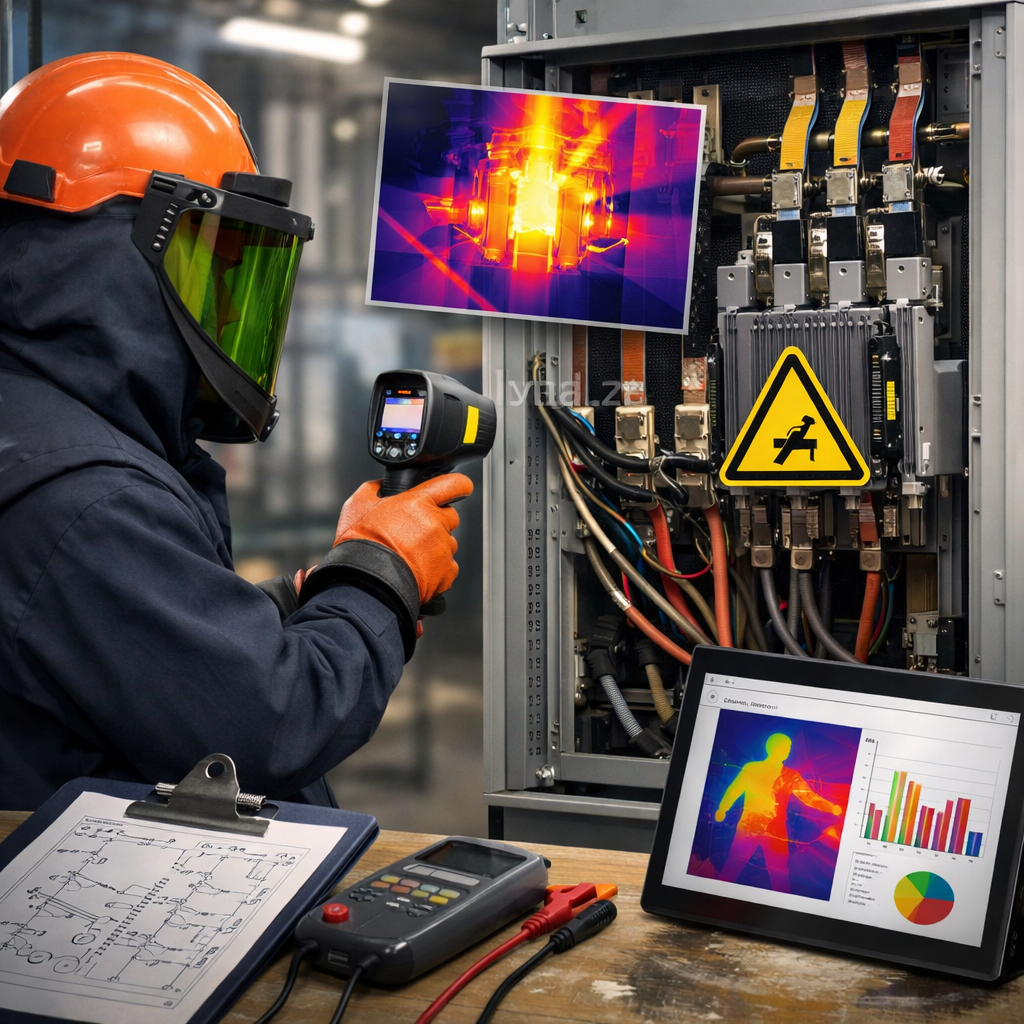
Arc flash risk assessment is one of the most important steps industrial workplaces can take to prevent severe burns, blast injuries, equipment damage, and costly downtime.
In facilities with energized electrical equipment, even a routine task such as opening a panel, taking voltage readings, or troubleshooting a motor control center can expose workers to dangerous incident energy.
A proper arc flash risk assessment helps employers identify where hazards exist, how severe the risk may be, and what controls are needed to protect workers. It also supports compliance efforts under electrical safety programs aligned with OSHA and industry standards such as NFPA 70E.
For manufacturers, warehouses, utilities, and process plants, the goal is not just checking a compliance box. It is creating a safer workplace where maintenance teams, electricians, contractors, and supervisors understand the hazard and know how to work around it safely.
What an Arc Flash Risk Assessment Should Cover
An arc flash risk assessment is more than a quick review of electrical panels. It should evaluate the likelihood of an arc event, the potential severity of injury, and the protective measures required for each task and piece of equipment.

In industrial settings, this usually starts with a detailed equipment inventory. Switchboards, panelboards, motor control centers, disconnects, transformers, and industrial control panels all need to be reviewed. The assessment should also consider system voltage, available fault current, protective device settings, equipment condition, and likely worker interaction.
Key elements to evaluate
- Equipment identification: Confirm location, voltage, nameplate data, and configuration.
- Fault current and clearing time: Determine how much energy may be released and how long the arc could persist.
- Task analysis: Review activities such as testing, racking, switching, inspection, and maintenance.
- Condition of equipment: Poor maintenance, contamination, corrosion, and loose connections can increase risk.
- Worker exposure: Identify who may be exposed, how often, and at what distance.
- Required controls: Define engineering, administrative, and PPE measures for each exposure scenario.
Many companies also integrate the assessment into their broader electrical safety program and maintenance planning. If you already use procedures for lockout/tagout or preventive maintenance, the findings from the arc flash risk assessment should be tied directly to those systems.
For technical guidance, employers often reference OSHA electrical safety resources and the CCOHS health and safety guidance library when building internal procedures.
Why Labeling and Boundaries Matter in Industrial Facilities
Labeling and approach boundaries are critical because workers need immediate, visible information before they interact with energized equipment. In a busy plant, clear labels can be the difference between a controlled task and a serious incident.
An arc flash label should help workers quickly understand the hazard. Depending on the method used, labels may show nominal voltage, arc flash boundary, incident energy at a working distance, required PPE, or other task-specific information. If labels are missing, outdated, damaged, or unreadable, workers may rely on guesswork under pressure.

Why accurate labeling improves safety
Labels turn technical study results into practical field information. A detailed engineering calculation has little value if the person opening the equipment cannot see the hazard level or required protection.
In industrial environments, labels also support contractor management. Outside electricians or service technicians may not know the facility history, maintenance condition, or protective device settings. Clear labeling reduces confusion and supports consistent decisions across shifts and departments.
Why boundaries must be clearly understood
The arc flash boundary marks the distance at which a person could receive a second-degree burn if an arc occurs. This matters because not everyone near the task is equally exposed. A technician performing energized diagnostics, a helper standing nearby, and an operator walking past may all need different controls.
Workplaces should define boundaries physically and procedurally. Barricades, signs, floor markings, and restricted access rules help keep unprotected people outside the hazard zone. During shutdown troubleshooting or commissioning work, this becomes especially important because multiple trades may be active in the same area.
| Safety Element | Why It Matters | Typical Workplace Control |
|---|---|---|
| Arc flash label | Communicates hazard level and required protection | Updated field label on each applicable equipment enclosure |
| Arc flash boundary | Keeps unprotected workers away from dangerous incident energy | Barricades, signs, floor tape, restricted access |
| Working distance | Affects incident energy exposure during a task | Task planning and use of insulated tools or remote operation |
| PPE selection | Reduces injury severity when energized work cannot be avoided | Arc-rated clothing, face shield, gloves, hearing protection |
Practical Arc Flash Risk Assessment Tips for Better Hazard Control
The best arc flash risk assessment is one that leads to action. Industrial facilities should focus on practical controls that reduce both the likelihood of an event and the severity of injury if one occurs.

A useful way to organize controls is through the Hierarchy of Controls. This approach keeps attention on higher-level risk reduction methods before relying only on PPE.
Apply the Hierarchy of Controls
- Elimination: De-energize equipment before work whenever possible. This remains the most effective control.
- Substitution: Replace outdated equipment with designs that lower exposure during operation or maintenance.
- Engineering controls: Use arc-resistant gear, remote racking, remote switching, current-limiting devices, and properly coordinated protective devices.
- Administrative controls: Implement energized work permits, job safety planning, training, qualified worker requirements, and documented procedures.
- PPE: Provide arc-rated clothing and task-appropriate protection based on the assessment results.
For example, if workers regularly open a motor control center to collect readings, the facility may be able to install external test points or remote monitoring devices. That engineering change can significantly reduce exposure and improve production efficiency at the same time.
Another common issue is poor protective device coordination. If a breaker takes longer than expected to clear a fault, incident energy rises. Reviewing coordination studies alongside the arc flash risk assessment can reveal opportunities to lower hazard levels without changing the entire system.
Facilities should also include equipment maintenance in their risk strategy. A panel that has not been cleaned, inspected, or torque-checked may present a higher likelihood of failure than a well-maintained one. This is why arc flash prevention is closely tied to preventive maintenance, infrared inspections, and condition monitoring. Resources such as NFPA standards and your own electrical safety training program can help reinforce these practices.
Training, Review Cycles, and Common Mistakes to Avoid
Even a technically strong arc flash risk assessment can fail if workers do not understand what it means in the field. Training should explain not only the rules, but also the reason behind labels, boundaries, PPE requirements, and energized work restrictions.

Qualified workers need task-specific instruction. They should know how to interpret equipment labels, determine whether they are crossing a boundary, select the right PPE, and recognize when equipment condition makes a task unsafe. Supervisors and planners also need training so job schedules do not pressure workers into bypassing controls.
Common mistakes industrial workplaces should avoid
- Treating the study as a one-time project: System changes can invalidate previous results.
- Ignoring equipment maintenance: Poor condition increases the chance of an arc event.
- Using outdated labels: Labels must reflect current system data and protective settings.
- Failing to define boundaries in the field: Workers nearby may be exposed if access is not controlled.
- Relying on PPE alone: PPE is important, but it should not replace de-energization and engineering controls.
- Not reviewing contractor activities: Temporary workers may face the same hazards without the same site knowledge.
Regular review cycles are essential. The assessment should be revisited whenever major electrical modifications occur, protective devices are adjusted, new equipment is installed, or work practices change. Periodic audits also help confirm that labels remain legible, one-line diagrams are current, and procedures still match real operating conditions.
In many industrial workplaces, the most effective improvements come from combining engineering data with frontline feedback. Electricians, operators, reliability staff, and safety professionals often notice practical issues that are missed in a desk-based review. Their input can help refine boundaries, improve access control, and identify tasks that should be redesigned or eliminated.
Arc flash risk assessment is not just an engineering requirement. It is a core part of protecting people in industrial workplaces where energized equipment is part of daily operations. When employers identify hazards accurately, maintain clear labels, enforce boundaries, apply the Hierarchy of Controls, and keep training current, they greatly reduce the chance of life-changing injuries. A strong arc flash risk assessment gives workers the information they need to make safer decisions, and it gives organizations a practical path toward compliance, reliability, and long-term electrical safety.
No comments yet