
Lockout Tagout Procedures: Essential Steps for Hazardous Energy Control


Lockout tagout procedures are one of the most important safeguards for preventing serious injuries during equipment maintenance, cleaning, servicing, and repair.
When hazardous energy is not properly controlled, workers can be exposed to electric shock, burns, crushing injuries, amputations, release of pressure, or unexpected machine startup. In manufacturing plants, warehouses, utilities, food processing facilities, and construction environments, these risks are very real.
A strong hazardous energy control program helps employers meet legal duties while protecting people on the job. Organizations such as OSHA and CCOHS emphasize that effective lockout and tagout must be planned, documented, and verified before work begins.
This guide explains essential lockout tagout procedures, with practical focus on preparation, isolation, verification, and group lockout best practices. It also shows how these procedures fit within broader workplace safety systems such as training, supervision, and the Hierarchy of Controls.
- Why lockout tagout procedures matter in hazardous energy control
- Preparation: the foundation of effective lockout tagout procedures
- Isolation and stored energy release in lockout tagout procedures
- Verification: the step that confirms lockout tagout procedures are working
- Group lockout best practices and safe return to service
Why lockout tagout procedures matter in hazardous energy control
Hazardous energy is not limited to electricity. It includes mechanical, hydraulic, pneumatic, chemical, thermal, gravitational, and stored energy sources. A conveyor may stop moving, yet still hold tension in a spring or pressure in a line. A press may be powered off, but elevated parts can still fall if not blocked or released.
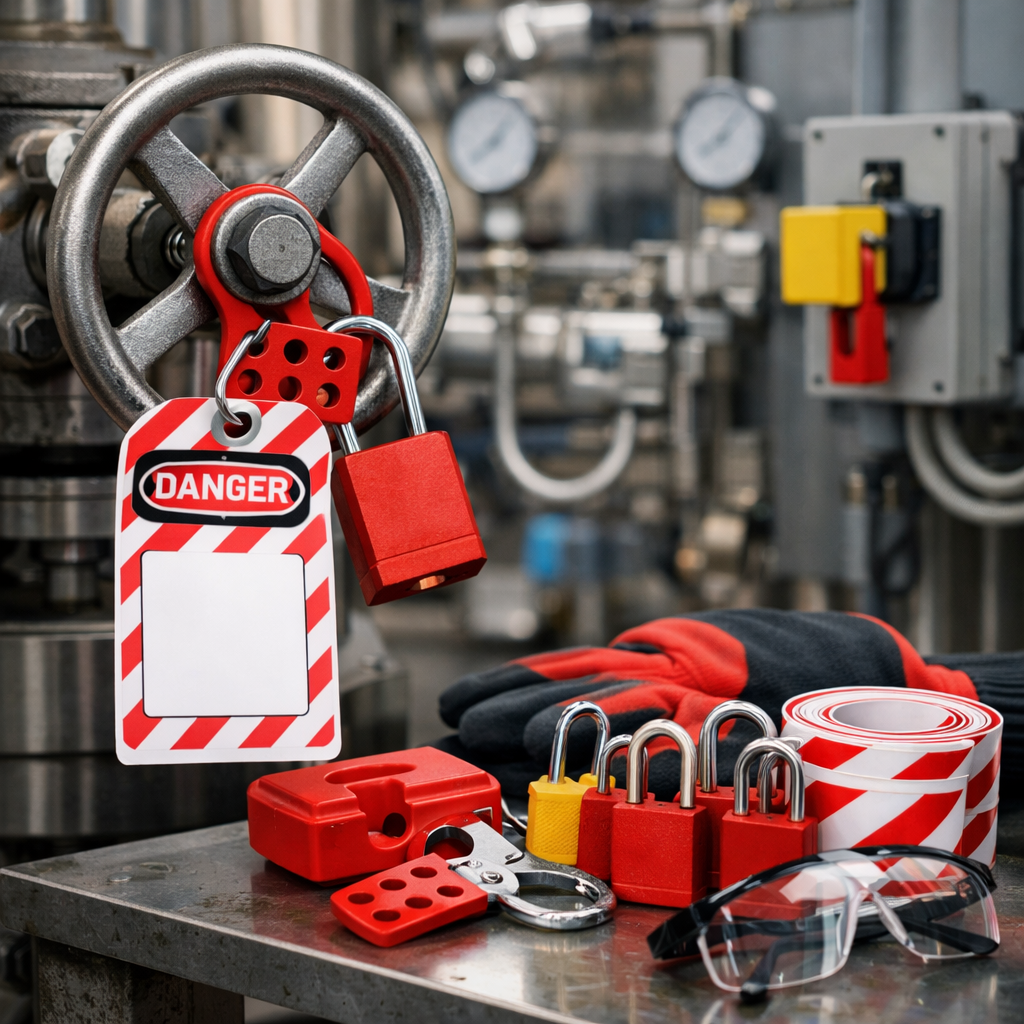
That is why lockout tagout procedures must go beyond simply switching off a machine. The goal is to place equipment in a zero-energy state so that no startup, movement, or energy release can injure workers.
From an OHSE perspective, lockout tagout is primarily an administrative control supported by physical devices such as locks, hasps, tags, blocks, chains, and valve covers. Under the Hierarchy of Controls, eliminating the need to service energized equipment is always preferable where possible. For example, redesigning machinery for safer access or isolating energy at a higher level can reduce exposure. However, when servicing must occur, lockout tagout remains an essential control measure.
Employers should also connect these procedures with other safety tools, including permit-to-work systems, job hazard analysis, and preventive maintenance planning. For related guidance, see our workplace safety training resources and hazard identification and risk assessment guide.
Preparation: the foundation of effective lockout tagout procedures
Identify all energy sources before work begins
The preparation stage is where many failures start. Before any lock or tag is applied, workers need to know exactly what equipment is being serviced, what type of energy it uses, and where isolation points are located.
A machine-specific procedure should describe normal operation, shutdown steps, energy sources, isolation devices, stored energy hazards, and verification methods. This is especially important for complex systems with multiple feeds, backup power, interconnected equipment, or hidden energy sources.

Preparation should include a pre-job review covering:
- the exact scope of maintenance or servicing
- all affected employees and work areas
- electrical, mechanical, hydraulic, pneumatic, thermal, and chemical hazards
- required lockout devices, tags, and group lockout hardware
- stored energy release methods such as bleeding, blocking, venting, grounding, or discharging
- communication steps before shutdown and before restart
In real workplaces, practical examples matter. A maintenance technician servicing a mixer may need to isolate the main disconnect, close and lock a steam valve, bleed residual pressure, secure moving parts against rotation, and verify that a remote control station cannot restart the unit. Missing even one step can turn routine maintenance into a life-altering event.
Notify affected workers and assign responsibilities
Good lockout tagout procedures depend on clear communication. Operators, maintenance staff, contractors, supervisors, and nearby workers should know when equipment is being removed from service and who is responsible for controlling the energy.
Authorized employees should be specifically trained to perform lockout and verification. Affected employees should understand what lockout means, why they must not restart equipment, and how to report concerns. This distinction is central to compliance and day-to-day safety performance.
Isolation and stored energy release in lockout tagout procedures
Shut down equipment in a controlled sequence
After preparation, the equipment should be shut down using the normal stopping procedure. This may include pressing stop buttons, using operator controls, allowing moving parts to stop fully, and following manufacturer instructions.
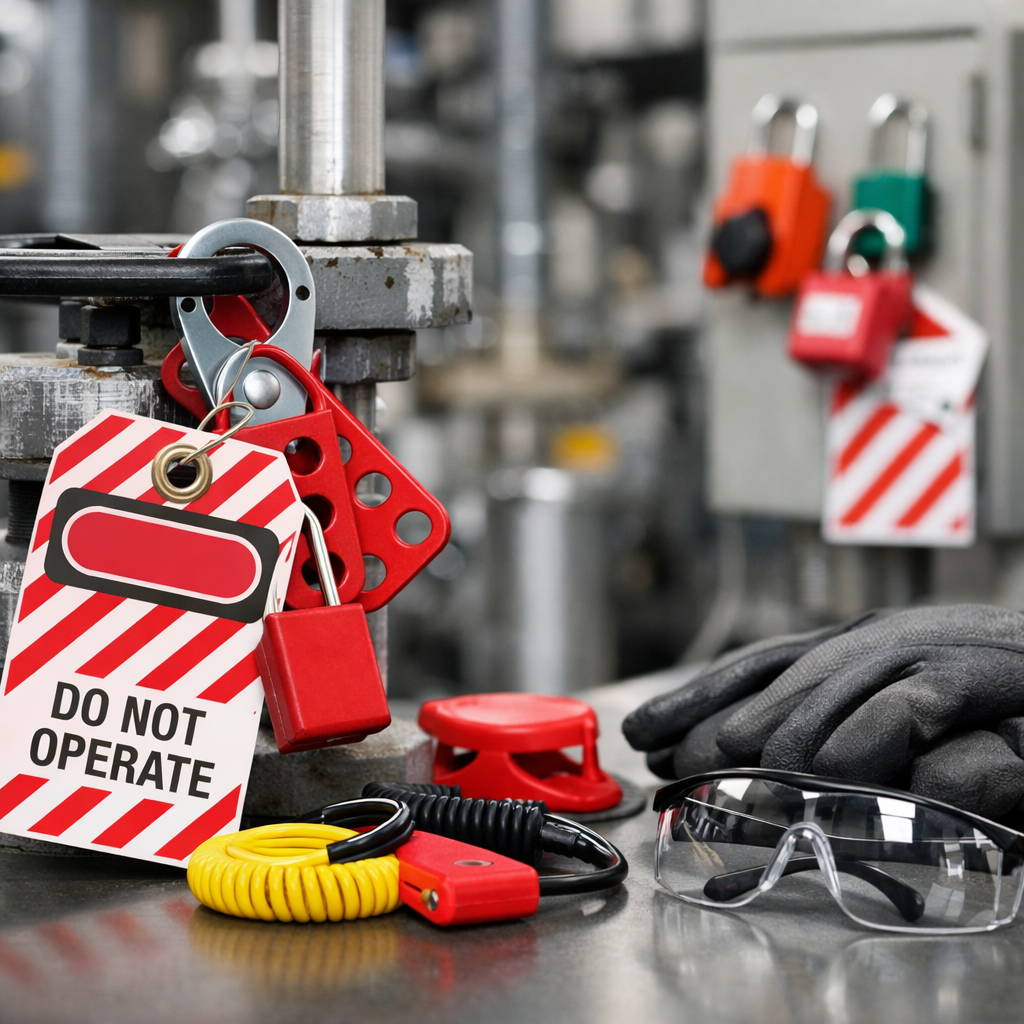
Once the machine is stopped, each energy-isolating device must be operated to disconnect the equipment from its energy source. This may involve opening a disconnect switch, closing a valve, racking out a breaker, or physically blocking a mechanism.
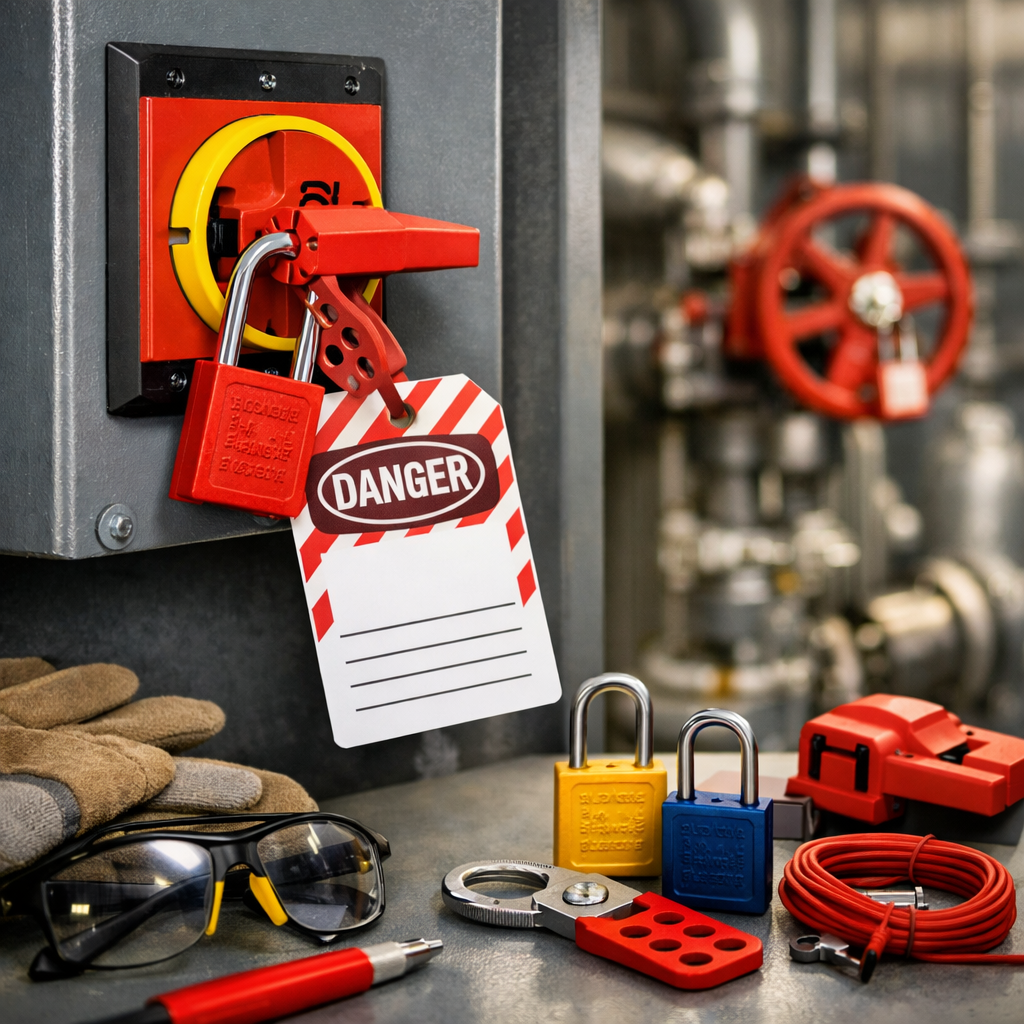
Every authorized worker involved should apply a personal lock where required. Tags should clearly identify the person, date, and reason for lockout. Tags alone are not equivalent to locks unless a specific system permits tagout only and demonstrates equivalent protection.
Control residual and stored energy
One of the most overlooked parts of lockout tagout procedures is stored energy control. Even after isolation, dangerous energy may remain in capacitors, springs, hydraulic accumulators, steam lines, elevated machine components, or rotating parts.
Common stored energy controls include:
- bleeding hydraulic and pneumatic lines
- releasing or restraining spring tension
- blocking or cribbing elevated components
- grounding electrical systems where required
- discharging capacitors
- allowing hot surfaces or fluids to cool
- draining or neutralizing hazardous chemicals
These measures should be written into the procedure, not left to memory. In many incidents, workers believed a machine was safe because power was off, but stored pressure or gravity created the actual hazard.
| Energy Type | Typical Source | Example of Isolation or Release |
|---|---|---|
| Electrical | Disconnects, breakers, control panels | Open disconnect, lock breaker, test absence of voltage |
| Hydraulic | Pumps, cylinders, accumulators | Shut valve, bleed pressure, block movement |
| Pneumatic | Air lines, receivers, actuators | Close supply, vent lines, lock valve |
| Mechanical | Springs, rotating parts, belts | Secure motion, release tension, install blocks |
| Thermal | Steam, hot surfaces, heated fluids | Isolate source, cool system, drain lines |
Verification: the step that confirms lockout tagout procedures are working
Try-start and test before work begins
Verification is what proves the isolation is effective. Without it, lockout is only an assumption.
Authorized employees should attempt a normal start using the operating controls after locks and tags are in place. If the machine does not start, that is a useful first check. However, a failed start attempt alone is not enough when electrical or other hazardous energy could still be present.
Where applicable, workers should use proper testing instruments to confirm zero energy. For electrical systems, that may mean following safe electrical work practices and testing for absence of voltage with an appropriately rated meter. For pressure systems, it may mean confirming gauges read zero and vents are open. For mechanical hazards, it may involve checking that moving parts are physically secured.
Controls should be returned to the neutral or off position after the try-start. This detail is simple but important, since leaving controls in the start position can create confusion or danger during re-energization.
Document and re-check when conditions change
Effective lockout tagout procedures include documentation, especially for high-risk or multi-step tasks. Supervisors should ensure the procedure is followed and updated when equipment changes, incidents occur, or audits identify gaps.
Verification may also need to be repeated when shifts change, work scope expands, contractors join the job, or equipment has multiple isolation points. If any uncertainty exists, stop work and re-verify before proceeding.
For practical employer guidance, the OSHA 1910.147 standard remains a key reference for developing a compliant hazardous energy control program.
Group lockout best practices and safe return to service
Use a clear group lockout system
Group lockout is common during shutdowns, major maintenance, and contractor work. In these situations, more than one person may be exposed, and every worker must have personal protection within the system.
Best practice is to use a group lock box or hasp arrangement managed by a designated primary authorized employee or supervisor. That person coordinates the isolation of all energy sources, places the keys for isolation locks into the lock box, and each worker then applies their own personal lock to the box. No one should rely solely on another person’s lock for protection.
Strong group lockout tagout procedures should include:
- one written procedure covering the entire job scope
- a designated lead responsible for coordination and communication
- shift handover steps so incoming workers apply their own locks before outgoing workers remove theirs
- contractor coordination to ensure site and employer procedures align
- a final inspection before re-energization
Remove lockout carefully and restart only when safe
Before locks and tags are removed, the work area should be inspected to confirm tools are cleared, guards are reinstalled, systems are intact, and all employees are safely positioned. Affected workers should be notified that the equipment is about to be re-energized.
Each personal lock should be removed by the employee who applied it, except under a tightly controlled emergency removal procedure. Once lockout devices are removed, re-energization should happen in a controlled sequence to avoid sudden startup risks.
In the end, lockout tagout procedures are not just a compliance task. They are a proven life-saving process for controlling hazardous energy in real workplaces. When preparation is thorough, isolation is complete, verification is consistent, and group lockout is well managed, employers can dramatically reduce the risk of serious injury or fatality. The best lockout tagout procedures are written clearly, practiced regularly, audited often, and supported by a strong safety culture that never treats hazardous energy as routine.
No comments yet