
waste management worker hazards: Key Risks, PPE, Compliance, and Prevention Strategies


waste management worker hazards are a major occupational health and safety concern across collection routes, transfer stations, recycling facilities, landfills, and hazardous waste sites.
Workers in this sector face daily exposure to moving vehicles, sharp objects, biohazards, toxic substances, noise, heat, and ergonomic strain, often in fast-paced environments where one mistake can lead to serious injury.
Because waste handling is essential to public health and environmental protection, employers must treat safety as a core operational requirement rather than an afterthought.
An effective OHSE approach combines hazard identification, worker training, engineering controls, safe work procedures, personal protective equipment, and regulatory compliance.
This article explains the most common waste management worker hazards, outlines practical prevention measures, and shows how employers can apply the Hierarchy of Controls to reduce risk in real workplaces.
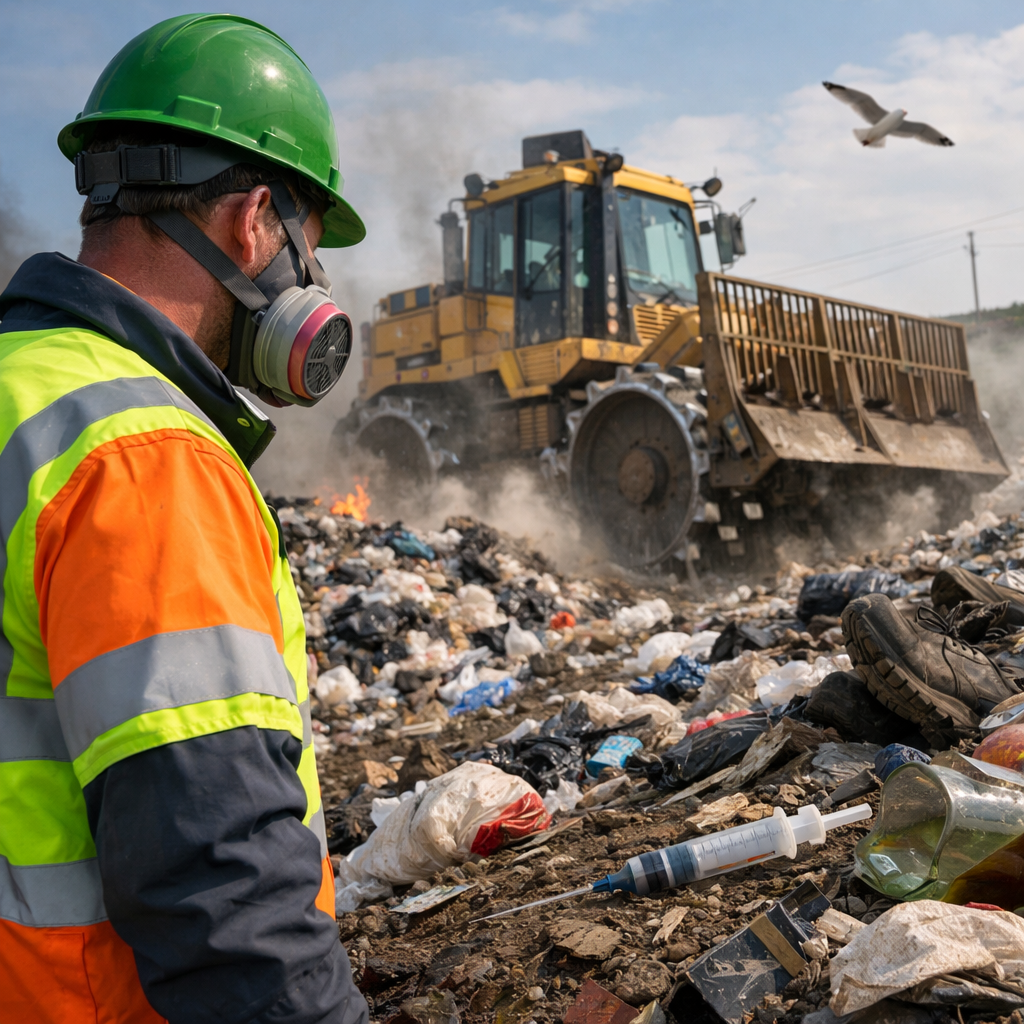
Understanding waste management worker hazards in daily operations
Waste management worker hazards vary by task, but the overall risk profile is consistently high.
Collection crews may ride on trucks, lift heavy bins, work near traffic, and encounter unpredictable waste contents. Material recovery facility staff may face conveyor pinch points, dust, repetitive motion, and contact with contaminated items. Landfill and transfer station workers often deal with heavy equipment, unstable ground, airborne contaminants, and fire risks.
These hazards become more severe when schedules are tight, weather conditions are poor, or workers are not adequately trained.
Common incidents include slips and falls on wet surfaces, needle-stick injuries from improperly discarded sharps, strains from lifting overloaded containers, and struck-by events involving reversing vehicles or mobile equipment.
Practical workplace examples are easy to find. A residential collector may suffer a back injury while pulling a damaged wheelie bin up an incline. A recycling sorter may be cut by broken glass hidden inside a paper stream. A transfer station spotter may be struck by a reversing loader in a blind spot. Each case shows how ordinary tasks can become serious OHSE events without the right controls.
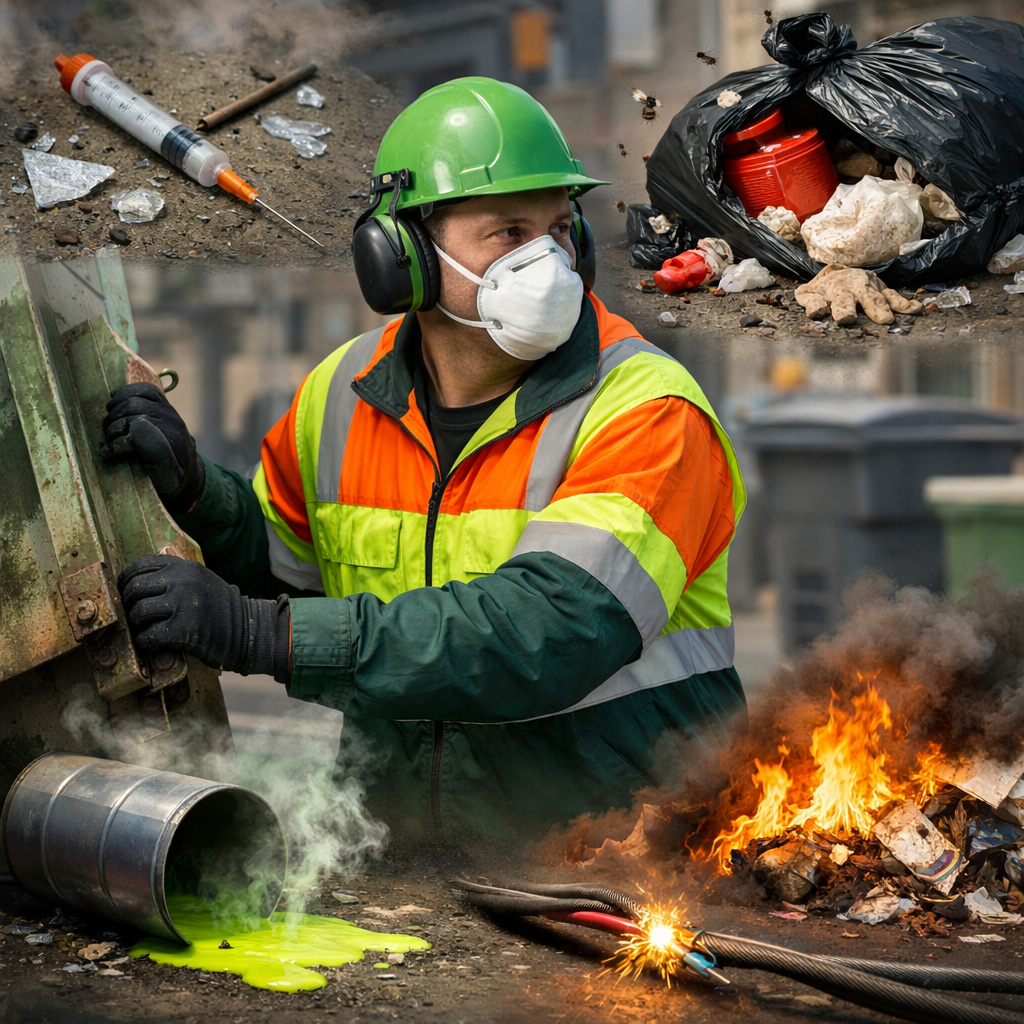
Main risk categories
- Physical hazards: vehicle movement, machine entanglement, slips, trips, falls, and sharp objects
- Biological hazards: bacteria, viruses, mold, bloodborne pathogens, and animal waste
- Chemical hazards: solvents, batteries, asbestos, cleaning agents, fuel vapors, and unknown substances
- Ergonomic hazards: lifting, pulling, pushing, twisting, repetitive sorting, and awkward postures
- Environmental hazards: heat stress, cold exposure, poor lighting, rain, ice, dust, and noise
- Psychosocial hazards: fatigue, time pressure, working alone, and exposure to distressing materials
Common waste management worker hazards and their health effects
The most visible waste management worker hazards are physical injuries, but many long-term health issues receive less attention.
Musculoskeletal disorders are especially common due to repetitive lifting, jumping on and off vehicles, and manual handling of bins, bags, and loose waste. Over time, these tasks can lead to chronic back pain, shoulder injuries, and knee problems.
Exposure to biohazardous waste creates another major risk. Sanitation workers may encounter used needles, contaminated dressings, animal carcasses, or food waste in advanced decomposition. Contact with these materials can cause infections, skin conditions, respiratory irritation, or bloodborne disease exposure if puncture wounds occur.
Chemical exposure is also a significant concern. Batteries, aerosols, paints, pesticides, and industrial waste can leak, ignite, or react unexpectedly when compacted.
In enclosed or poorly ventilated areas, workers may inhale dust, diesel exhaust, or fumes that affect the lungs, eyes, and nervous system. Guidance from OSHA and CCOHS emphasizes hazard communication, ventilation, and exposure control for exactly these reasons.

High-risk tasks and likely outcomes
| Task | Typical Hazard | Possible Health or Safety Outcome |
|---|---|---|
| Bin collection | Overexertion, traffic, slips | Sprains, fractures, struck-by injuries |
| Sorting recyclables | Sharp objects, repetitive motion, conveyors | Cuts, amputations, strain injuries |
| Compactor operation | Crush points, unexpected startup | Severe trauma or fatality |
| Hazardous waste handling | Chemical splash, toxic vapors | Burns, poisoning, respiratory harm |
| Landfill operations | Heavy equipment, fire, unstable surfaces | Vehicle collision, falls, smoke exposure |
Noise exposure from trucks, compactors, and sorting lines can gradually damage hearing.
Heat stress is another underrecognized issue, especially for crews working outdoors in high-visibility clothing during summer months. Dehydration, fatigue, dizziness, and impaired decision-making can all increase injury risk.
For related workplace prevention topics, many organizations also review manual handling safety and workplace PPE guidelines as part of broader OHSE programs.
Preventing waste management worker hazards through the Hierarchy of Controls
The most effective way to reduce waste management worker hazards is to apply the Hierarchy of Controls rather than relying only on PPE.
This means first looking for ways to eliminate hazards, then substituting safer methods or materials, followed by engineering controls, administrative controls, and finally personal protective equipment.

Elimination and substitution
Elimination may include removing the need for manual handling through automated side-loader collection vehicles or banning certain unsafe disposal practices at the source.
Substitution might involve using safer cleaning chemicals in depots or replacing fragile waste containers with standardized, mechanically compatible bins.
Engineering controls
Engineering solutions are highly effective in waste settings.
Examples include guarded conveyors, reversing cameras, proximity alarms, hydraulic lifting devices, ventilation systems, enclosed cabs with filtered air, and sharps-resistant disposal systems. Good site layout also matters, with clearly marked traffic routes, pedestrian exclusion zones, and adequate lighting in transfer stations and yards.
Administrative controls
Administrative controls support daily safe work.
These include route planning, fatigue management, vehicle inspection programs, lockout/tagout procedures, incident reporting, hazard communication, and regular toolbox talks. Employers should train workers to recognize suspicious waste, refuse unsafe loads, and respond correctly to spills, fires, and needle-stick incidents.
Supervisors should also monitor compliance in the field, because written procedures are only effective when they are understood and followed.
PPE for waste management worker hazards
PPE remains essential even when other controls are in place.
Suitable PPE depends on the task, but commonly includes:
- Cut-resistant gloves for sorting and handling mixed waste
- Steel-toe, puncture-resistant boots
- High-visibility clothing for roadside and yard work
- Safety glasses or face shields for splash and debris protection
- Hearing protection in noisy facilities
- Respiratory protection where dust, mold, or fumes are present
- Chemical-resistant gloves and coveralls for hazardous waste tasks
PPE must fit properly, be maintained, and be paired with training on limitations and correct use.
Compliance, training, and practical safety examples
Managing waste management worker hazards also requires compliance with applicable occupational health and safety laws, environmental rules, and industry standards.
Employers should complete risk assessments, maintain safety data sheets, investigate incidents, and keep documented training records. They should also ensure machine guarding, hazard labeling, emergency response planning, and worker consultation processes meet legal requirements.
Organizations often use OSHA guidance on sanitation and hazardous materials, while Canadian employers may refer to CCOHS resources for best practices in waste handling, ergonomics, and PPE. Fire prevention and hazardous waste storage requirements may also draw on local environmental agency rules and standards from NFPA where applicable.
Practical examples from the workplace
A city collection department reduced strains and sprains by replacing manual rear-loading routes with semi-automated lifters. Injury rates fell because workers no longer had to drag heavy bins over long distances on every stop.
At a recycling facility, managers introduced pre-sort bag openers, better conveyor guarding, and mandatory cut-resistant sleeves. This reduced lacerations and kept workers farther away from hazardous hand-sorting points.
In a landfill setting, a traffic management plan separated pedestrians from dozers, compactors, and haul trucks. Spotters used radios, high-visibility gear, and designated safe zones, sharply lowering the chance of struck-by incidents.
Another employer tackled needle-stick risk by training workers never to compress bags manually, providing puncture-resistant gloves, and establishing a clear exposure response protocol that included first aid, immediate reporting, and medical follow-up.
In conclusion, waste management worker hazards are diverse, serious, and highly practical in nature, affecting everyone from curbside collectors to recycling sorters and landfill equipment operators.
The strongest OHSE programs recognize the full range of risks, apply the Hierarchy of Controls, provide suitable PPE, and build compliance into everyday operations through training, supervision, and continuous improvement.
When employers take a systematic approach to waste management worker hazards, they protect workers, improve efficiency, reduce lost-time injuries, and strengthen the essential public service that waste management provides.
No comments yet