
public event safety planning: A Practical OHSE Guide for Safer Gatherings
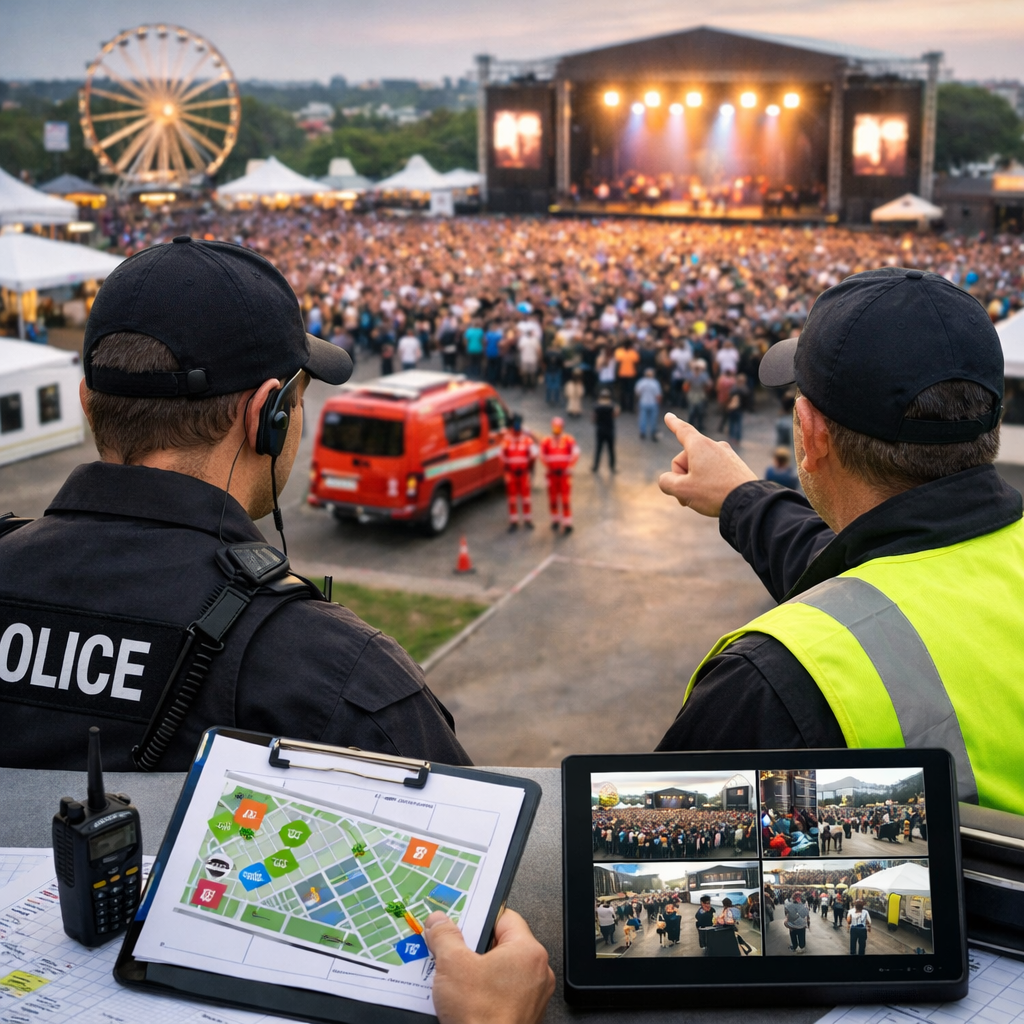
public event safety planning is the foundation of a successful gathering, whether the event is a community fair, music festival, sports day, conference, parade, or charity fundraiser.
When safety is planned early and managed well, organizers protect workers, contractors, volunteers, vendors, performers, and attendees while reducing legal, financial, and operational risks.
From an OHSE perspective, public event safety planning is more than crowd control. It includes hazard identification, emergency preparedness, traffic management, weather monitoring, contractor coordination, PPE selection, and compliance with local laws and recognized safety standards.
A strong plan also helps event teams respond calmly when conditions change, such as a sudden storm, medical incident, equipment failure, or overcrowding at entry points.
In practical terms, event safety should be treated like any other workplace safety system. Temporary workplaces still require safe access, safe equipment, competent supervision, and clear communication.
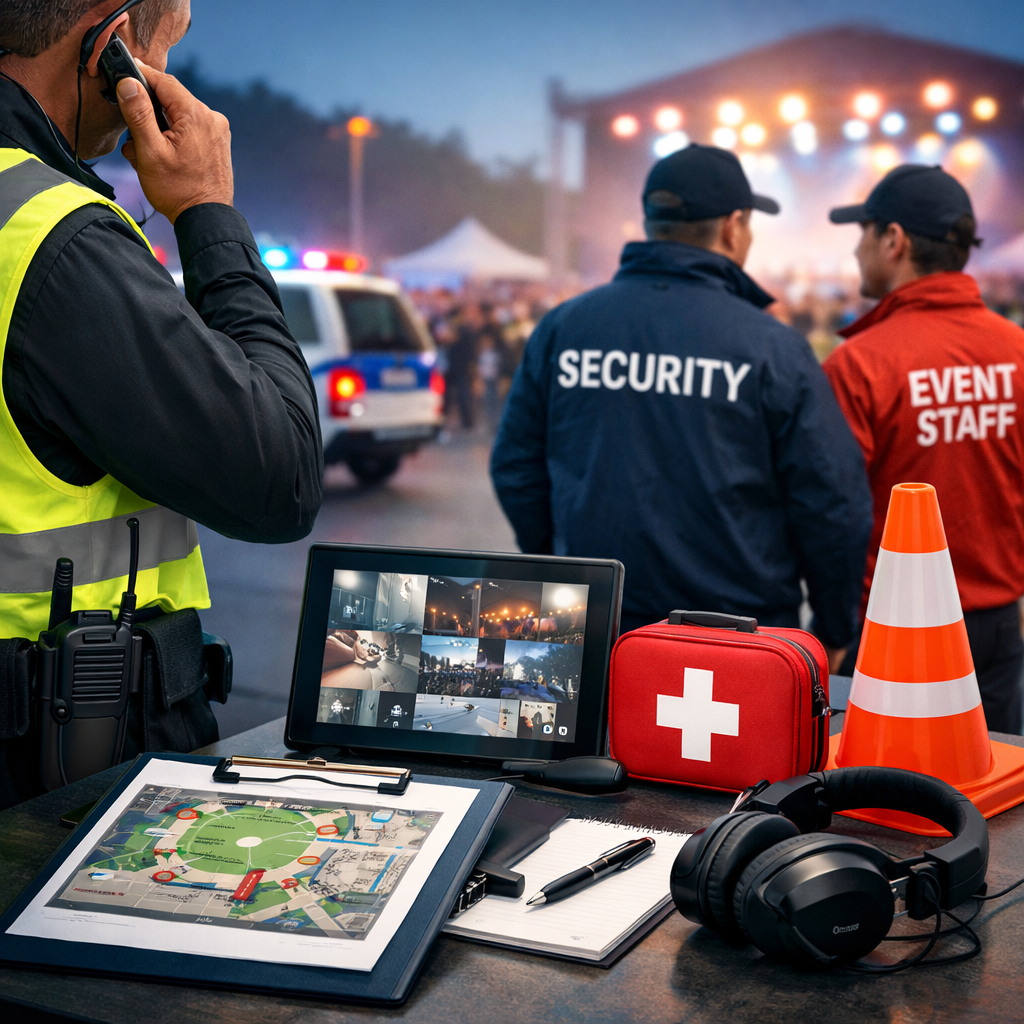
Guidance from organizations such as CCOHS and OSHA can support planning, especially where workers are exposed to noise, electrical hazards, slips and trips, manual handling, heat stress, and moving vehicles.
Why public event safety planning matters in OHSE
Every public event creates a temporary work environment with changing risks. Crews may be setting up stages in low light, electricians may be running temporary power, food vendors may be using gas cylinders, and security teams may be managing large crowd movements.
At the same time, members of the public may be unfamiliar with the site layout, emergency exits, or weather risks. That combination makes public event safety planning essential.
Common consequences of poor planning include injuries, property damage, event delays, reputational harm, insurance claims, and enforcement action. In serious cases, failures in planning can lead to crowd crush incidents, structural collapse, vehicle strikes, fires, or delayed emergency response.
OHSE duties usually extend across the full event lifecycle, including bump-in, operation, and bump-out. This means risk controls must not focus only on attendees.
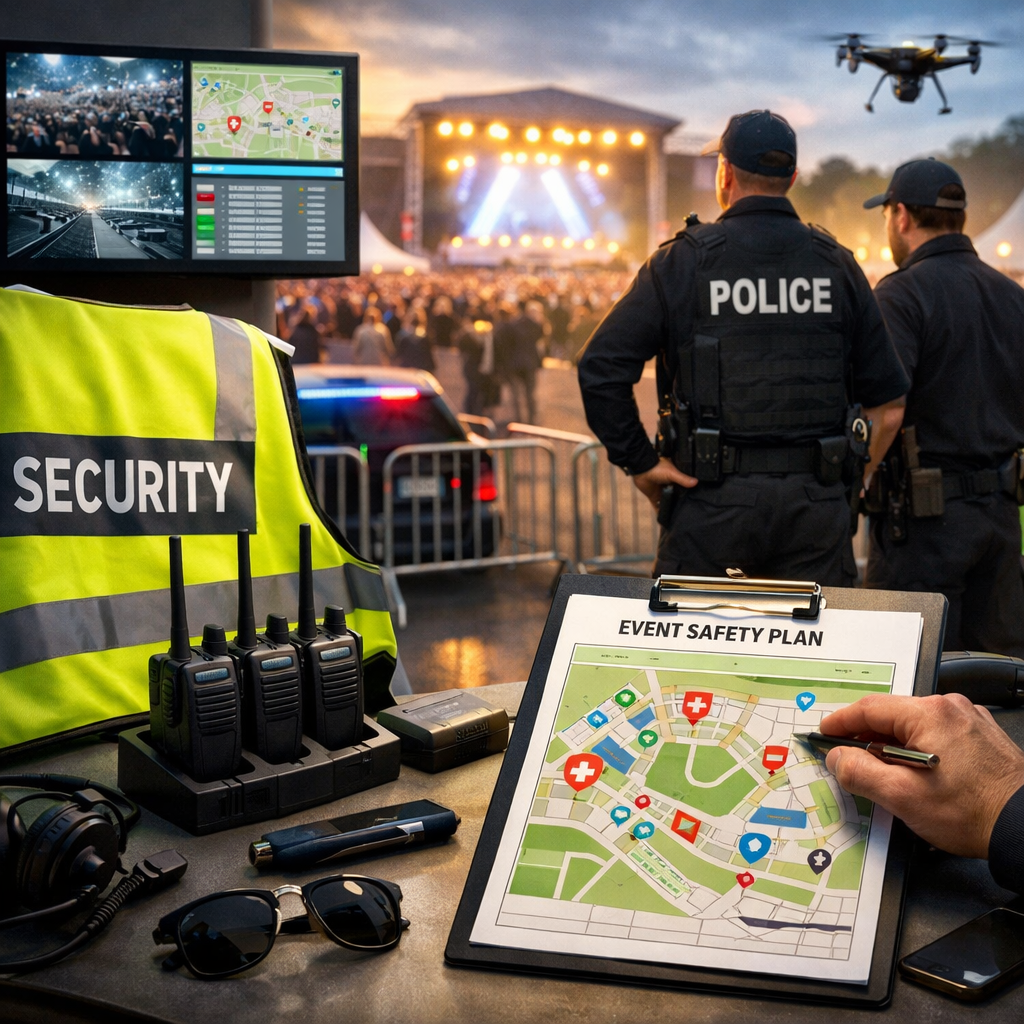
They must also protect stage crews, cleaners, first aid teams, waste contractors, traffic marshals, and delivery drivers.
Useful event teams often build safety into related processes such as risk assessment procedures and incident reporting systems. These systems improve consistency and make reviews easier after the event.
public event safety planning risk assessment: key hazards to identify
Typical event risks
A thorough risk assessment should consider the venue, crowd profile, weather, activities, equipment, and local surroundings. Risks differ between an indoor conference and an outdoor concert, but some hazards are common across most events.
- Crowd risks: overcrowding, surges, crushing, queue collapse, aggressive behavior, and blocked exits
- Slip, trip, and fall hazards: uneven ground, cables, wet floors, poor lighting, temporary flooring, and loose waste
- Weather exposure: heat, lightning, heavy rain, wind, cold stress, and reduced visibility
- Vehicle movement: delivery trucks, forklifts, buses, rideshare congestion, and pedestrian-vehicle interaction
- Electrical hazards: generators, temporary cabling, damaged leads, water exposure, and overloaded circuits
- Fire and explosion hazards: cooking equipment, fuel storage, pyrotechnics, gas cylinders, and smoking areas
- Structural hazards: stages, grandstands, fencing, marquees, rigging, and temporary platforms
- Health risks: dehydration, fatigue, infectious illness, noise exposure, and poor sanitation
- Security threats: theft, violence, suspicious packages, and unauthorized access to restricted areas
Practical examples from real event settings
At an outdoor festival, public event safety planning should address heat stress by adding shaded rest zones, drinking water points, welfare teams, and a process for stopping high-exertion work during extreme temperatures.
At a parade, vehicle separation becomes a top priority. Barriers, designated crossing points, trained marshals, and route inspections can reduce the chance of pedestrian strikes.
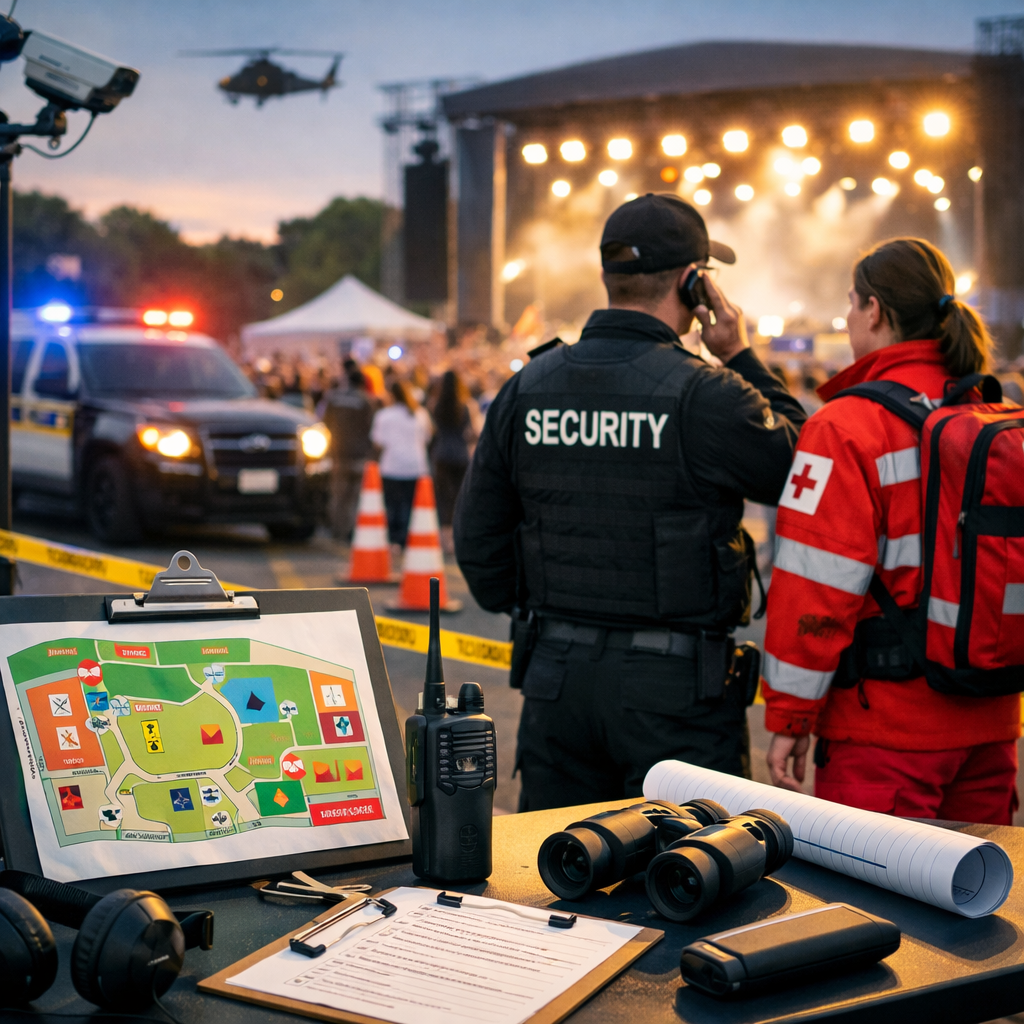
At a night market, lighting and cable management are often critical. Poorly secured extension leads and dark walkways can quickly create trip hazards for workers and the public.
At a sports event, entry congestion may require staggered admissions, bag check procedures, communication signage, and real-time crowd monitoring to prevent dangerous build-ups.
Controls, PPE, and emergency arrangements in public event safety planning
Applying the Hierarchy of Controls
The best public event safety planning uses the Hierarchy of Controls rather than relying only on warnings or PPE. This means starting with higher-level controls where possible.
| Control level | Event example |
|---|---|
| Elimination | Canceling a fireworks element during extreme fire weather |
| Substitution | Using battery-powered equipment instead of fuel-powered tools in enclosed areas |
| Engineering controls | Installing barriers, cable covers, secure fencing, and emergency lighting |
| Administrative controls | Traffic plans, safe work procedures, inductions, signage, and radio protocols |
| PPE | High-visibility clothing, hearing protection, gloves, safety footwear, and rain gear |
PPE for workers and support teams
PPE should match the actual risks and tasks. Event staff working near vehicles may need high-visibility vests and safety boots, while stage crews may require gloves, helmets, and hearing protection during setup and sound checks.
Security personnel working outdoors for long shifts may need weather-appropriate clothing, hydration support, and sun protection. Food workers may need gloves, aprons, and slip-resistant footwear.
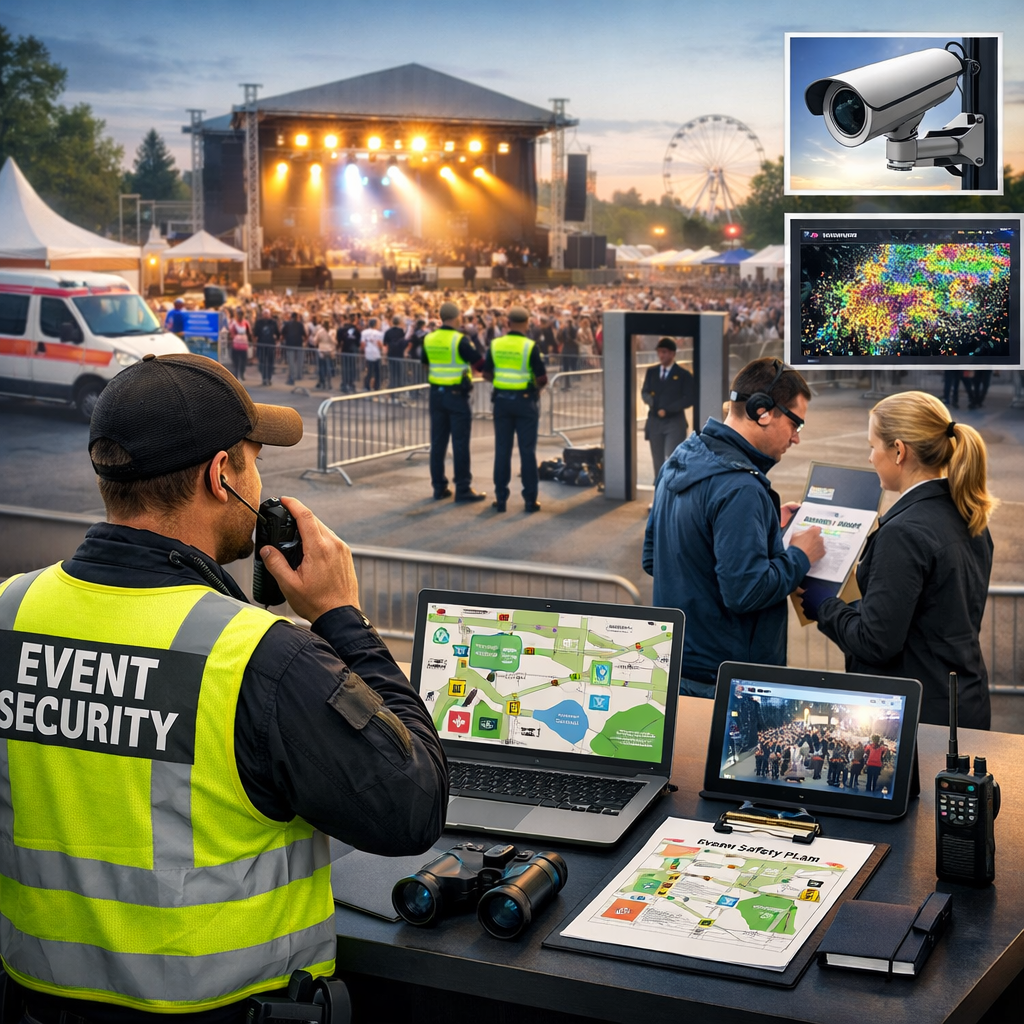
PPE is important, but it should never be the only control. For example, giving marshals high-vis clothing does not remove the need for proper traffic separation and lighting.
Emergency planning and response
Emergency arrangements should be documented, practiced, and shared with key personnel. Public event safety planning should cover evacuation, shelter-in-place procedures, severe weather response, fire incidents, missing persons, medical emergencies, and communication failure.
Key measures often include:
- Clearly marked exits and assembly areas
- First aid posts and trained responders
- Emergency vehicle access routes kept clear at all times
- Reliable communications such as radios with backup channels
- Contact lists for police, fire, ambulance, utilities, and venue management
- Decision triggers for stopping performances or closing parts of the site
Where large crowds are expected, a joint briefing with emergency services and contractors can improve coordination. Site maps should show hydrants, generators, fuel storage, control points, and restricted areas.
Compliance, coordination, and continuous improvement in public event safety planning
Legal and compliance considerations
Compliance requirements vary by location, but public event safety planning commonly involves occupational health and safety law, fire codes, building and electrical requirements, food safety rules, noise limits, traffic management obligations, and permit conditions.
Organizers should confirm who is responsible for each compliance area, especially when multiple contractors or venue owners are involved. Contractor management is a major OHSE issue because overlapping duties can create gaps if roles are unclear.
Important compliance actions may include documented risk assessments, inspection records, proof of competency or licensing, emergency planning records, and incident logs. Temporary structures should be installed and certified by competent persons.
For reference, event planners may also review guidance from the UK HSE event safety resources where relevant principles align with broader OHSE practice.
Coordination before, during, and after the event
Effective public event safety planning depends on communication. Before the event, safety expectations should be included in contracts, inductions, site rules, and pre-start meetings.
During the event, supervisors should monitor crowd density, weather conditions, housekeeping, contractor performance, and incident trends. A control room or coordination point can help leaders make timely decisions based on live information.
After the event, teams should review what worked and what failed. Near misses, minor injuries, access problems, and delayed responses often reveal weaknesses that should be fixed before the next event.
A simple post-event review can ask:
- Were the main hazards correctly identified?
- Did the chosen controls work in practice?
- Was PPE suitable and actually used?
- Were contractors and volunteers properly briefed?
- Did emergency communication function as planned?
- What changes are needed for future events?
public event safety planning is most effective when it is proactive, practical, and reviewed continuously. A safe event is not created by one checklist alone. It is created by clear responsibility, realistic risk assessment, layered controls, suitable PPE, legal compliance, and strong coordination across everyone involved.
Whether you are managing a small community celebration or a major public festival, public event safety planning should be embedded in every stage of the job. That approach supports OHSE performance, protects people, and helps deliver an event that is memorable for the right reasons.
No comments yet