
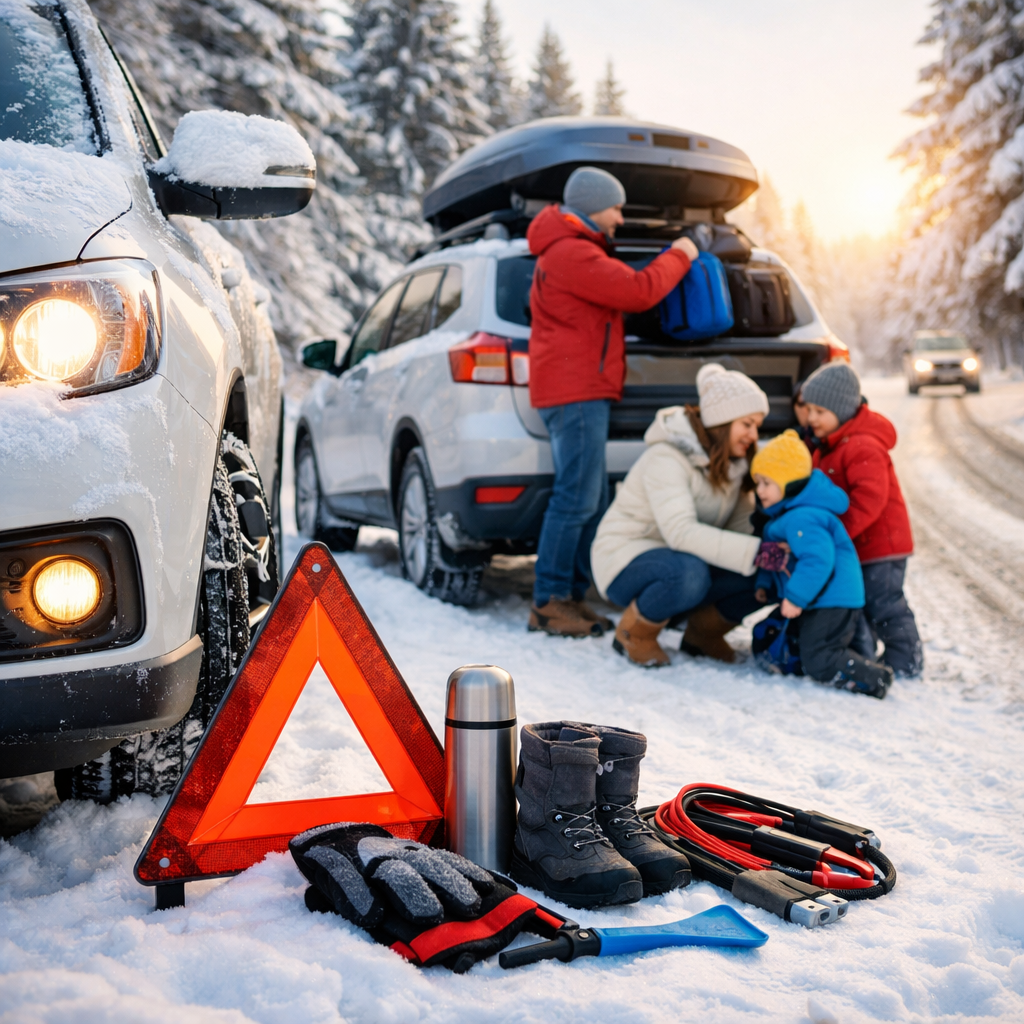

Winter road trip safety for families starts before anyone buckles in. In Ontario and across Canada, snow, ice, blowing wind, early darkness, and long stretches between services can turn a routine drive into a stressful situation very quickly.
A practical plan helps families reduce risks, stay comfortable, and respond calmly if weather or road conditions change. Whether you are driving children to a holiday visit, returning to campus, or travelling for school, work, or recreation, the goal is the same: prepare the vehicle, pack the right emergency items, and make safer decisions before and during the trip.
This guide offers a calm, prevention-focused approach to winter road trip safety for families, with a complete vehicle and emergency checklist, simple inspection tips, and family-specific planning ideas that fit Canadian winter driving conditions.
Why winter road trip safety for families begins before departure
Most winter driving problems become more manageable when they are caught at home instead of on the highway. A weak battery, low washer fluid, underinflated tires, poor visibility, or an almost empty fuel tank may be inconvenient in town, but those same issues can become serious in freezing temperatures.
For families, preparation also means thinking beyond the driver. Children may need warm layers, snacks, medications, comfort items, and a plan for delays. Teen drivers and young workers using a family vehicle should understand the route, expected weather, and what to do if travel no longer feels safe.
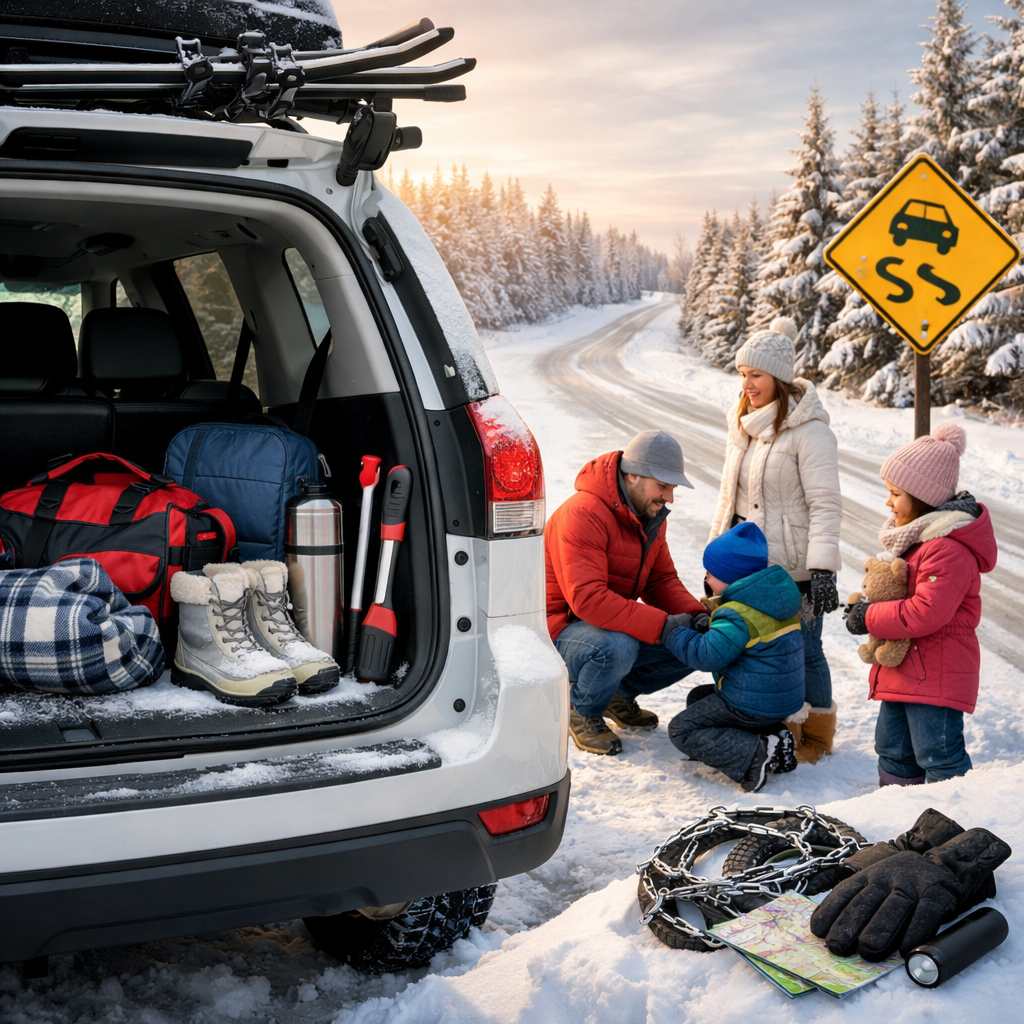
Trusted Canadian safety organizations such as CCOHS, the Government of Ontario, and Parachute offer reliable seasonal safety information. Families can also find practical workplace and public safety resources at OHSE.ca, and training options at learn.ohse.ca when safe travel planning connects to work, school transportation, or young worker readiness.
Use a simple winter driving risk check
A helpful way to think about winter road trip safety for families is to control hazards in order. First, eliminate unnecessary travel if conditions are severe. Next, reduce exposure by choosing daylight travel, shorter routes, or major roads that are more likely to be maintained. Then use physical controls such as winter tires, a well-maintained vehicle, and proper child restraints. Finally, support those controls with safe behaviour: slower speeds, longer following distance, and regular rest breaks.
- Delay or cancel the trip if visibility is poor or freezing rain is expected.
- Choose the safest route rather than the fastest route.
- Tell someone where you are going and when you expect to arrive.
- Keep devices charged and carry charging cables or a power bank.
Complete vehicle checklist for winter road trip safety for families
Your vehicle should be ready for cold starts, slippery roads, and reduced visibility. A pre-trip check does not need to be complicated, but it should be consistent. If something seems uncertain, follow the manufacturer’s guidance or have a qualified technician inspect it before departure.
Essential vehicle inspection points
- Tires: Confirm winter tires are installed where appropriate, tread is in good condition, and pressure matches the vehicle recommendation.
- Battery: Cold weather reduces battery performance. Make sure the battery is holding a charge and terminals are secure.
- Fluids: Check engine oil, coolant, and winter-rated windshield washer fluid.
- Wipers and defrosters: Replace worn wiper blades and test front and rear defrost functions.
- Lights: Confirm headlights, brake lights, turn signals, and hazard lights are working and clear of snow.
- Brakes: Address unusual noises, pulling, vibration, or warning lights before travelling.
- Fuel: Start with a full tank or full charge, and avoid letting levels drop too low during the trip.
- Exhaust area: Keep it clear of snow, especially if the vehicle becomes stuck.
Quick pre-departure table
| Item | What to check | Why it matters in winter |
|---|---|---|
| Tires | Pressure, tread, winter suitability | Improves traction, braking, and steering control |
| Battery | Charge, age, clean connections | Helps prevent no-start situations in cold weather |
| Washer fluid | Winter-rated and full | Keeps windshield clear of salt and slush |
| Lights | All bulbs working, lenses clean | Supports visibility in snow, fog, and early darkness |
| Fuel or charge | Start full, refill early | Reduces stress if delays or detours occur |
For family vehicles used by student drivers, carpools, or young workers, these checks are especially important. Shared vehicles can develop overlooked problems because each user assumes someone else already checked them.
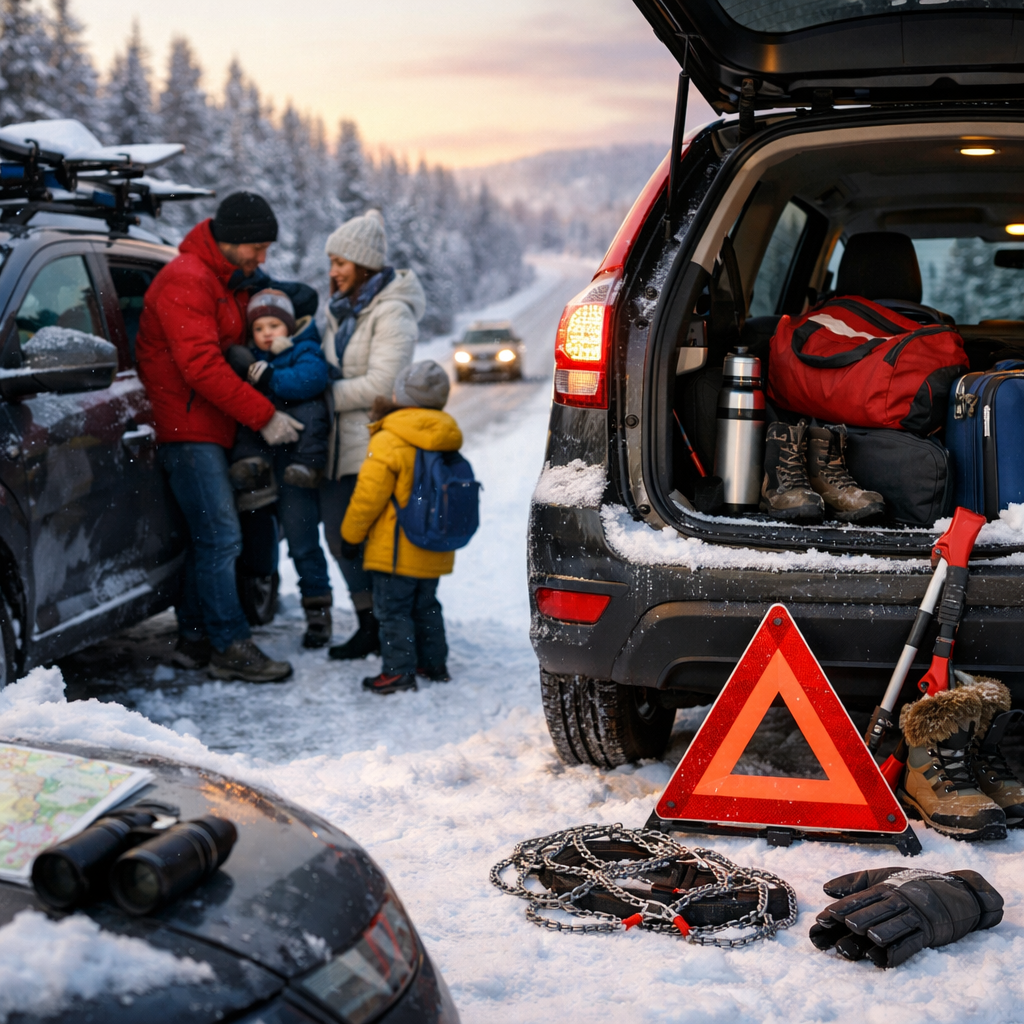
Emergency kit essentials for winter road trip safety for families
An emergency kit should help you stay warm, visible, fed, and able to communicate while waiting for assistance. Keep the kit easy to reach, not buried under luggage. Review it at the start of each winter season and replace expired or missing items.
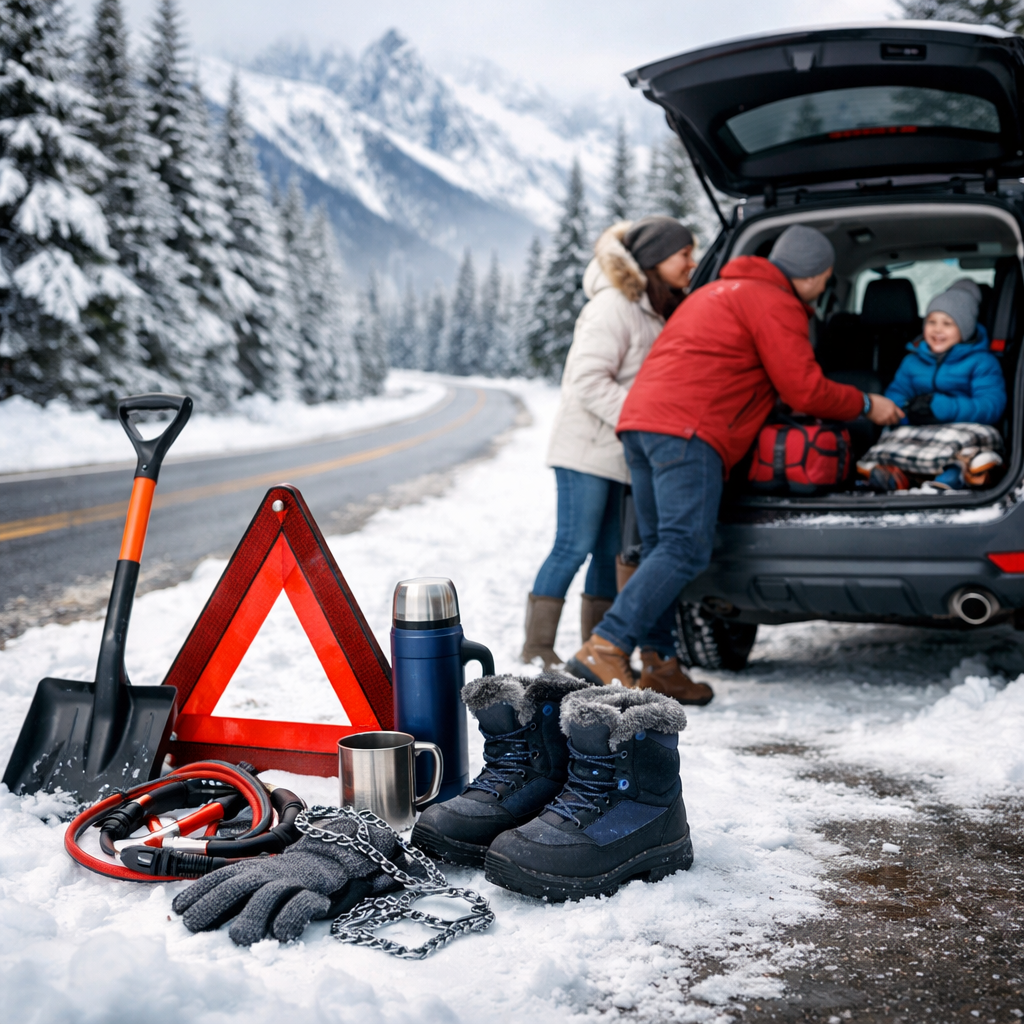
Family winter emergency kit checklist
- Warm blankets or sleeping bags
- Extra hats, mitts, socks, and layered clothing for each person
- Non-perishable snacks and drinking water
- Phone charger, charging cable, and power bank
- Flashlight with fresh batteries
- Small shovel and ice scraper/brush
- Traction aid such as sand, salt, or approved traction material
- Jumper cables, if suitable for your vehicle
- First aid kit and regularly used medications
- Reflective vest or other high-visibility item
- Paper towel, tissues, and garbage bags
- Child-specific supplies such as diapers, wipes, formula, or comfort items where needed
This checklist supports winter road trip safety for families because it covers both roadside hazards and family comfort. Young children get cold quickly, and delays are easier to manage when food, warmth, and familiar items are available.
Keep child car seats and booster seats installed and used according to manufacturer instructions. Bulky winter coats can affect harness fit, so check for safe, secure positioning before departure. If you need health and injury prevention guidance for children and youth, Parachute and Health Canada are appropriate places to start.
On-the-road habits that improve winter road trip safety for families
Safe winter travel depends on decisions made during the drive as much as the items packed beforehand. Build extra time into the trip so the driver never feels pressure to speed, pass aggressively, or continue in deteriorating weather.
Smart driving practices for winter conditions
- Clear all windows, mirrors, lights, and the roof before moving the vehicle.
- Drive smoothly with gentle steering, braking, and acceleration.
- Increase following distance because stopping distances are longer on snow and ice.
- Slow down for bridges, ramps, shaded areas, and rural roads where ice may form first.
- Use headlights appropriately so your vehicle is visible in low-light and blowing snow.
- Take breaks to reduce fatigue, especially on long holiday or school travel days.
- Watch for changing conditions and turn back or stop safely if the trip no longer feels manageable.
If your vehicle becomes stuck or stranded, stay calm and follow local guidance where applicable. In many cases, staying with the vehicle is safer than walking in severe cold or poor visibility. Make sure the exhaust area remains clear of snow, use hazard lights when appropriate, and conserve battery power where possible.
Short actionable checklist before every winter family drive
- Check weather and road conditions.
- Fuel up or fully charge the vehicle.
- Inspect tires, lights, wipers, and washer fluid.
- Pack the emergency kit and children’s essentials.
- Share your route and expected arrival time.
- Leave early enough to drive at a safe pace.
Winter road trip safety for families is not about fear. It is about reducing predictable risks with practical steps that protect drivers, children, students, and passengers. A well-maintained vehicle, a stocked emergency kit, and a willingness to delay travel when needed can make winter journeys safer and less stressful. Before your next trip, use this checklist, review manufacturer guidance, and follow local school, workplace, road, or emergency instructions where applicable. That simple routine is one of the most effective ways to support winter road trip safety for families all season long.
No comments yet