
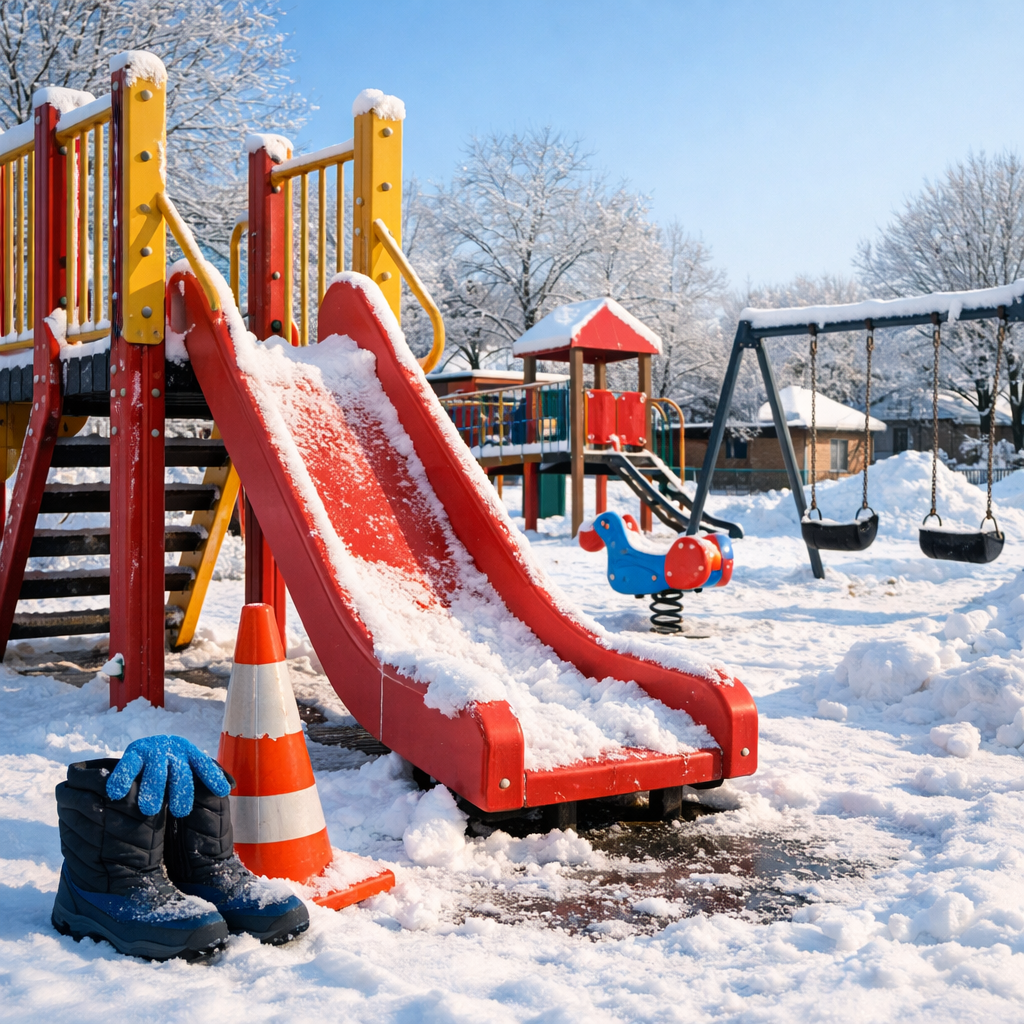

Winter playground safety starts before children zip up their coats and head outside. In Canadian winters, a playground can change quickly from a safe play space to one with hidden ice, packed snow, cold metal surfaces, reduced visibility, and slippery walkways. For parents, schools, caregivers, and supervisors, a few practical checks before outdoor play can lower the chance of slips, falls, cold-related problems, and unsafe equipment use.
Outdoor play still matters in winter. It supports movement, social time, and fresh air, but safe play depends on conditions, clothing, supervision, and the state of the equipment. A calm, prevention-focused routine helps adults decide whether children can play safely, which areas should be avoided, and when outdoor time should be shortened or moved indoors.
Why winter playground safety needs a seasonal check
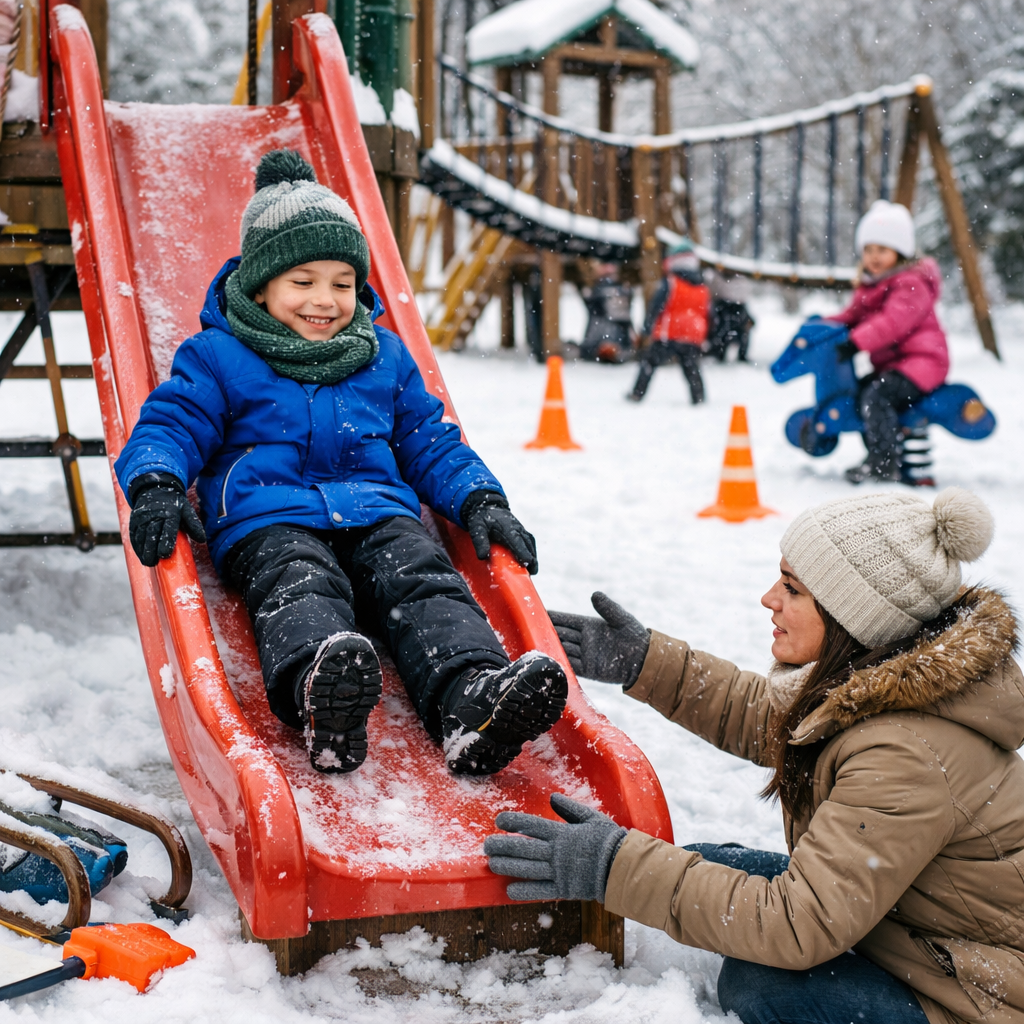
Winter changes the way playground hazards appear. A surface that was stable in fall may become icy after freezing rain. Steps, ramps, platforms, and transfer points can be harder to use when boots track in snow. Slides, ladders, handrails, and monkey bars may be extremely cold to the touch, especially for children who remove gloves or wear wet mittens.
Supervisors should also remember that children may take more risks when excited by snow, sled-like sliding, or rough play. Snowbanks can hide edges, drainage dips, and hard objects. Visibility may be reduced during active snowfall or early winter afternoons when it gets dark sooner. In school and child care settings, winter playground safety works best when daily outdoor checks are part of routine site inspection and supervision planning.
For general Canadian health and safety guidance, organizations such as CCOHS, the Government of Ontario, and Parachute can support broader prevention planning. Schools and workplaces can also review practical safety resources at OHSE.ca.
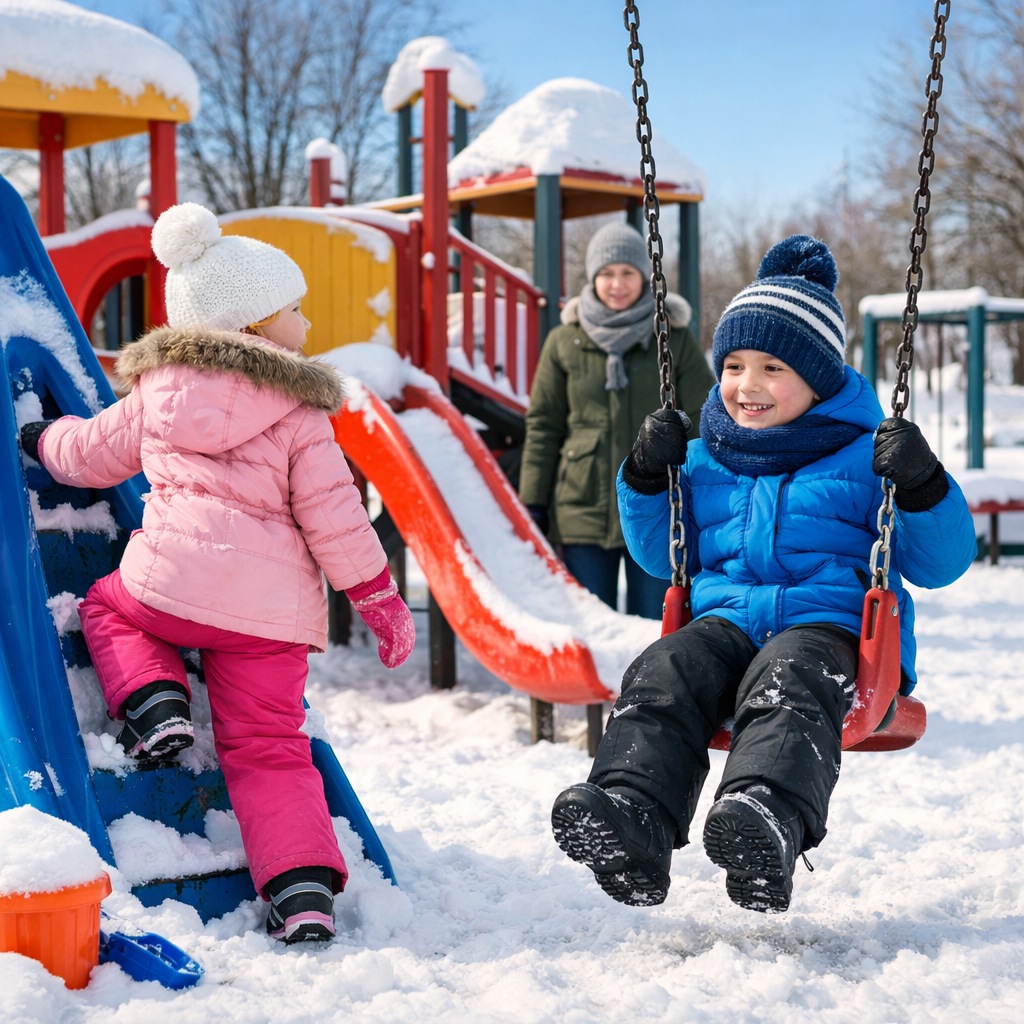
Essential winter playground safety checks before outdoor play
Inspect surfaces, access points, and fall zones
Start with the route to the playground. Sidewalks, schoolyard entrances, gates, and paved paths should be checked for black ice, drifting snow, slush, and pooled water that may refreeze. If children cannot reach the play area safely, the playground itself is not ready for use.
Once at the site, inspect high-traffic areas such as stairs, ramps, bridges, platforms, and the ground beneath climbers and swings. Packed snow can harden landing areas and reduce impact absorption. Ice in fall zones is a strong signal to block access until the area is cleared or conditions improve.
Check equipment condition in cold weather
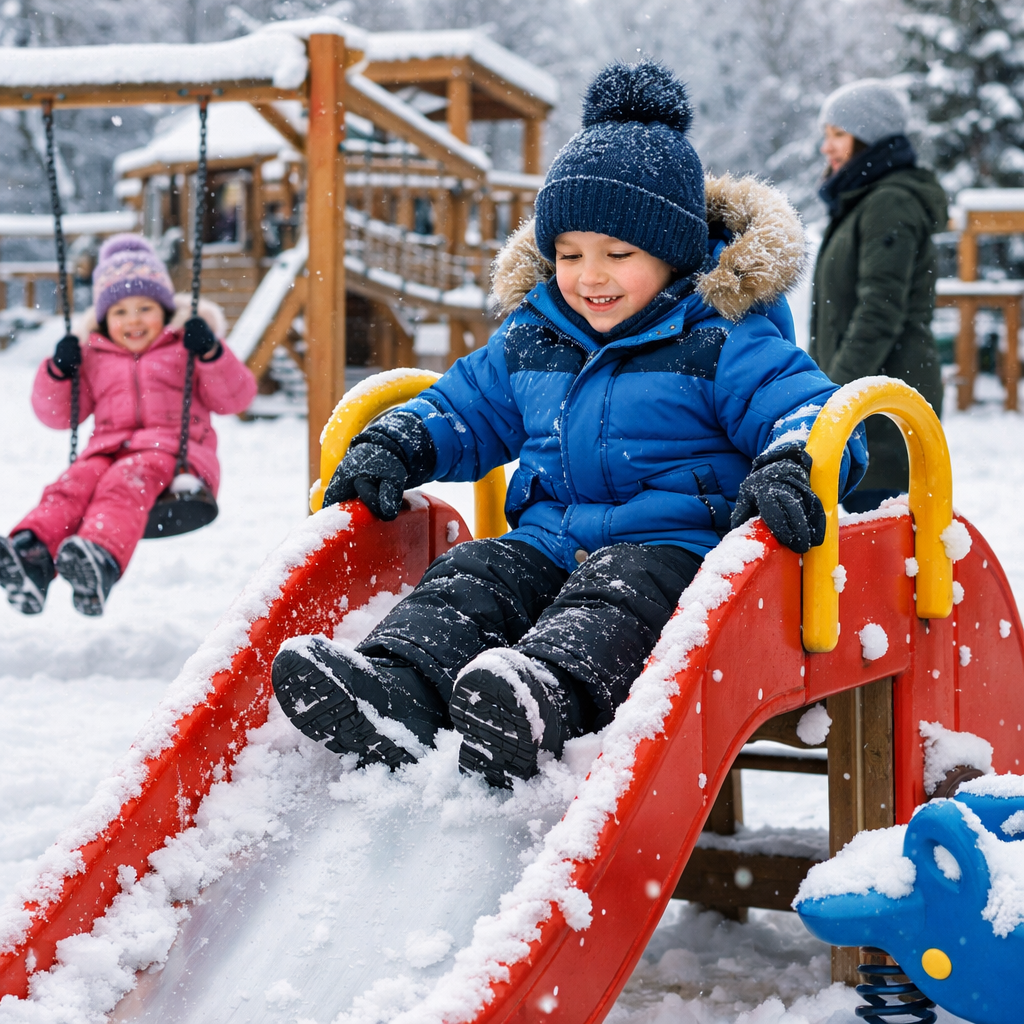
Cold temperatures can affect equipment use. Look for cracked plastic, loose hardware, icy chains, frozen moving parts, and metal surfaces that may be too cold for bare skin. Slides should be checked for ice buildup and snow compaction at the bottom exit area. Swings need enough clearance and a stable surface under and around them.
If any piece of equipment cannot be used safely, restrict access rather than relying on verbal reminders alone. This reflects a simple hierarchy of controls approach: remove the hazard where possible, isolate the area if needed, and support safe behaviour with supervision and clear instructions.
Review weather and exposure time
Winter playground safety is not only about equipment. It also depends on current weather and how long children will be outside. Wind, wet snow, freezing rain, and extreme cold can turn a normal recess into an exposure concern. Local school board rules, site procedures, and manufacturer guidance should always be followed.
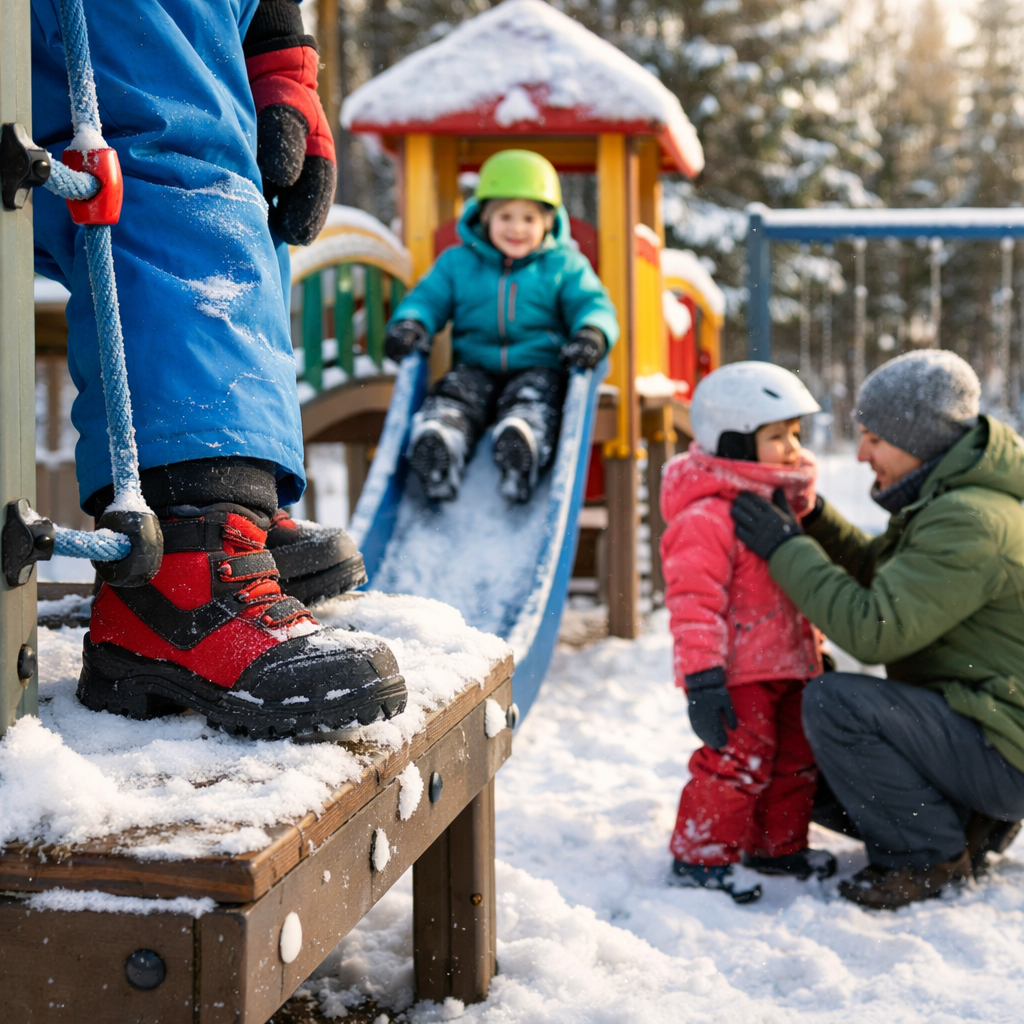
Adults should watch for signs that conditions are changing quickly, such as wet gloves, poor visibility, increased slipping, or children complaining that exposed skin hurts. Shorter play periods, rotating groups, or keeping children to lower-risk areas may be the safer choice.
- Check for ice on paths, stairs, ramps, and under equipment.
- Remove or isolate hazards that cannot be corrected right away.
- Confirm that visibility is good enough for active supervision.
- Limit access to steep, crowded, or poorly maintained areas.
- Adjust outdoor time when cold, wind, or wet conditions increase risk.
Clothing, supervision, and behaviour rules that support winter playground safety
Dress children for movement, warmth, and visibility
Proper winter clothing helps prevent both cold stress and avoidable falls. Children should have boots with good traction, mittens or gloves, a hat, and layers that stay warm if slightly damp. Scarves, loose drawstrings, and cords around the neck area can create entanglement hazards on playground equipment, so schools and families should choose safer alternatives where possible.
Wet clothing can quickly reduce comfort and safe play time. Supervisors should consider whether younger children have spare mittens, socks, or other backup items if outdoor periods are part of the school day. In Ontario and across Canada, this is especially useful during freeze-thaw conditions when snow becomes slush.
Use active supervision and simple winter rules
Children need clear reminders that winter play is different from summer play. Running on icy pavement, pushing on elevated equipment, climbing on snowbanks beside structures, or licking frozen metal are all behaviours that should be addressed before outdoor time begins. Winter playground safety improves when rules are short, repeated often, and matched to the age of the group.
Supervisors should position themselves where they can see entrances, high-use equipment, and any area with known seasonal hazards. In school environments, communication between staff matters too. If one part of the yard is restricted, everyone supervising should know that before recess starts.
| Check Area | What to Look For | Action |
|---|---|---|
| Walkways and gates | Ice, slush, blocked access, poor traction | Clear, sand where appropriate, or restrict access |
| Equipment surfaces | Ice, cracked parts, frozen chains, very cold metal | Inspect, clean, close unsafe equipment |
| Ground and fall zones | Hardened snow, hidden objects, uneven surfaces | Rake, clear, mark hazards, or keep children away |
| Children’s clothing | Loose cords, wet gloves, poor footwear, missing layers | Adjust clothing or shorten outdoor time |
A short actionable checklist for schools and families
A simple routine can make winter playground safety easier to manage on busy mornings. Whether you are a parent sending a child to school, an educator supervising recess, or a community group opening an outdoor play area, use a quick check before children go outside.
- Look: Scan the whole play space for ice, snow buildup, blocked exits, and hidden hazards.
- Touch carefully: Check whether rails, seats, chains, or slides are icy or dangerously cold.
- Test access: Walk the route children will use, including stairs, gates, and paved approaches.
- Check clothing: Make sure boots fit properly, gloves are dry, and no loose drawstrings create a snag risk.
- Set limits: Close unsafe areas and explain simple rules before play starts.
- Supervise actively: Watch high-risk areas and reassess if weather worsens.
Where schools or youth programs include staff responsibilities for outdoor inspections, basic safety education can help supervisors recognize winter hazards more consistently. For organizations that need broader training support, OHSE learning resources may be useful alongside local policies and procedures.
When to delay play and when to reassess the area
Sometimes the safest choice is to postpone outdoor play. Freezing rain, widespread black ice, severe wind, poor visibility, damaged equipment, or inaccessible walkways can all justify delaying or cancelling playground use. This is especially important for younger children, mixed-age groups, or settings where supervision ratios make close monitoring difficult.
Conditions should also be reassessed after maintenance work, heavy use, or changing weather through the day. Morning inspections are helpful, but they are not enough if snow begins melting and refreezing by lunchtime. A site that was safe earlier may no longer meet the same standard later in the day.
Winter playground safety depends on consistent checks, practical clothing, active supervision, and a willingness to close unsafe areas when needed. With a simple routine and clear communication, Canadian families and schools can support outdoor play while reducing preventable winter hazards. Always follow local school rules, manufacturer instructions, and site-specific emergency or maintenance guidance where applicable.
No comments yet