


Workshop safety for students starts with simple habits, clear supervision, and respect for every tool in the room.
Whether a student is using a hand saw in a school shop, a glue gun in a technology class, or a drill during a co-op placement, the same principle applies: the job is only successful when it is done safely.
For Canadian schools and families, a safe workshop is not about fear. It is about preparation, attention, and following instructions every time. Students learn best when rules are practical and consistent, and when teachers, parents, and supervisors reinforce the same expectations at school and at home.
This guide explains the essential rules for tools and equipment, the hazards students should recognize, and the daily habits that help prevent injuries. It also reflects a practical Ontario and Canadian approach: follow school procedures, use equipment as trained, and refer to trusted safety guidance such as CCOHS, Ontario government resources, and workplace-specific instructions where applicable.
Workshop safety for students begins before any tool is used
Many workshop incidents happen before cutting, drilling, sanding, or lifting even begins. A student may be distracted, wearing the wrong clothing, rushing to finish, or using equipment without understanding the task.
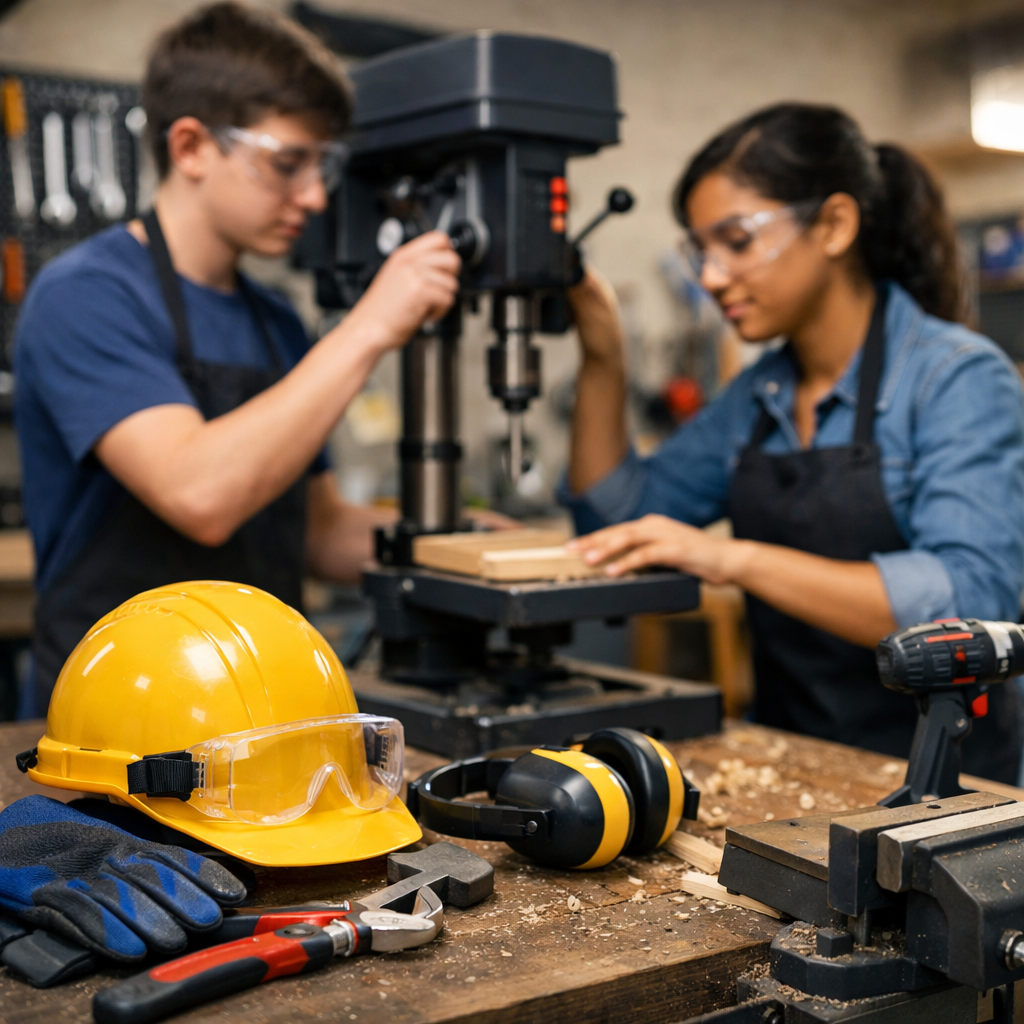
That is why the first rule of workshop safety for students is to pause and prepare.
Know the task and ask questions
Students should never use a tool or machine unless they have been shown how to use it correctly and have permission to do so. If the purpose of the tool, the setup, or the material is unclear, the safest choice is to stop and ask.
Instructions matter because even common tools can become dangerous when used the wrong way. A loose workpiece, the wrong blade, or a poor grip can quickly create a risk.
Dress for the workshop
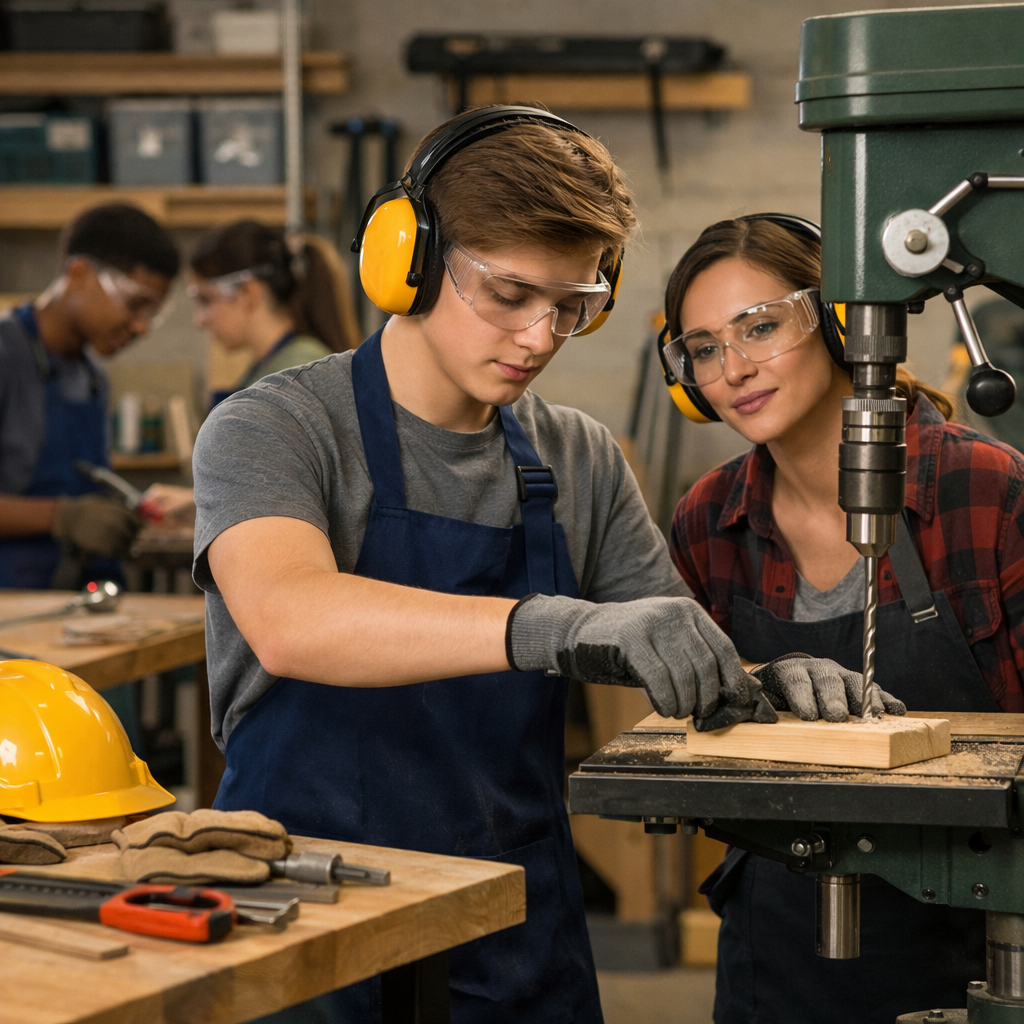
Proper clothing is one of the simplest forms of prevention. In most school shops, students should wear close-fitting clothing, tie back long hair, and remove loose jewelry. Closed-toe footwear is usually essential. Depending on the task, eye protection, hearing protection, gloves, or respiratory protection may also be required by the teacher or supervisor.
Students should use only the personal protective equipment provided or approved for that activity, and they should be shown how to wear it correctly. PPE is important, but it is not the first line of defence. Good setup, good training, and safe equipment come first.

Inspect the space and equipment
Before starting work, students should check that the area is tidy, well lit, and free of tripping hazards. Tools should be in good condition, guards should be in place where required, and damaged cords or cracked handles should be reported immediately.
In a school workshop or a placement setting, students should never try to repair equipment on their own unless that is part of approved training and they are supervised to do so.
Essential workshop safety for students when using tools and equipment
Once work begins, students need clear rules they can remember under pressure. Safe behaviour should be steady and predictable, especially around sharp edges, rotating parts, heat, dust, and electricity.
Core rules every student should follow
- Use the right tool for the job. Do not substitute one tool for another.
- Follow instructions exactly. Use tools only as demonstrated by the teacher or supervisor.
- Keep guards and safety devices in place. Never remove, block, or bypass them.
- Secure the material. Clamp or hold work properly before cutting, drilling, or sanding.
- Keep hands clear. Maintain a safe distance from blades, bits, pinch points, and hot surfaces.
- Work at a controlled pace. Rushing increases mistakes and reduces awareness.
- Stay focused. No horseplay, distraction, or phone use while operating tools or equipment.
- Shut equipment off before adjustments. Disconnect power when changing blades, bits, or attachments if required by instructions.
- Report problems right away. Stop using any tool that seems damaged, loose, overheated, or unusual.
Hand tools and power tools require different caution
Hand tools may seem less serious than power tools, but improper use can still cause cuts, punctures, strains, and eye injuries. Students should carry sharp tools carefully, cut away from the body where appropriate, and return tools to storage when not in use.
Power tools add more risk because of speed, force, heat, and electrical hazards. Students should wait for moving parts to stop completely before setting a tool down. Cords should be kept away from the cutting path, and battery-powered tools should be handled with the same care as corded ones.
| Tool or Equipment Type | Common Student Risk | Safe Practice |
|---|---|---|
| Hand tools | Cuts, slips, pinched fingers | Use the correct tool, maintain grip, store safely after use |
| Power drills and drivers | Entanglement, flying debris, loss of control | Secure material, wear eye protection, keep loose items away |
| Saws and cutting equipment | Severe cuts, kickback, contact with blade | Follow training, use guards, keep hands outside danger zone |
| Sanders and grinders | Dust, abrasion, sparks, noise | Use ventilation if provided, wear PPE, hold work securely |
| Hot tools or glue guns | Burns, fire risk | Use stands, allow cooling time, keep area clear |
Hazards, controls, and supervision in school workshops
Good safety teaching does more than list rules. It helps students understand hazards and how to control them. In practical terms, that means recognizing what could cause harm and reducing the risk before work starts.
The Hierarchy of Controls is useful here. If a hazard can be removed, that is stronger than relying only on PPE. In a student workshop, schools may eliminate certain tasks for younger learners, substitute safer materials, install guards or ventilation, create procedures, limit access, and then add PPE as the final layer.
Examples of common workshop hazards
- Sharp blades, points, and edges
- Rotating or moving machine parts
- Dust, fumes, or poor ventilation
- Noise and vibration
- Electricity and damaged cords
- Heat, sparks, and flammable materials
- Poor housekeeping, spills, and clutter
- Manual handling and awkward lifting
Why supervision matters
Students are still learning judgment, so supervision is a core part of workshop safety for students. Teachers, shop instructors, and workplace mentors should confirm that students are trained, authorized, and monitored for the tools they use.
Parents can support this by reinforcing that safety rules are not optional and that confidence should never replace instruction. A student who feels unsure should be encouraged to speak up early, not improvise.
For schools and young workers looking for practical safety learning, OHSE training resources and guidance from OHSE.ca can help build consistent habits and awareness.
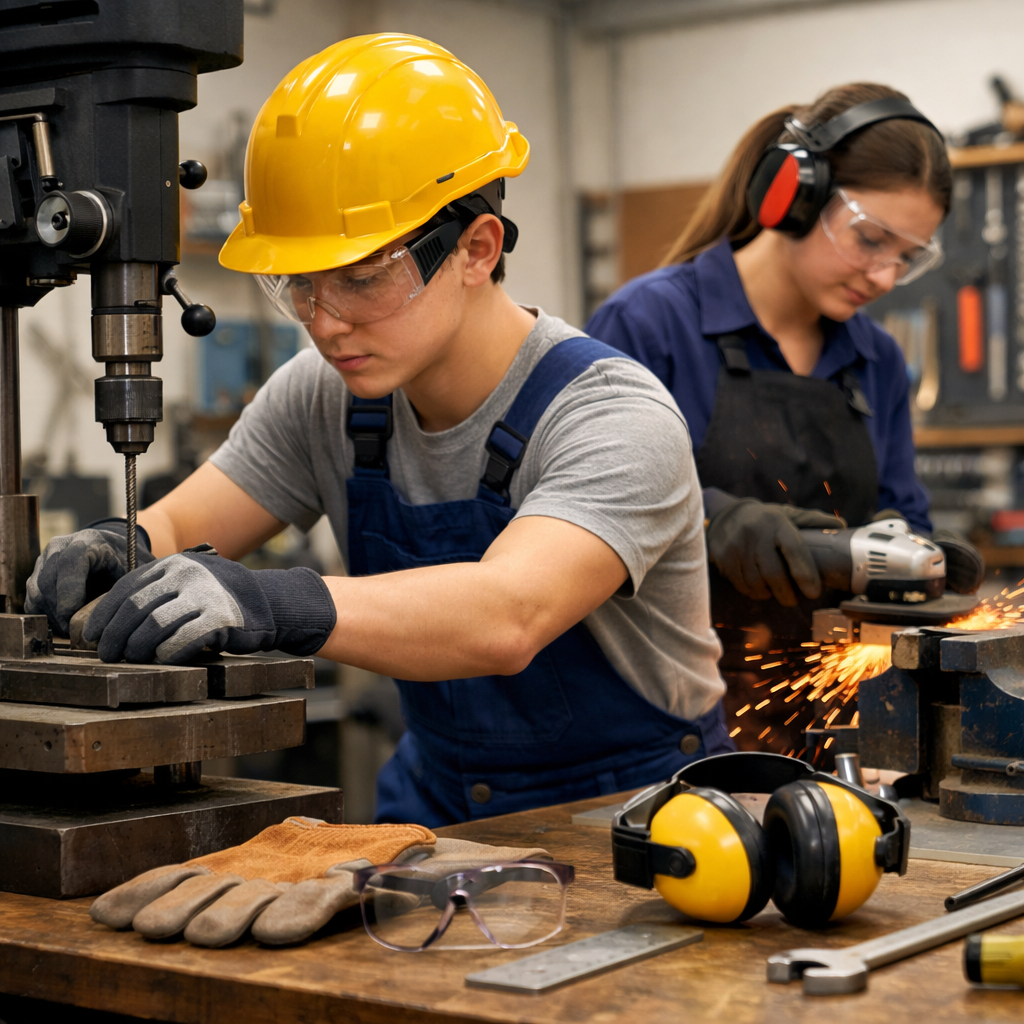
Practical workshop safety for students: daily checklist and emergency readiness
A short routine can make safety easier to remember. Students do not need a long speech before every task. They need a repeatable checklist that becomes second nature.
Short actionable checklist
- Do I understand the task and have permission to do it?
- Am I wearing the right clothing and required PPE?
- Is the tool in good condition and set up correctly?
- Is my work area clean, stable, and well lit?
- Is the material secured before I start?
- Do I know where to stop the equipment if something goes wrong?
- Am I focused, calm, and free from distractions?
If something goes wrong
Students should know the workshop procedure for damaged tools, spills, sparks, minor cuts, eye exposure, or any near miss. The correct response is usually to stop work, shut down the tool if safe to do so, alert the teacher or supervisor immediately, and follow local school, workplace, manufacturer, or emergency guidance.
Students should not hide mistakes or injuries because they seem small. Early reporting helps prevent a minor issue from becoming a more serious one. Schools may also refer to broader guidance from Health Canada or injury prevention resources such as Parachute where relevant.
Workshop safety for students is ultimately about building safe habits that last beyond one class or one semester.
When students learn to prepare properly, use tools as trained, respect guards and procedures, and ask for help when unsure, they protect themselves and the people around them. For Canadian schools, families, and young workers, that is the real goal: confident learning supported by calm, practical prevention. By keeping workshop safety for students at the centre of every project, students can develop skills with tools and equipment while reducing avoidable risk.
No comments yet