
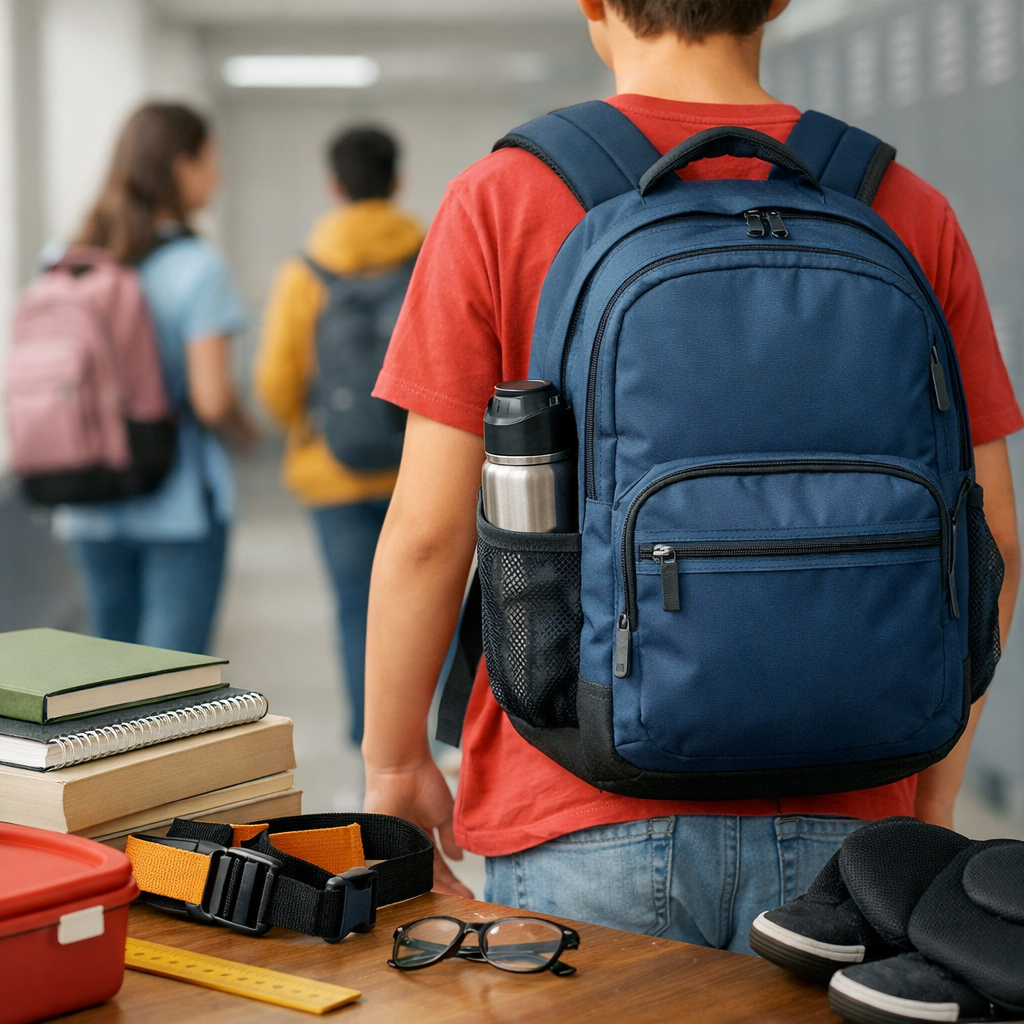

Backpack safety for students starts with a simple idea: a backpack should help carry school supplies, not create daily strain on the back, shoulders, or neck.
For students in Canada, heavy books, laptops, water bottles, sports gear, and lunch bags can turn a normal school day into a source of discomfort if a backpack fits poorly or is packed carelessly.
A practical approach focuses on fit, load, and habits. When families and schools pay attention to how a backpack is selected, adjusted, lifted, and worn, students are better able to move safely between home, school, transit, and after-school activities. This article explains how to improve backpack safety for students with simple prevention-focused steps that work in everyday life.
Why backpack safety for students matters every day
Students often carry their backpacks for longer than adults realize. Walking to school, climbing stairs, standing at bus stops, moving through hallways, and carrying devices between classes all add time under load.
If the backpack is too heavy, hangs too low, or puts pressure on one side of the body, a student may lean forward, shrug one shoulder, or twist while walking. Over time, that can contribute to soreness, fatigue, and poor carrying habits.
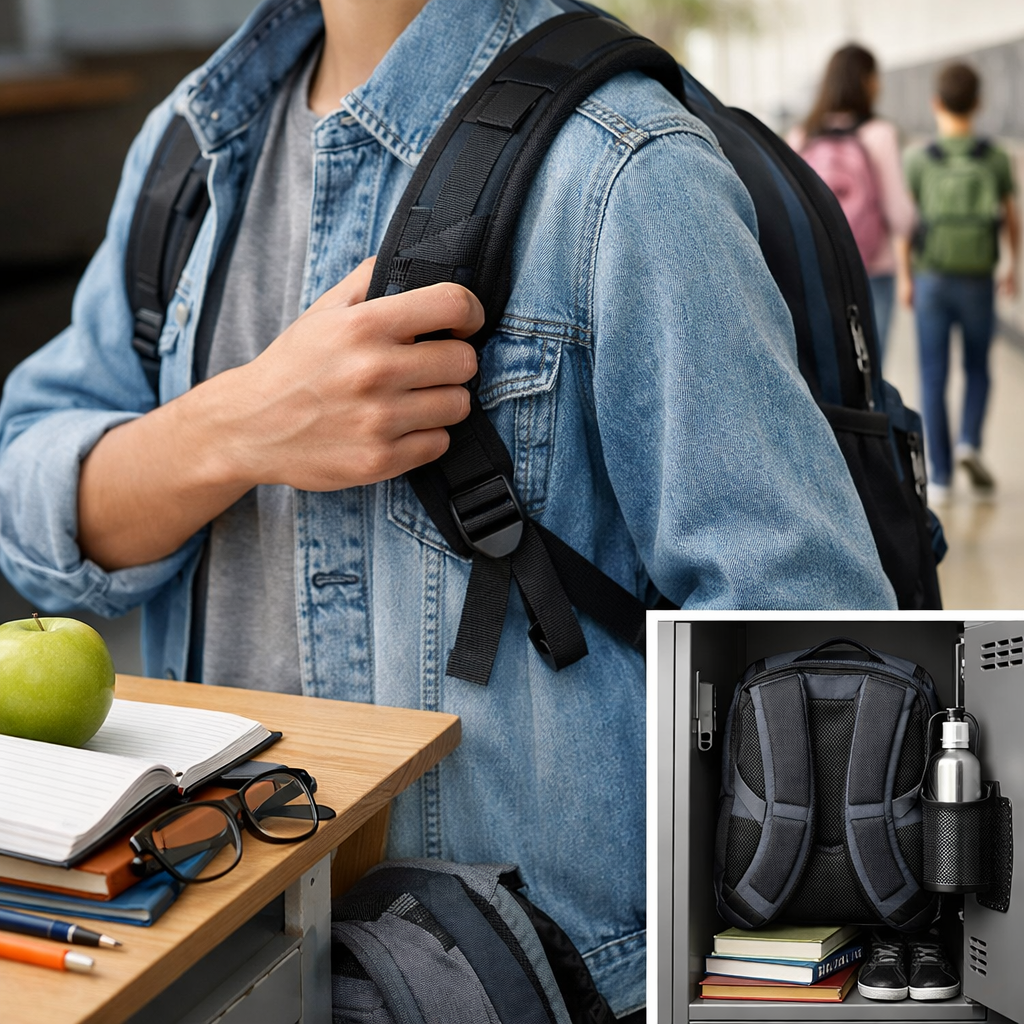
Backpack safety for students is also an important school and family safety topic because prevention is realistic. Unlike many risks that require specialized equipment, backpack-related strain can often be reduced through better selection, packing, and daily routines.
In Ontario and across Canada, general health and safety guidance from organizations such as the Canadian Centre for Occupational Health and Safety, Ontario.ca, and Parachute supports practical injury prevention. For schools, this fits well with broader efforts to reduce strain, slips, trips, and awkward carrying tasks on school property.
Choose the right bag for backpack safety for students
Look for fit before style
A good backpack should match the student’s size, not just their storage needs. A bag that is too large encourages overpacking and may shift while walking. A bag that is too small may force items into uneven positions or leave sharp edges pressing into the back.
Key features that support backpack safety for students include wide, padded shoulder straps, a padded back panel, multiple compartments, and an adjustable waist or chest strap where appropriate. These features help spread the load and keep the bag more stable.
How the backpack should sit
The backpack should sit close to the body and rest in the middle of the back rather than sagging low near the hips. Shoulder straps should be adjusted evenly so the backpack does not pull more to one side.
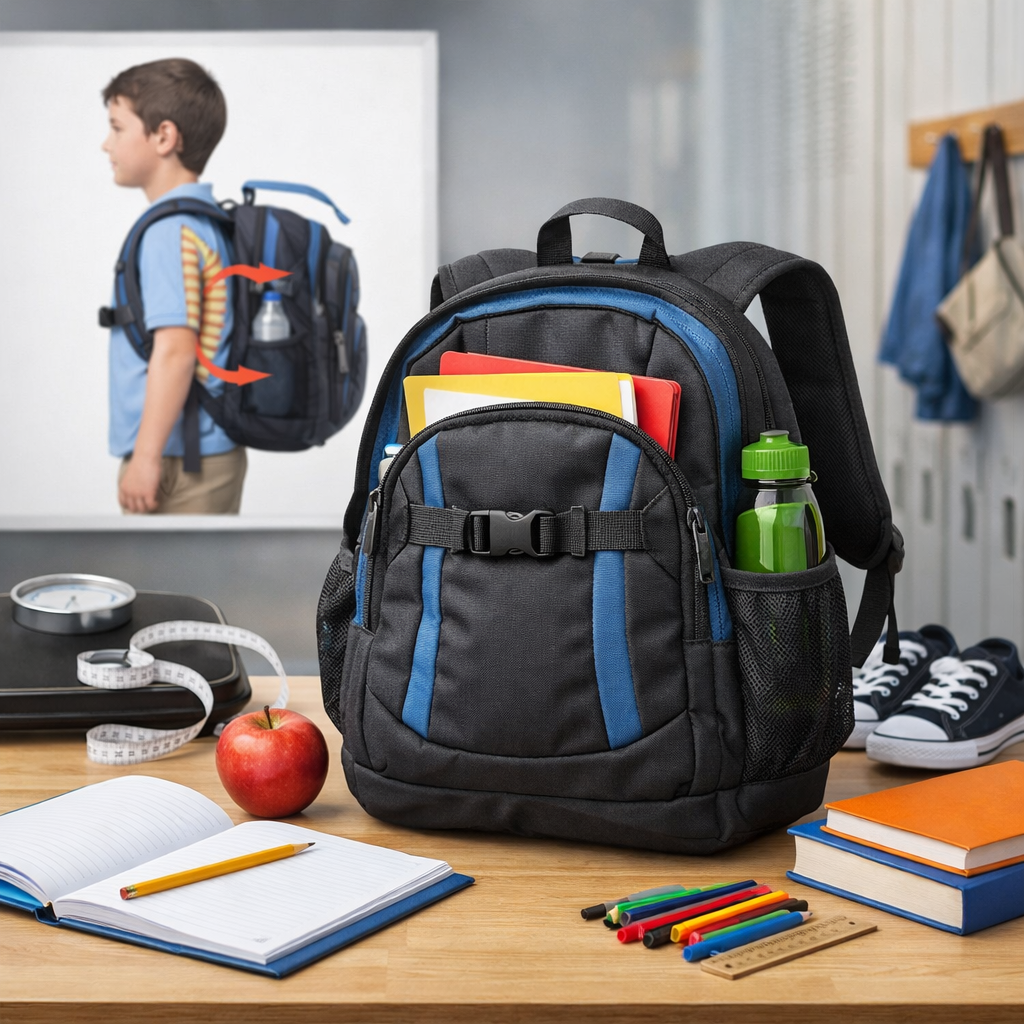
Students should use both shoulder straps. Carrying a backpack over one shoulder may be common, but it creates uneven loading and can lead to awkward posture.
- Choose a backpack proportionate to the student’s torso.
- Prefer two wide, padded shoulder straps.
- Use compartments to organize weight evenly.
- Adjust straps so the bag stays close to the back.
- Use waist or chest straps if the design includes them.
- Replace damaged backpacks with torn straps, broken zippers, or poor support.
Families looking for more everyday prevention information can also explore practical safety resources at OHSE.ca.
Pack smarter to reduce strain and improve load control
Keep only what is needed
One of the most effective ways to improve backpack safety for students is to reduce what goes into the bag in the first place. Students should empty their backpacks regularly and remove old papers, unused gym gear, extra chargers, or duplicate supplies.
When possible, heavier materials should be stored at school, kept in a locker if available, or carried only on the days they are needed. Digital planning, classroom organization, and teacher communication can also help reduce unnecessary load.
Place heavy items properly
Heavier items should be packed closest to the back panel. This helps keep the centre of gravity closer to the body and reduces pulling on the shoulders. Lighter or softer items can go in outer compartments.
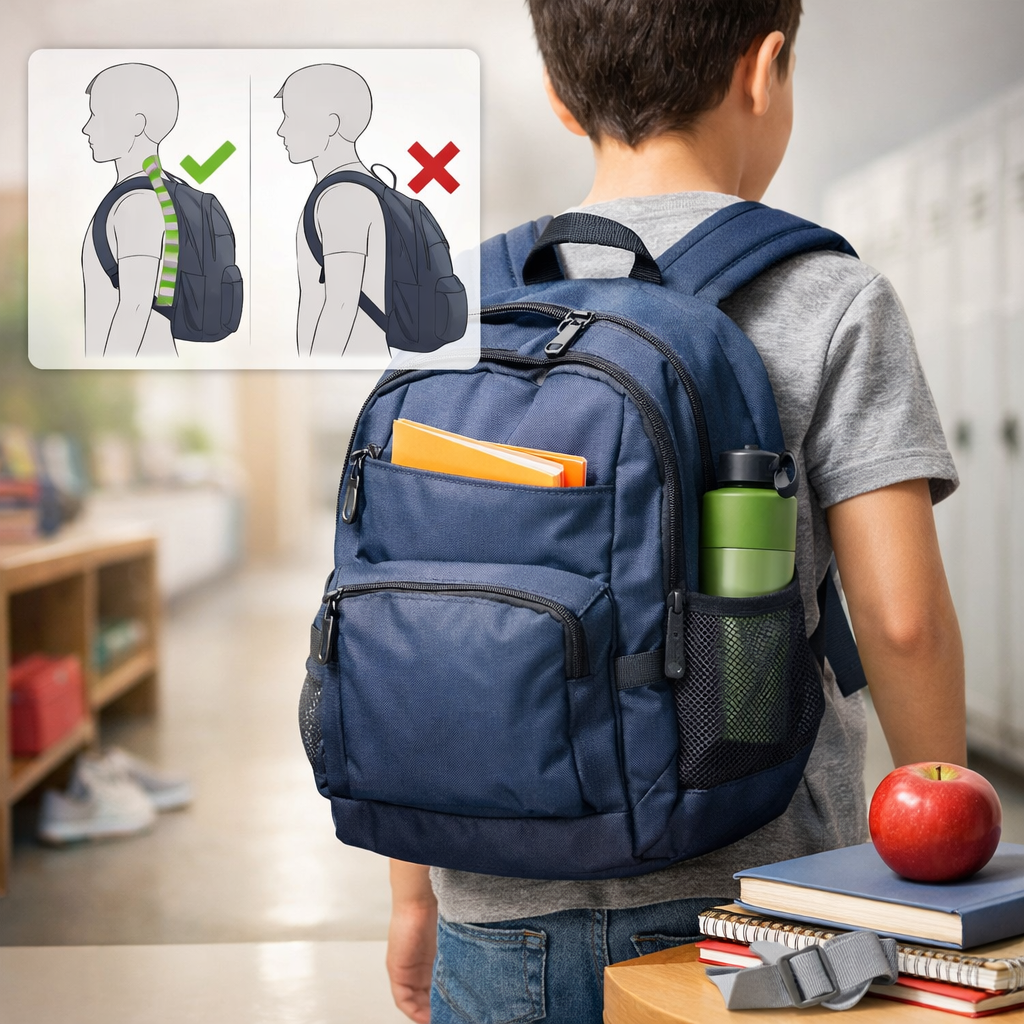
Sharp-edged objects, bulky binders, or poorly packed devices can create pressure points. A laptop sleeve, folder, or padded compartment can make the bag more comfortable and stable.
| Item type | Best placement | Reason |
|---|---|---|
| Textbooks or laptops | Closest to the back | Improves balance and reduces pulling |
| Lunch bag or clothing | Middle section | Adds cushioning and helps organization |
| Small supplies | Outer pockets | Keeps essentials accessible without shifting major weight |
| Water bottle | Secure side pocket if balanced | Prevents leaks and limits movement inside the bag |
For older students in co-op placements, trades programs, or part-time work, these same principles apply to tool bags, computer bags, and personal gear. Good load control is part of practical hazard prevention.
Daily habits that support backpack safety for students
Lift and put on the backpack carefully
Even a well-packed bag can cause problems if it is lifted awkwardly. Students should bend at the knees when picking up a heavy backpack from the floor and avoid twisting while lifting it onto the shoulders.
Placing the backpack on a desk, bench, or chair before putting it on can reduce strain. This is especially useful for younger students or anyone carrying a fuller load.
Watch posture and warning signs
Backpack safety for students includes paying attention to body position during normal use. If a student leans forward to compensate for the load, struggles to put the bag on, or complains about shoulder pressure, the backpack setup should be reviewed.
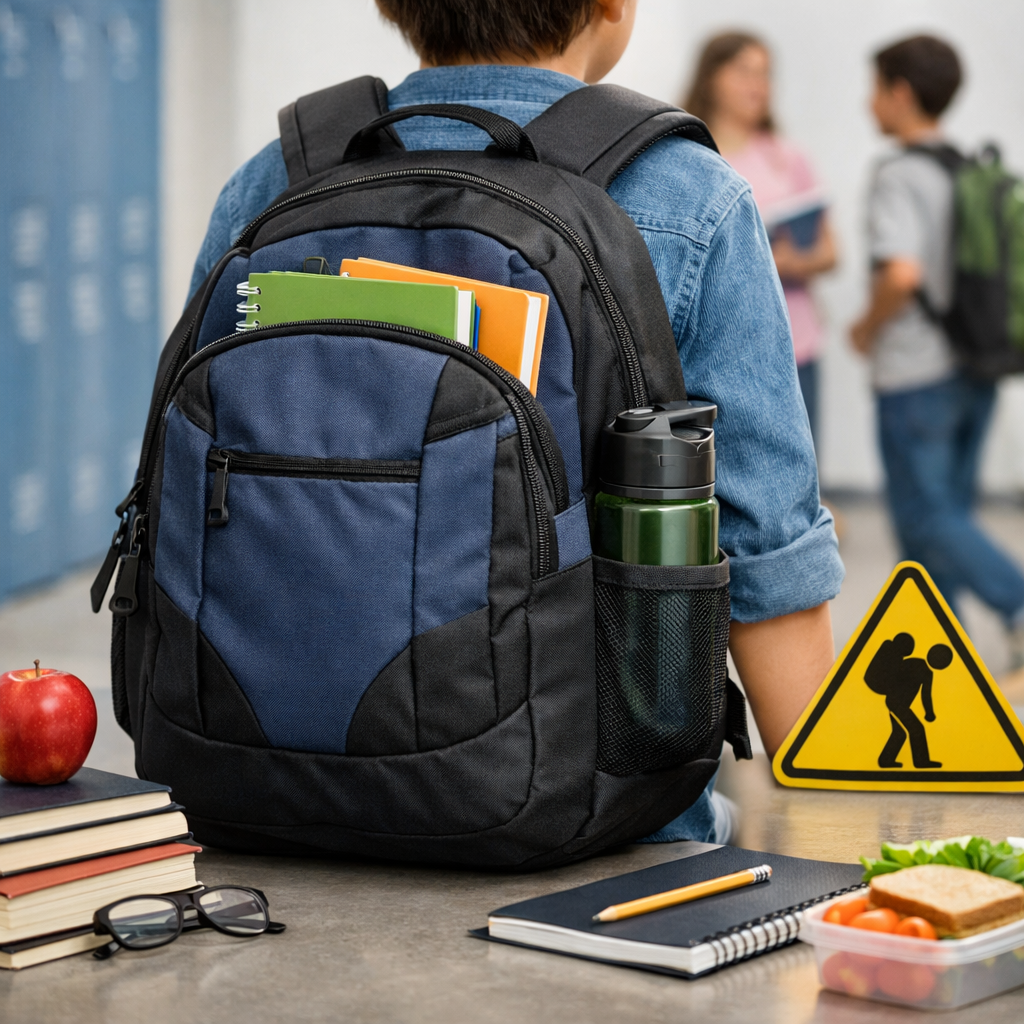
Parents, caregivers, teachers, and school staff can watch for signs such as red strap marks, frequent shifting of the bag, one-shoulder carrying, or regular complaints of discomfort after the school day. These are practical cues that the fit or load may need adjustment.
- Use both shoulder straps every time.
- Tighten straps so the bag does not hang low.
- Lift with care and avoid twisting.
- Clean out the backpack weekly.
- Check for wear, broken seams, or weak straps.
- Follow school and manufacturer guidance for use and weight management.
Where schools provide safety education, this topic can fit naturally into orientation, student well-being discussions, or young worker readiness materials. Training resources may also be helpful through learn.ohse.ca.
A short backpack safety for students checklist for home and school
A short routine makes prevention easier. Families can review the following checklist in a minute or two before the school week begins.
Actionable checklist
- Does the backpack fit the student’s body size?
- Are both shoulder straps padded and adjusted evenly?
- Is the backpack sitting high enough and close to the back?
- Are the heaviest items packed nearest the back panel?
- Has unnecessary weight been removed?
- Is the student using both straps instead of one?
- Are there signs of discomfort, pressure, or awkward posture?
- Is the backpack in good condition and suitable for the school day?
If discomfort continues, families should reduce the load, reassess fit, and follow local school, workplace, manufacturer, or healthcare guidance where applicable. This article does not replace medical advice or school-specific direction.
Backpack safety for students is most effective when it becomes a routine rather than a one-time reminder. A properly fitted backpack, a lighter and better-organized load, and safer daily habits can make school travel more comfortable and reduce avoidable strain. For Canadian families, schools, and young workers, prevention-focused steps like these support healthier movement and a safer start to every day.
No comments yet