
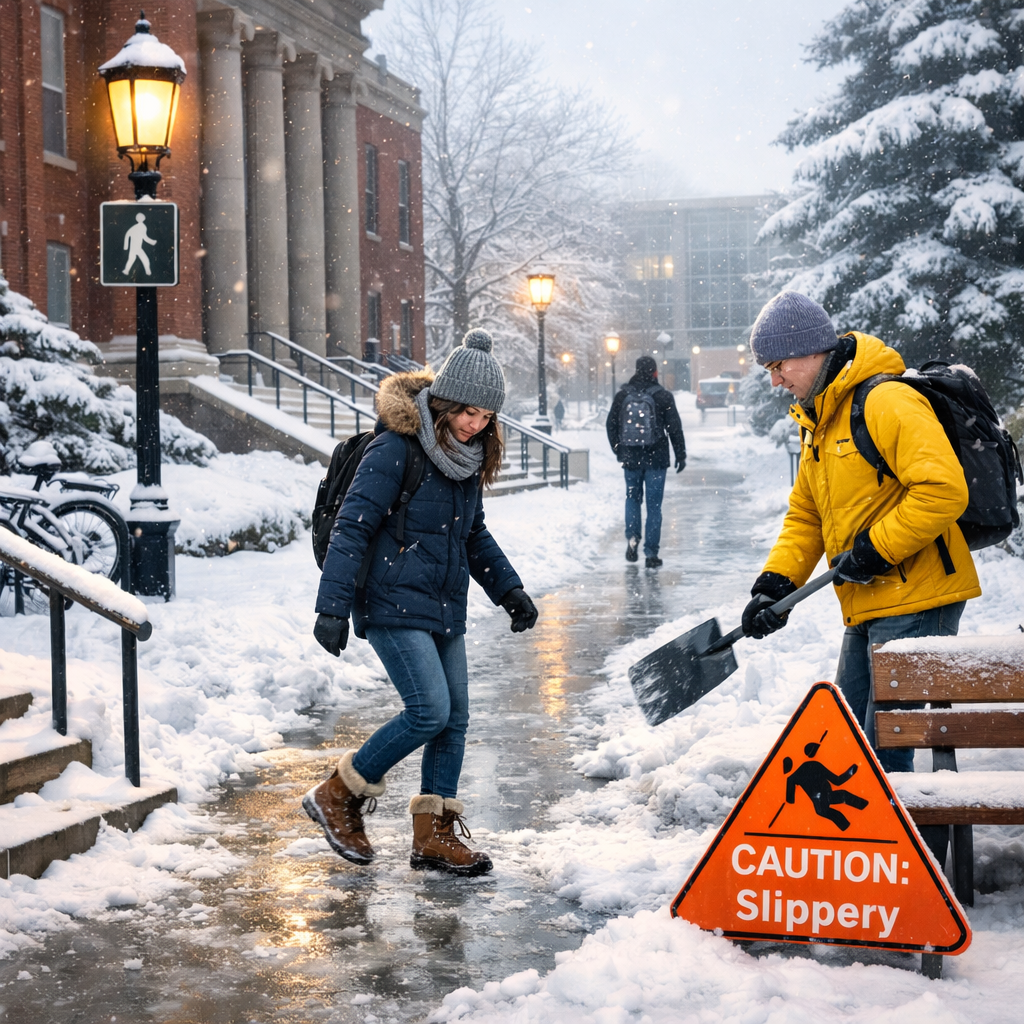

Campus winter safety matters from the moment students leave residence, step off a bus, or walk across an icy parking lot. In Canadian winters, snow, freezing rain, early darkness, and extreme cold can turn a normal school day into a preventable injury risk if students are not prepared.
For college and university students in Ontario and across Canada, winter safety is not just about staying warm. It also means preventing slips and falls, travelling more carefully, protecting devices and batteries in cold weather, and making smart decisions when classes, placements, or part-time work continue during storms. A practical plan helps students stay safer on campus, on transit, and at work. For more general safety resources, students and families can visit OHSE.ca.
Campus Winter Safety Starts Before You Leave Home or Residence
Good winter habits begin before a student heads outside. Check the weather, dress for conditions, and allow extra travel time. Rushing across wet steps or running for a bus often creates more risk than the weather itself.
Layers are usually the best approach in Canadian winters. A base layer that keeps skin dry, a warm middle layer, and a wind- and water-resistant outer layer can help students stay comfortable during long walks between buildings. Gloves, a hat, and insulated footwear also matter, especially when temperatures drop or wind chill becomes severe.
Choose clothing and gear for changing conditions
- Footwear: Wear boots or shoes with good traction and enough grip for snow and slush.
- Outerwear: Choose a coat that protects against wind and moisture, not just cold.
- Visibility: Use reflective details or a light if walking in the dark.
- Bag essentials: Carry gloves, a phone charger, a small snack, and any required medication.
- Backup items: Keep dry socks or indoor shoes in a backpack if long walks are common.
Students living away from home may underestimate how quickly wet clothing and cold hands affect concentration and judgment. Cold stress can build slowly, especially during long waits outdoors. Guidance on cold conditions and workplace health topics is available from CCOHS.
Campus Winter Safety on Walkways, Stairs, Parking Lots, and Residence Areas
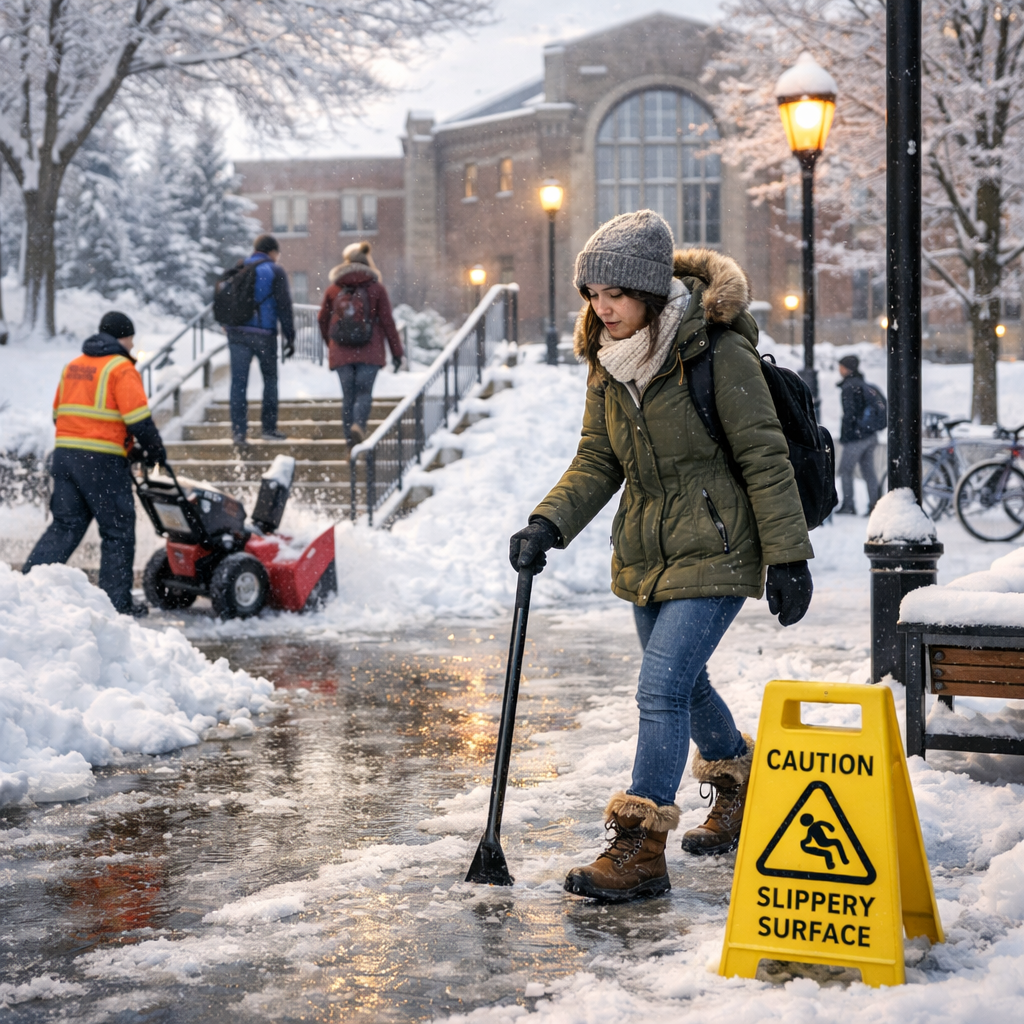
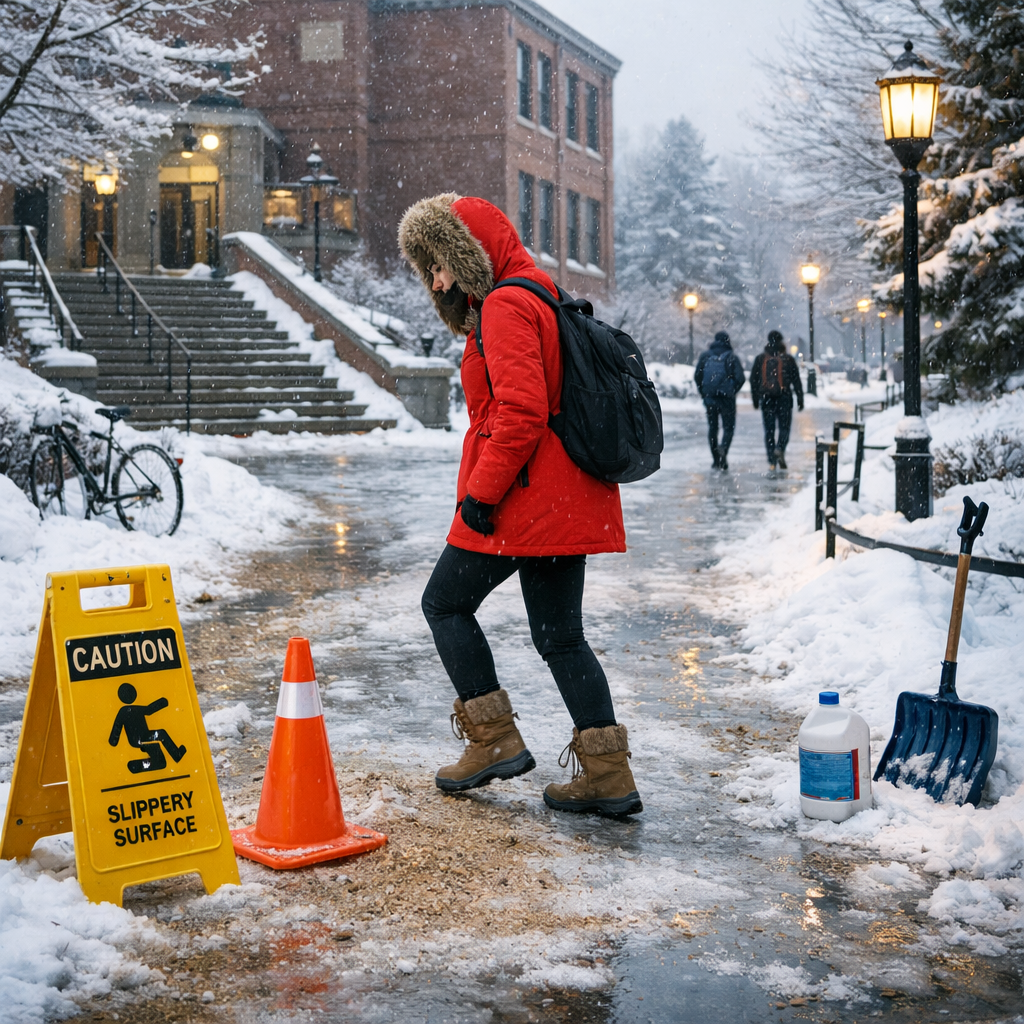
Many winter injuries on campus happen during ordinary movement between classes. Snow can hide uneven pavement, black ice can form near entrances, and slush can make tile floors slippery once students get indoors. Campus winter safety depends on slowing down and staying alert in these transition areas.
Walk, do not run, and keep your hands as free as possible for balance. If you are carrying books, food, or sports equipment, make sure your view of the ground is not blocked. Use marked paths and cleared entrances instead of shortcuts across snowbanks, lawns, or unlit routes.
Reduce slip and fall risk
- Take shorter steps on icy surfaces.
- Use handrails on outdoor stairs and ramps.
- Avoid looking at your phone while walking.
- Wipe footwear carefully when entering buildings.
- Report untreated ice, poor lighting, or blocked exits to campus facilities or residence staff.
Where schools use salting, sanding, snow clearing, floor mats, and warning signs, they are applying practical hazard controls. Students also play a role by noticing hazards early and following posted instructions. If a walkway looks unsafe, choose another route and notify the appropriate school contact. Ontario public guidance and seasonal safety information can also be found at Ontario.ca.
Campus Winter Safety for Travel, Transit, and Off-Campus Placements
Winter travel can affect more than the trip to class. Many students commute by foot, bicycle, rideshare, public transit, or personal vehicle. Others leave campus for co-op placements, labs, community work, or part-time jobs. That makes campus winter safety part of a bigger daily travel plan.
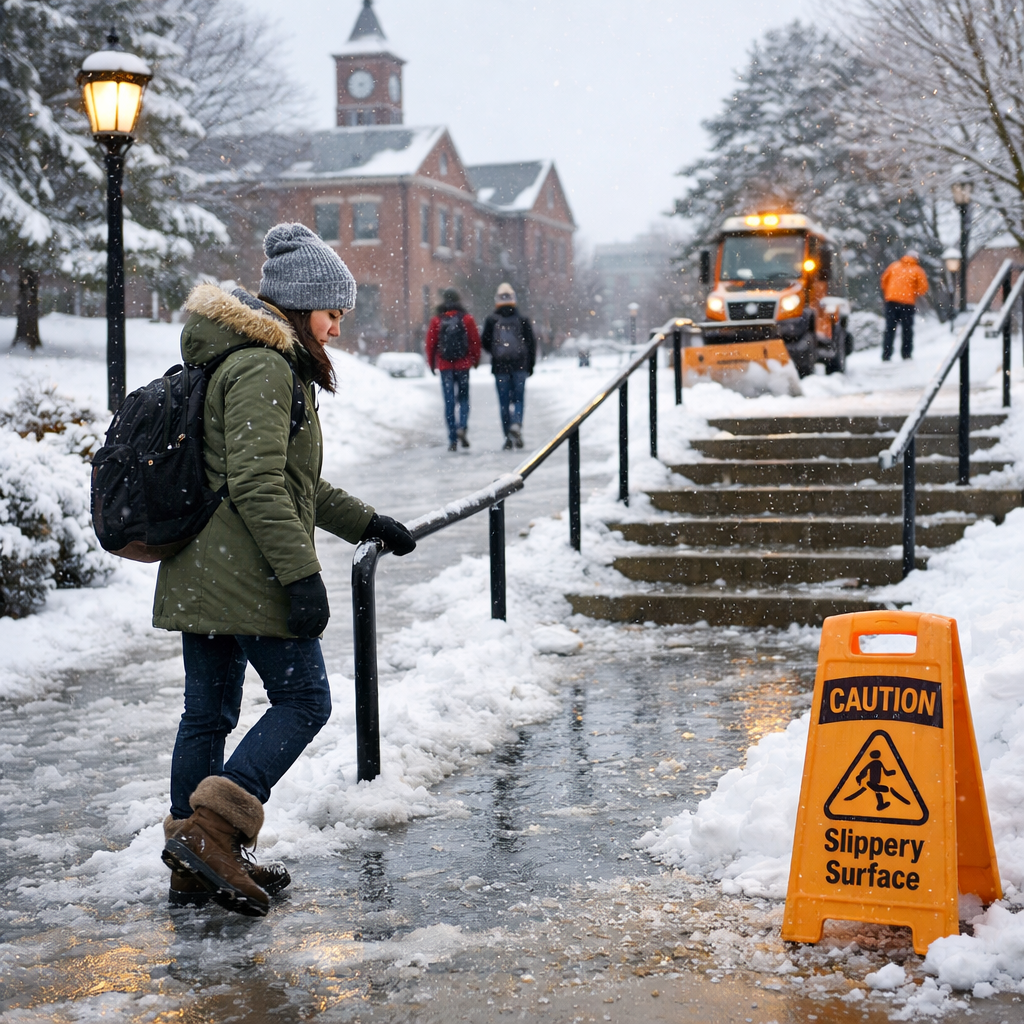
If you drive, clear snow and ice from all windows, mirrors, lights, and the roof before leaving. Keep more distance from other vehicles and expect longer stopping times. If you use transit, dress as though delays are possible and wait in safer, well-lit areas when you can. If you walk, choose maintained routes and avoid assuming drivers can stop quickly at crossings.
Winter travel planning table
| Situation | Main Risk | Smart Control |
|---|---|---|
| Walking between buildings | Slips on ice or slush | Wear traction-friendly footwear and use cleared routes |
| Waiting for transit | Cold exposure and reduced visibility | Dress in layers and stand in well-lit areas |
| Driving to campus | Reduced traction and poor visibility | Clear the vehicle fully and allow extra travel time |
| Placement or part-time work travel | Pressure to rush in bad weather | Communicate delays early and follow employer guidance |
Students in placements or jobs should remember that winter hazards do not end at the campus boundary. Sidewalks, loading areas, entrances, and parking lots at workplaces can be just as hazardous. If you are a young worker, winter travel and footwear choices can affect safety on every shift. Training resources for workers and supervisors are available through OHSE training.
Campus Winter Safety in Cold Weather, Emergencies, and Daily Decision-Making
Winter weather can change quickly. A day that begins with light snow can become freezing rain, poor visibility, or dangerous wind chill by evening. Campus winter safety means paying attention to school notices, residence updates, transit service changes, and local weather alerts before problems develop.
Keep your phone charged, but do not rely on it alone. Cold weather can drain batteries faster. Save important school contacts, know where you can warm up between classes, and tell a friend or family member if you are travelling a long distance in poor conditions. If conditions feel unsafe, consider whether the trip is necessary and follow your school’s attendance, closure, or emergency guidance.
Use a simple hierarchy of controls mindset
A helpful way to think about winter prevention is through the hierarchy of controls:
- Elimination: Avoid unnecessary travel during the worst conditions when possible.
- Engineering controls: Use cleared paths, lighting, floor mats, railings, and well-maintained entrances.
- Administrative controls: Follow campus alerts, adjust schedules, and report hazards early.
- Personal protective equipment: Wear proper winter clothing and footwear suited to the conditions.
This approach is common in occupational health and safety because it focuses on prevention rather than reacting after someone gets hurt. It is also useful for students balancing classes, residence life, sports, and work. For broader injury prevention information, students and families may also find resources at Parachute and Health Canada.
Short campus winter safety checklist
- Check weather and campus notices before leaving.
- Wear layered clothing, gloves, and footwear with grip.
- Leave early so you do not need to rush.
- Use cleared, well-lit routes and hold handrails.
- Keep your phone charged and carry key essentials.
- Report icy areas, blocked exits, or poor lighting.
- Follow school, workplace, transit, and emergency guidance.
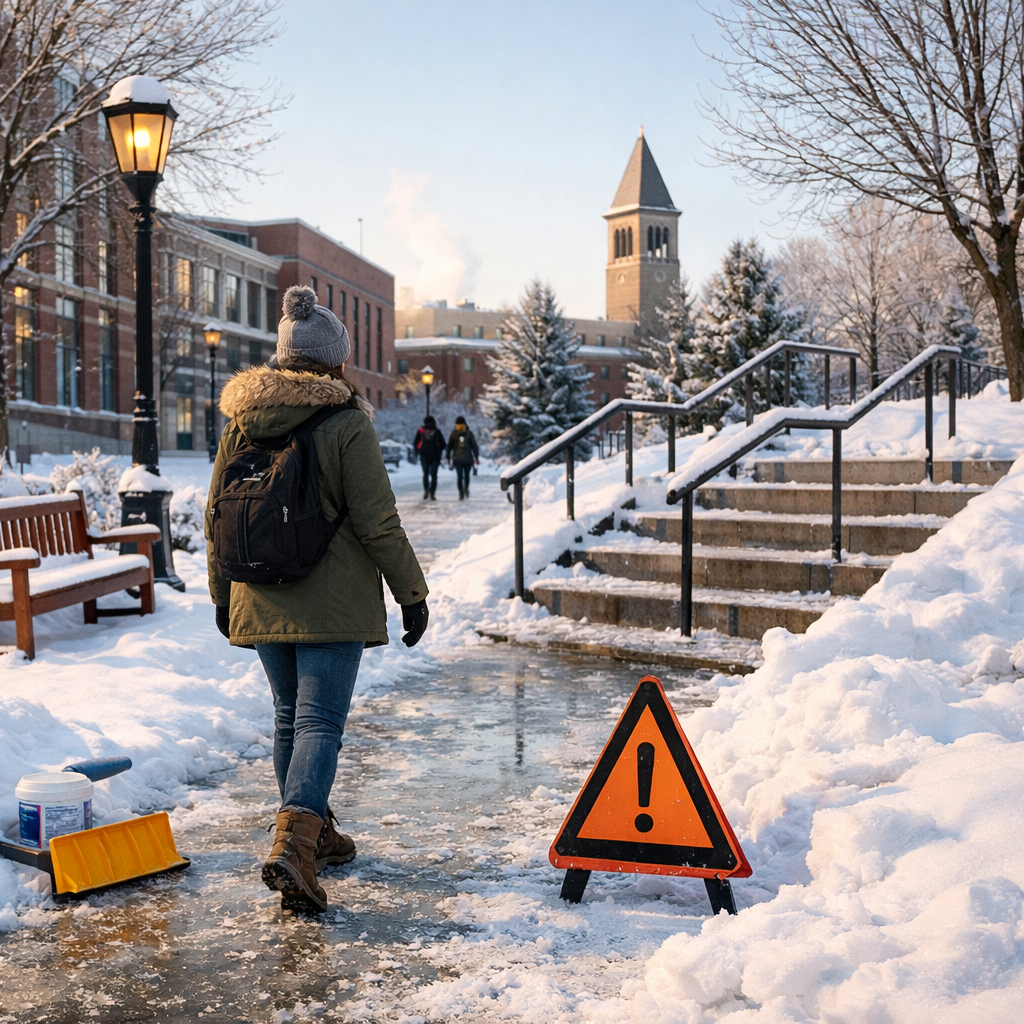
Campus winter safety is really about consistent small decisions: dressing properly, walking carefully, planning travel, and speaking up when hazards appear. For college and university students, these habits can reduce preventable injuries and make winter travel, residence life, and part-time work safer. By staying alert, using the right gear, and following local campus and employer procedures, students can handle Canadian winter conditions with more confidence and less risk.
No comments yet