
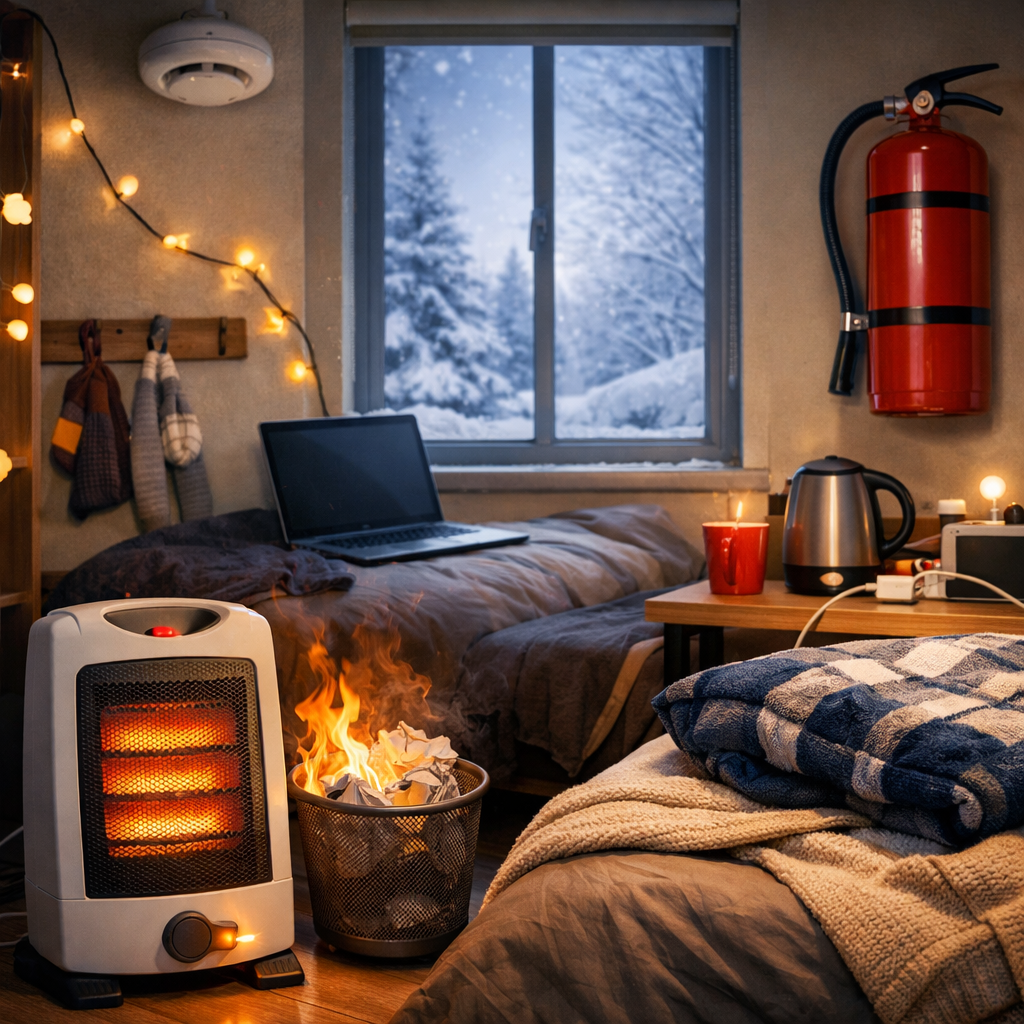

Dormitory winter fire safety becomes especially important when colder weather pushes students indoors and increases the use of heaters, kitchen appliances, chargers, and extension cords. In residence buildings, a small mistake in one room or shared kitchen can quickly affect many people, which is why prevention, awareness, and clear routines matter so much for students, families, and schools.
Canadian campuses and residences often have strict building rules, but everyday choices still shape the level of risk. Space heaters placed too close to bedding, unattended cooking in a shared kitchen, overloaded power bars, or blocked exits can all turn a manageable hazard into an emergency. The good news is that practical habits, supported by school policies and trusted guidance from organizations such as CCOHS and the Government of Ontario, can help reduce common winter fire risks.
Dormitory Winter Fire Safety Starts With Heat Sources
Heating equipment is one of the most important winter concerns in student housing. Many dormitories have central heating, but students may still try to warm cold rooms with personal devices that are not permitted or not used properly. Before bringing any heating appliance into residence, students should confirm whether the school allows it and follow residence rules, manufacturer instructions, and local fire safety guidance.
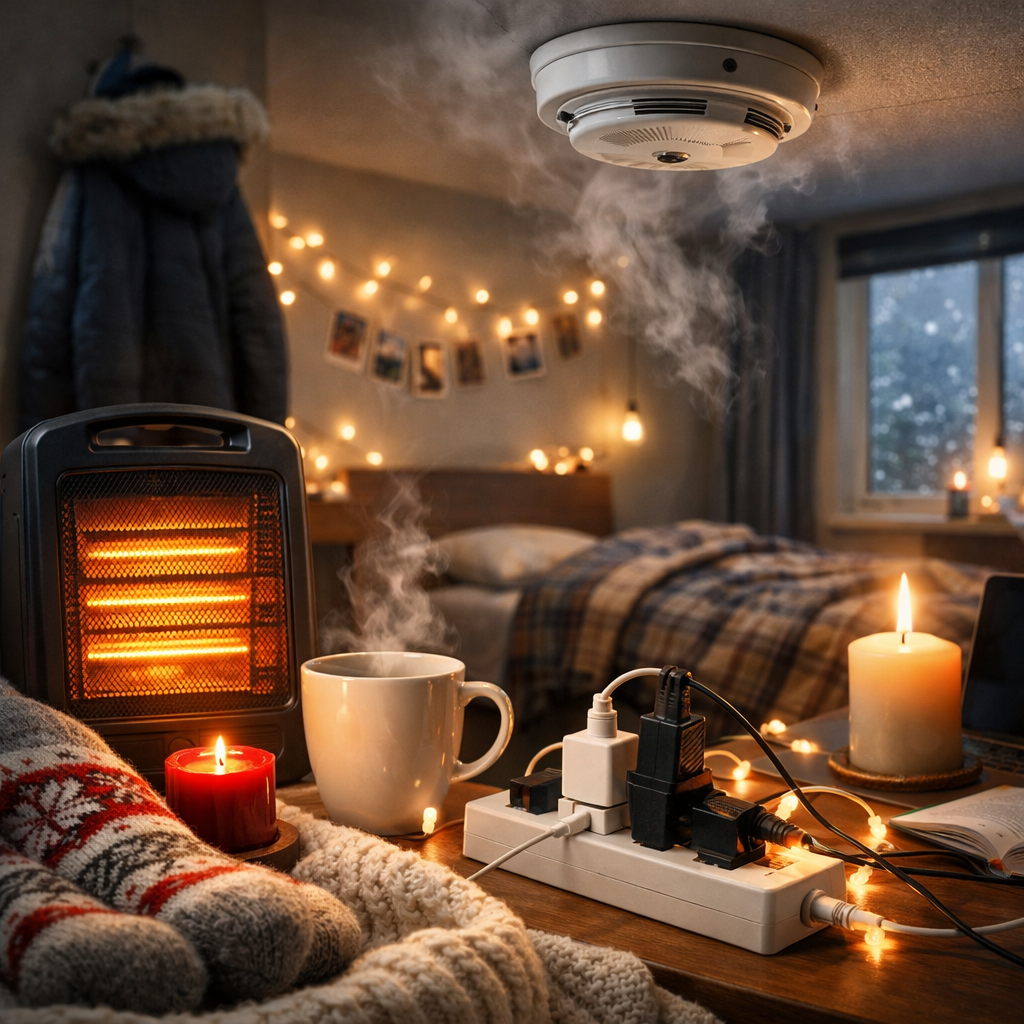
If a space heater is allowed, place it on a stable, hard surface and keep it well away from blankets, curtains, paper, clothing, and upholstered furniture. A heater should never be left running when the room is empty or while someone is sleeping unless the manufacturer and school rules clearly permit that use. It should also be plugged directly into a wall outlet, not into an extension cord or overloaded power bar.
Practical heating controls for student rooms
- Keep heaters away from beds, desks piled with paper, and laundry.
- Do not dry mittens, socks, or jackets on or near heaters.
- Report damaged radiators, baseboards, or room heating systems to residence staff promptly.
- Never block vents or cover fixed heating units.
- Use only approved devices that are in good condition.
From an OHSE perspective, this is a good place to apply the hierarchy of controls. Elimination and substitution come first: if the building heating system works properly, there may be no need for a portable heater at all. Administrative controls include residence policies, inspections, and student orientation. Safe placement, housekeeping, and routine checks are everyday controls that support dormitory winter fire safety.
Dormitory Winter Fire Safety in Shared Kitchens and Student Rooms
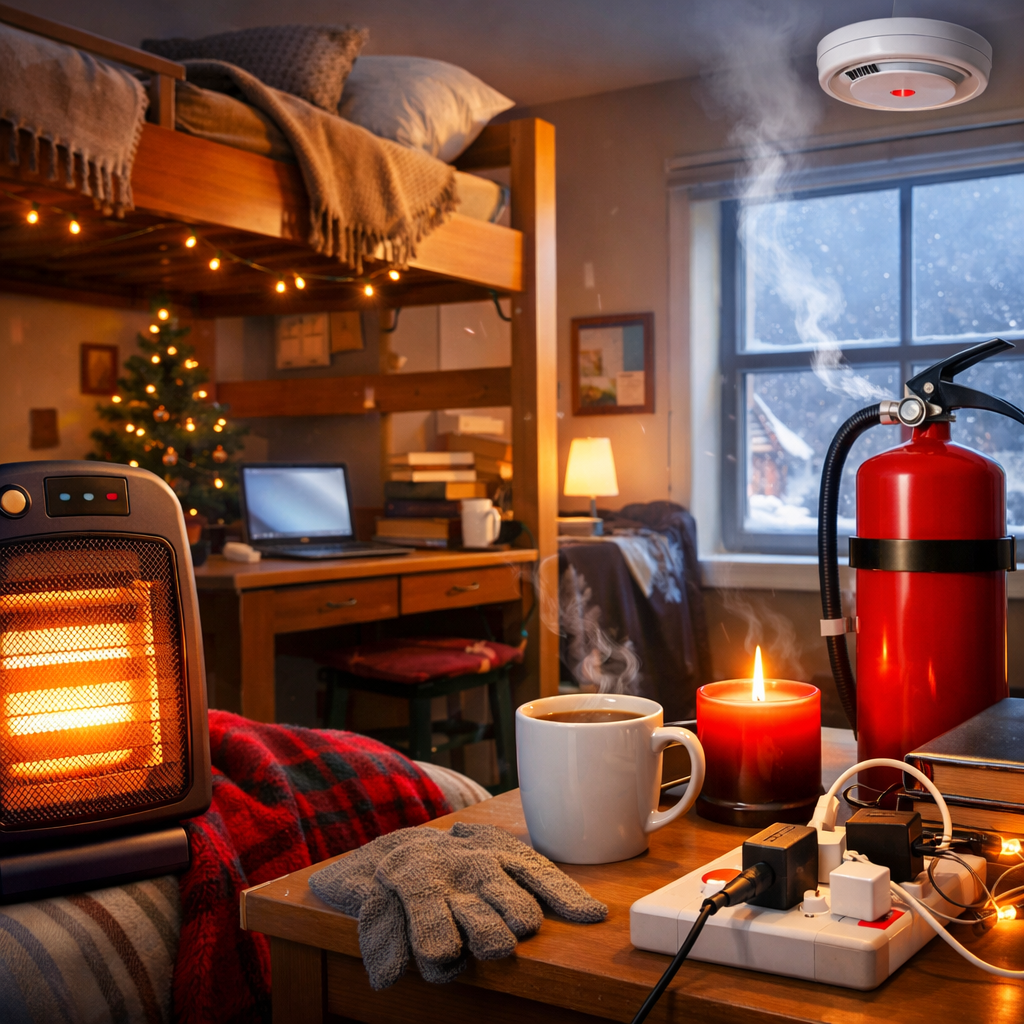
Cooking is a leading concern in residences because it combines heat, distraction, oil, packaging, and sometimes inexperience. Shared kitchens can become crowded, and students may cook late at night when they are tired or rushing. Even when hot plates, toaster ovens, or kettles are allowed, they still require close supervision and a clean area around them.
Unattended cooking is one of the most preventable causes of fire. If food is on the stove, in a toaster oven, or in a microwave, stay nearby. Burners should be turned off as soon as cooking is finished, and grease buildup should be cleaned regularly. Cardboard, paper towels, dish cloths, and food packaging should be kept away from heat sources. Students should also know whether cooking is permitted in their rooms or only in designated kitchen spaces.
Safe cooking habits that reduce winter fire risk
- Stay in the kitchen when frying, boiling, or baking.
- Keep handles turned inward where appropriate to avoid bumps and spills.
- Keep the cooking area free of clutter and combustibles.
- Use appliances only for their intended purpose.
- If a small cooking fire occurs, follow school emergency procedures and use equipment only if trained and it is safe to do so.
Students working part-time in food service or residence support roles may recognize similar workplace controls. Clear procedures, housekeeping, supervision, and training all matter. Schools can reinforce these habits through orientation, posted rules, and emergency drills, while students can build their own awareness through practical safety education such as resources available at learn.ohse.ca.
Electrical Risks That Increase During Winter
Winter often means more devices running at the same time: laptops, phones, gaming systems, mini fridges, lamps, electric blankets, and seasonal lighting. In older residence buildings or crowded rooms, that can create electrical stress very quickly. Dormitory winter fire safety depends on recognizing that overloaded circuits, damaged cords, and makeshift charging setups are not minor issues.
Power bars should never be daisy-chained together, and extension cords should not be used as permanent wiring. Cords should not run under rugs, mattresses, or doorways where they can overheat or become damaged. If an outlet feels hot, a cord is frayed, or a breaker trips repeatedly, students should stop using the equipment and report the problem right away. Faulty appliances should be replaced, not taped up and reused.
A quick electrical risk check
| Hazard | Why it matters | Safer action |
|---|---|---|
| Overloaded outlet or power bar | Can overheat and increase fire risk | Reduce the load and use only approved setups |
| Damaged charger or cord | May spark, arc, or fail during use | Replace it immediately |
| Cord under bedding or carpet | Heat can build up unnoticed | Keep cords visible and ventilated |
| Unapproved room appliance | May exceed residence safety rules | Check policy before use |
Electrical safety also includes battery-powered devices and chargers. Do not charge phones, tablets, e-bikes, scooters, or battery packs in unsafe locations, near exits, or on soft surfaces unless the manufacturer instructions specifically allow it. Good housekeeping helps here too. A tidy room makes it easier to spot overheating devices, exposed cords, and blocked plugs.
Emergency Readiness and a Short Dormitory Winter Fire Safety Checklist
Even strong prevention measures need to be backed by readiness. Students should know at least two ways out of their floor or residence area if possible, understand the building alarm sound, and learn where to go during an evacuation. Fire doors should never be propped open, and hallways, stairwells, and exits must stay clear. In Ontario and across Canada, schools and residence operators may have site-specific procedures, so students should follow local instructions first.
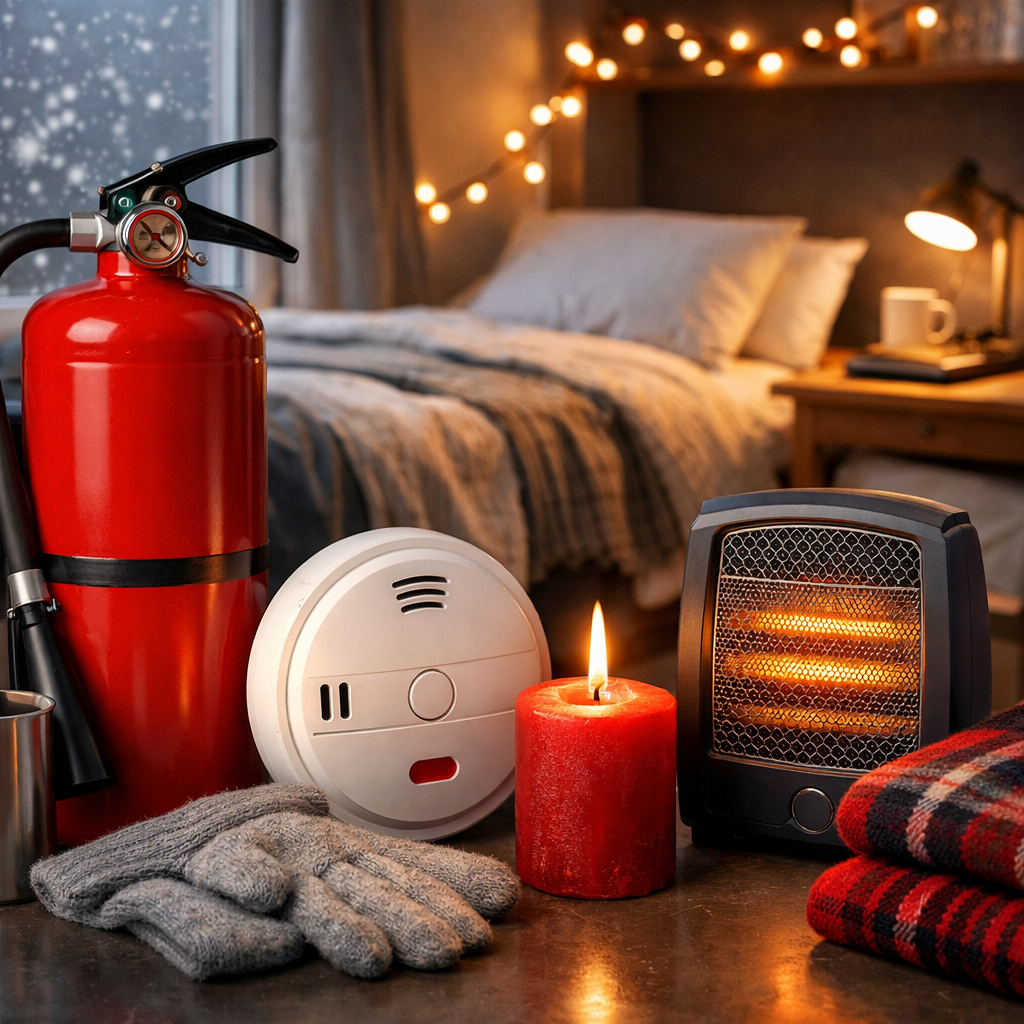
It also helps to know what equipment is present in the building, such as smoke alarms, pull stations, sprinklers, extinguishers, and emergency lighting. Students should never tamper with this equipment. If a smoke alarm is missing, damaged, covered, or sounding without explanation, residence staff should be notified immediately. Additional public guidance can also be found through Health Canada and injury prevention organizations such as Parachute.
Short actionable checklist
- Check residence rules before using heaters or cooking devices.
- Keep heaters, cords, and chargers away from bedding and paper.
- Never leave cooking unattended.
- Do not overload outlets or power bars.
- Keep exits, hallways, and fire doors clear.
- Learn the evacuation plan and meeting location.
- Report damaged equipment, alarms, or electrical issues right away.
For schools, parents, and students looking for practical safety support, OHSE.ca offers workplace-relevant safety information that also fits residence life, especially where young workers and students are learning to manage everyday risks independently.
In the end, dormitory winter fire safety is about small decisions made consistently: using heat sources properly, cooking with attention, managing electrical loads safely, and being ready to respond if an alarm sounds. For Canadian students living away from home, these habits are part of responsible shared living. By following school rules, manufacturer instructions, and local emergency guidance, students can help keep their rooms, neighbours, and residence communities safer all winter long.
No comments yet