
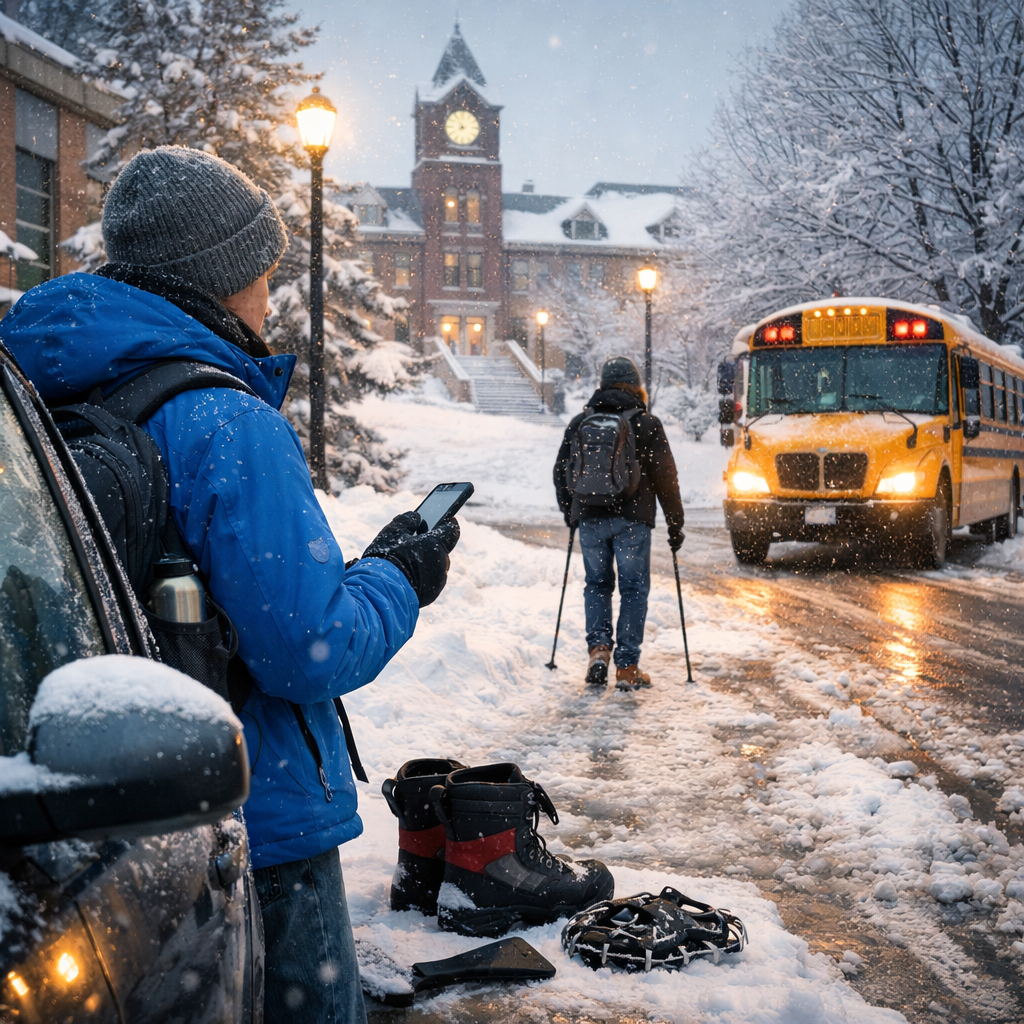

College winter commuting safety starts before you leave home. For students in Canada, winter travel can mean icy sidewalks, reduced visibility, slower buses, delayed trains, crowded parking lots, and extra pressure to arrive on time for class or work placement.
A practical plan helps reduce risk. Whether you walk, drive, cycle, or take transit, the goal is the same: give yourself more time, choose safer options, and prepare for changing conditions without rushing.
For families, schools, and young workers, winter commuting is not just about convenience. It is a safety issue that affects slips and falls, vehicle crashes, cold exposure, and decision-making under stress. Using a prevention-focused approach can make daily travel more manageable throughout the season.
Why college winter commuting safety matters in Ontario and across Canada
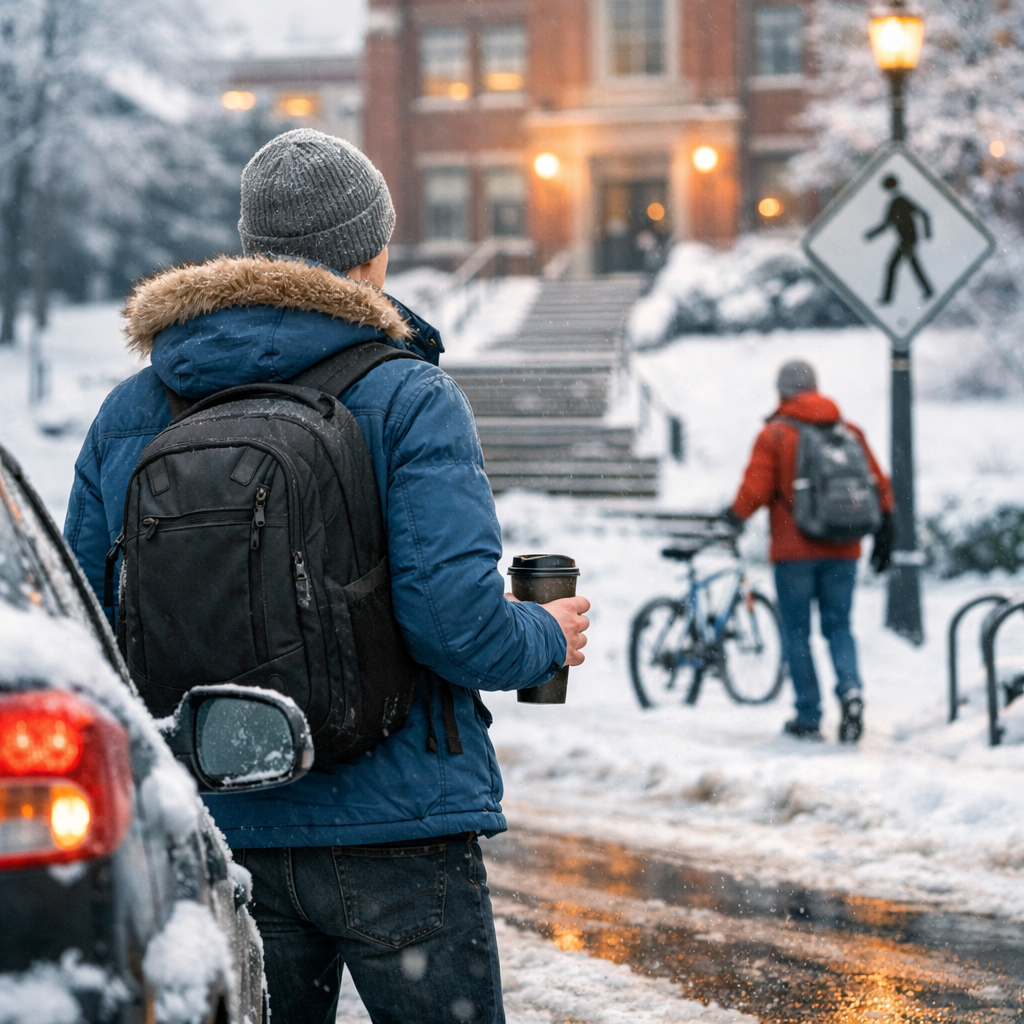
Winter conditions can change quickly. A route that feels routine in October may become hazardous after freezing rain, blowing snow, or a sudden temperature drop. Even short trips between a bus stop, residence, parking area, classroom, or placement site can create exposure to slippery surfaces and low visibility.
Students also face timing pressure. Early classes, shift work, exams, and attendance expectations can lead people to rush, skip proper footwear, or drive when they are not fully prepared. In OHSE terms, those are common human factors that increase risk.
For reliable public safety information, it is helpful to review guidance from CCOHS, Ontario, and Parachute. Students can also explore practical campus and workplace safety information at OHSE.ca.
Common winter commuting hazards for students
- Ice on sidewalks, steps, ramps, and parking lots
- Snowbanks that block sightlines for drivers and pedestrians
- Reduced traction for cars, bikes, and boots
- Longer braking distances and slower transit service
- Cold stress from waiting outside in wet or windy conditions
- Poor visibility in early morning, evening, or storms
- Distraction from phones, headphones, or schedule pressure
Build a safer routine for college winter commuting safety
The best winter travel plan is simple enough to use every day. Start by checking the forecast and local travel conditions before you leave. Then decide whether your usual route is still the safest route.
If roads or sidewalks are poor, leave earlier and choose a lower-risk option if possible. Taking a bus instead of driving, using a well-maintained entrance, or asking for a ride may reduce exposure on difficult days.
Use the hierarchy of controls in everyday travel
The hierarchy of controls is useful beyond workplaces. Students can apply it to winter commuting decisions in a practical way:
| Control level | Winter commuting example |
|---|---|
| Elimination | Avoid unnecessary travel during severe conditions if your school or placement allows remote participation. |
| Substitution | Use transit or a ride instead of cycling or driving in poor traction conditions. |
| Engineering | Choose routes with lighting, cleared sidewalks, handrails, shelters, and maintained parking areas. |
| Administrative | Leave early, monitor service alerts, tell someone your plan, and follow school or employer weather guidance. |
| PPE | Wear insulated, slip-resistant boots, warm layers, gloves, and visible outerwear. |
This approach keeps the focus on prevention first, not just reacting once you are already in trouble.
Short actionable checklist
- Check weather, road, and transit conditions before leaving.
- Leave extra travel time and avoid rushing.
- Wear boots with good grip and dress in layers.
- Charge your phone and keep it protected from cold and moisture.
- Carry essentials such as gloves, hat, ID, and any school or work items needed for delays.
- Use well-lit, maintained walkways and entrances.
- Follow local school, workplace, and emergency guidance when conditions worsen.
Walking, driving, transit, and cycling in winter
College winter commuting safety looks different depending on how you travel. A good plan should match your route, your timing, and the hazards you face most often.
Walking on campus and near roads
Many winter injuries happen on foot. Slow down on snow-covered surfaces, keep your hands available for balance, and use railings where provided. Short steps can improve stability on ice.
Avoid cutting across uncleared paths or climbing over snowbanks. If a sidewalk or entrance looks unsafe, choose another route and report the hazard to the school, property manager, or workplace if appropriate.
Driving to class or placement
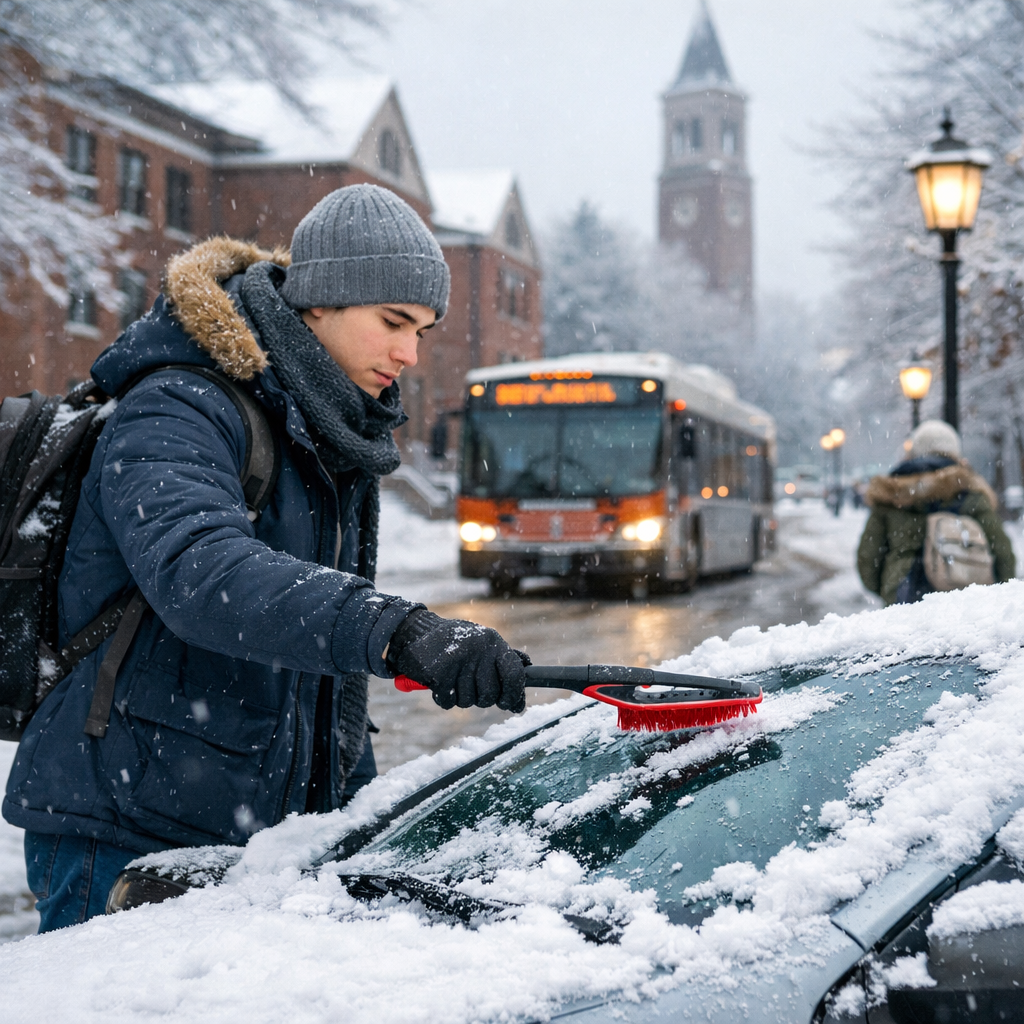
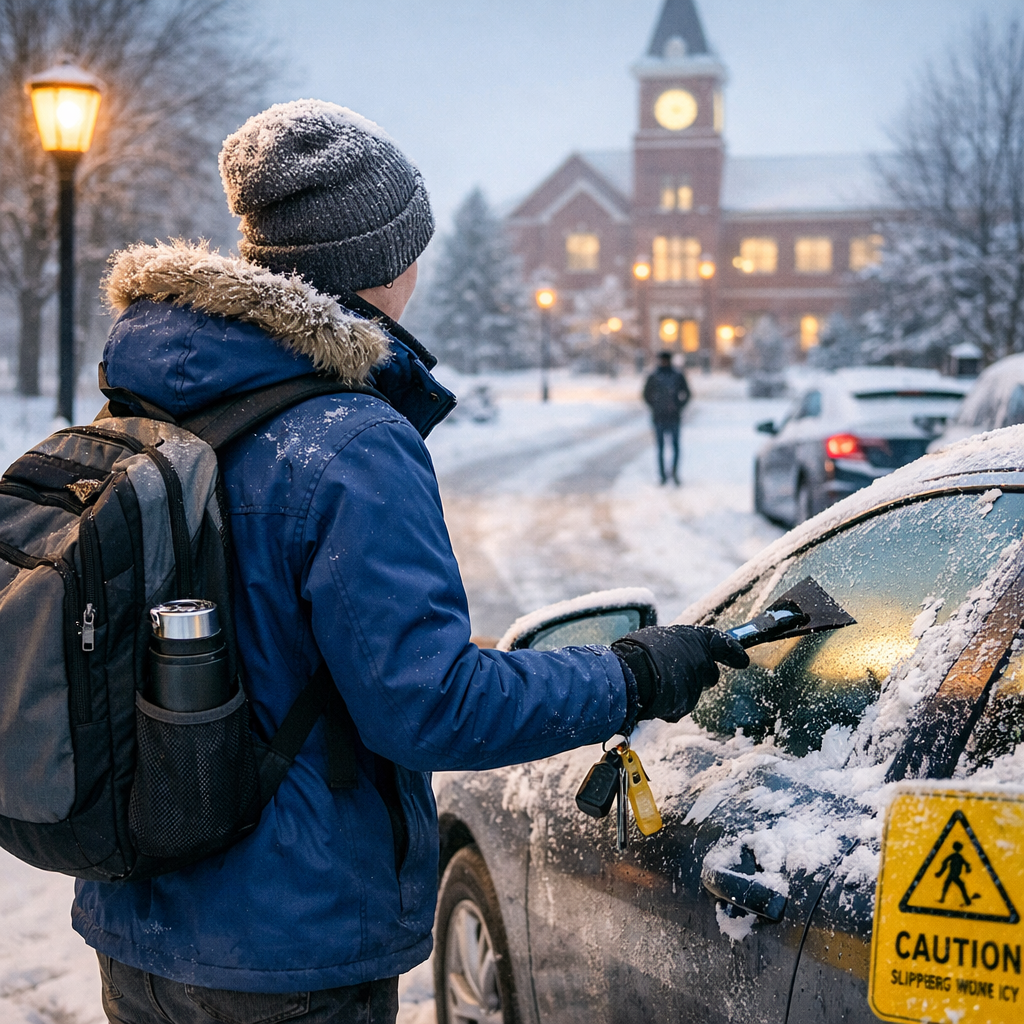
If you drive, clear snow and ice from all windows, mirrors, lights, and the roof before moving the vehicle. Increase following distance and brake gently. Parking lots and campus side roads may be slick even when main roads look better.
Keep fuel at a reasonable level, and bring basic winter items such as a brush, warm clothing, and charged phone. If your college program includes co-op or placements, winter driving becomes a young worker safety issue as well. Students preparing for work-related safety learning may find relevant courses at OHSE training.
Public transit and waiting outdoors
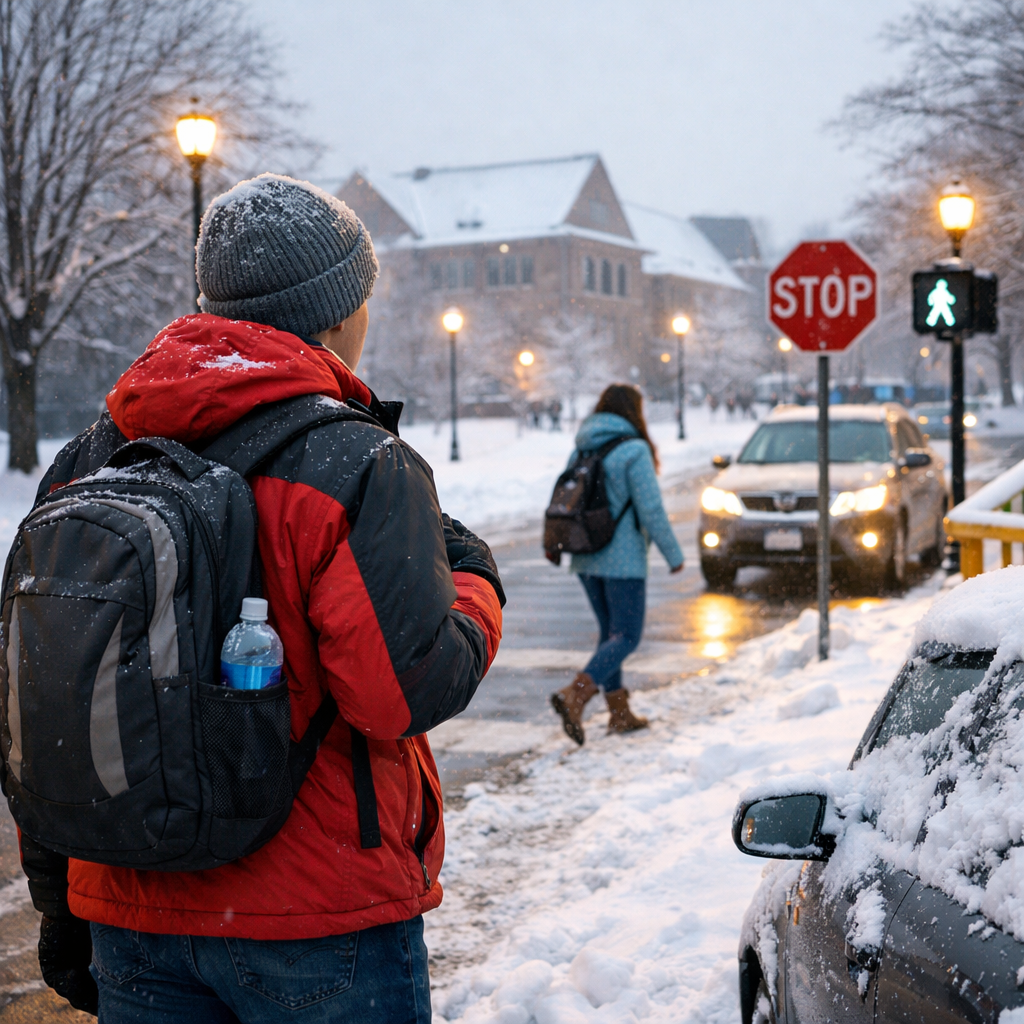
Transit can reduce some driving risks, but delays may increase cold exposure and crowding. Dress for the wait, not just the ride. Stand back from the curb, especially where snow and slush reduce traction near traffic.
If a route is delayed or cancelled, avoid risky shortcuts. Move to a safer waiting area when possible, let someone know if you will be late, and watch for slippery platform edges, stairs, and bus entrances.
Cycling in winter
Some students cycle year-round, but winter riding requires careful judgment. Ice, slush, hidden potholes, and reduced driver visibility can sharply increase risk. If conditions are poor, switching to transit or another method may be the safer choice.
If you do ride, maintain your bike, use lights, reduce speed, and avoid sudden braking or sharp turns. Follow local rules and manufacturer guidance for winter use and equipment.
Plan for delays, communication, and cold-weather decisions
Part of college winter commuting safety is accepting that delays are normal in bad weather. A strong plan includes what you will do if the bus is late, your car gets stuck, your class starts before the roads improve, or your placement expects you on site during a storm.
Set a delay plan before problems start
Know who to contact if weather affects your arrival. Save school, employer, transit, and family contacts in your phone. Keep important items in a bag that stays packed during the week so you are not scrambling on difficult mornings.
Students under stress may take unnecessary risks to avoid being late. That is when slips, falls, and crashes become more likely. If conditions are worsening, pause and reassess instead of pushing ahead automatically.
Dress and pack for exposure, not just appearance
Wet feet, numb hands, and inadequate layers can affect concentration and decision-making. Choose practical winter clothing that fits your route and waiting time. Waterproof footwear, warm socks, gloves, and a hat are often more protective than lighter fashion items in poor conditions.
Pack a few basics that support winter travel:
- Phone and charging cable or power bank
- Extra gloves or socks if your route is long
- Water and a small snack for extended delays
- ID, transit pass, and any required school or placement materials
- Reflective or high-visibility item for dark travel times
When to change the plan
Not every day should be treated as a normal commute. If visibility is poor, surfaces are glazed with ice, or alerts suggest major disruption, look for safer alternatives. Follow campus notices, workplace directions, transit updates, and local emergency guidance where applicable.
Parents and families can help by supporting realistic departure times and safer choices. Schools and placement hosts can help by communicating clearly about expectations during severe weather.
College winter commuting safety is most effective when it becomes part of your routine rather than a last-minute reaction. Check conditions, leave early, wear the right gear, choose safer routes, and build a clear backup plan for delays. For Canadian students, especially in Ontario, small prevention steps can make winter travel safer from the first snowfall to the last icy morning.
No comments yet