
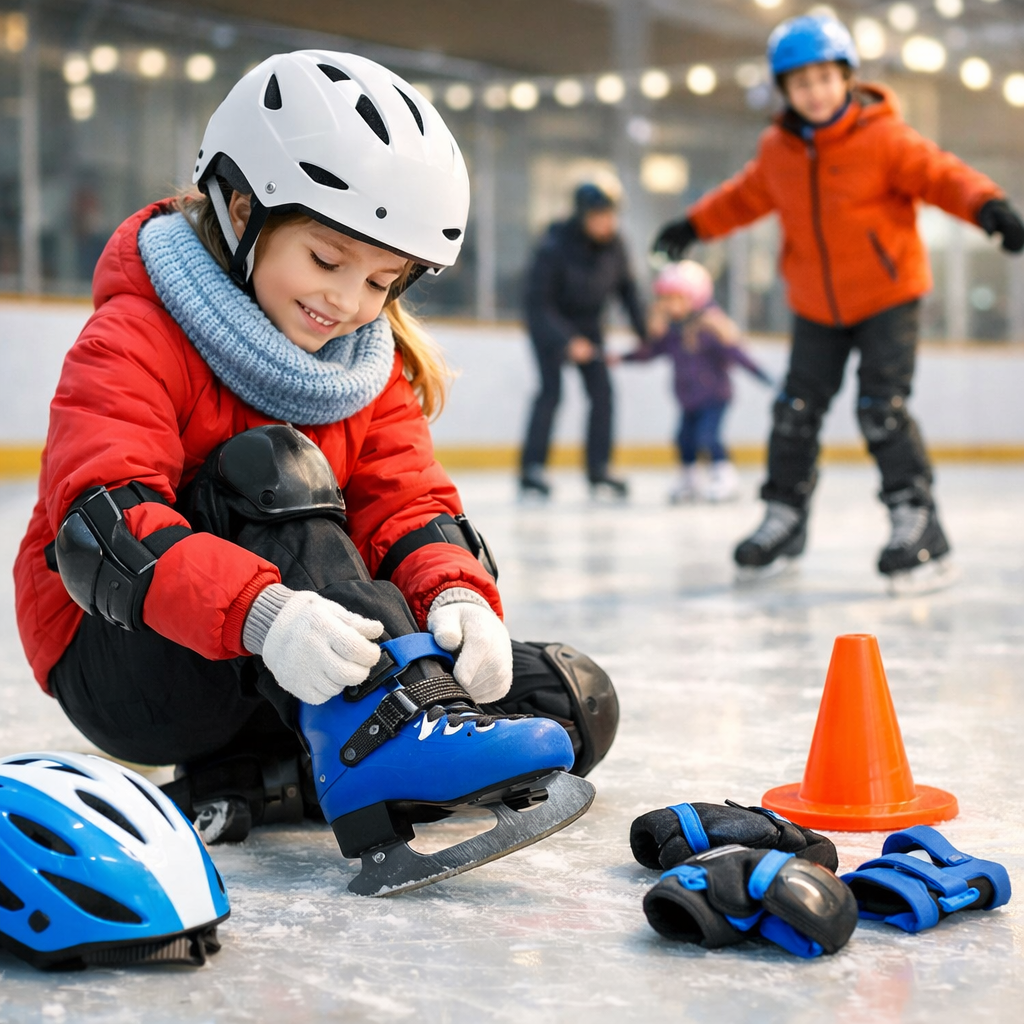

Ice skating safety for kids starts with simple habits, the right gear, and good decisions before anyone steps onto the ice.
Whether children are skating at a school outing, a community arena, a backyard rink, or an outdoor pond, adults can lower the risk of falls, collisions, and cold-related injuries by setting clear rules and checking conditions carefully.
For families, schools, and youth programs in Canada, the goal is not to remove fun. It is to make skating safer, more predictable, and better supervised so kids can build confidence while staying protected.
This practical guide covers smart rink rules, outdoor ice precautions, essential equipment, and an easy checklist that parents, teachers, and supervisors can use right away. For broader prevention resources, readers can also visit OHSE.ca and review trusted public guidance from CCOHS, Ontario.ca, and Parachute.
Why ice skating safety for kids matters
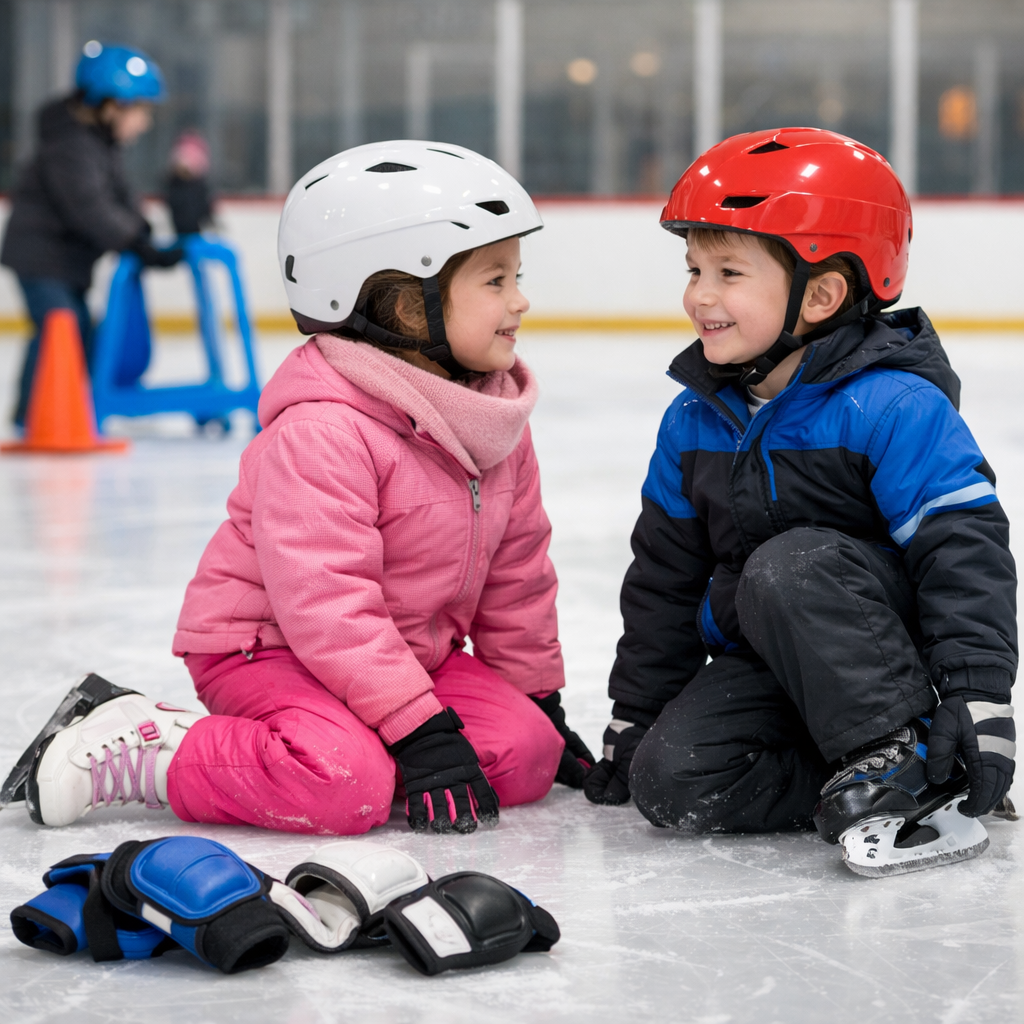
Skating looks simple, but ice creates a fast, hard, and slippery environment. Even on a well-maintained rink, children can lose balance, skate into others, or get hurt by poor-fitting equipment.
Outdoor skating adds another layer of risk because ice thickness, temperature changes, snow cover, and hidden cracks can make conditions less predictable than an indoor arena.
Children also vary widely in skill, judgment, and confidence. A beginner may need close hands-on help, while an older child may move faster and take more chances. That is why adults should match supervision and rules to the child’s age, experience, and the skating setting.
In school, recreation, and youth work settings, skating safety also connects to basic occupational health and safety thinking: identify hazards, assess the risk, and put controls in place before the activity begins. Where training or safety awareness is part of a program, resources such as OHSE training can support a stronger prevention mindset.
Essential gear and preparation for safer skating
Start with proper equipment
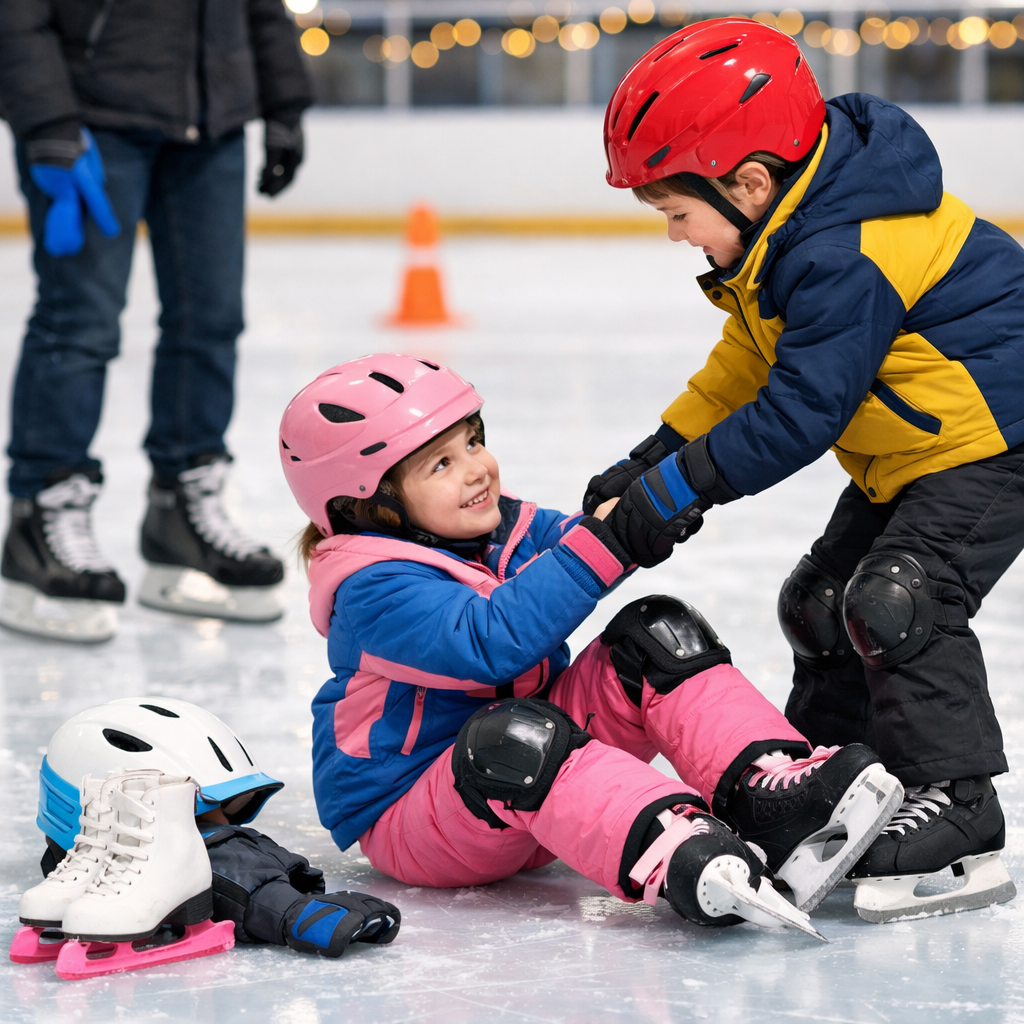
The most important piece of equipment for many children is a properly fitted hockey-style helmet. A helmet helps reduce the risk of head injury from falls and collisions, especially for beginners and young skaters.
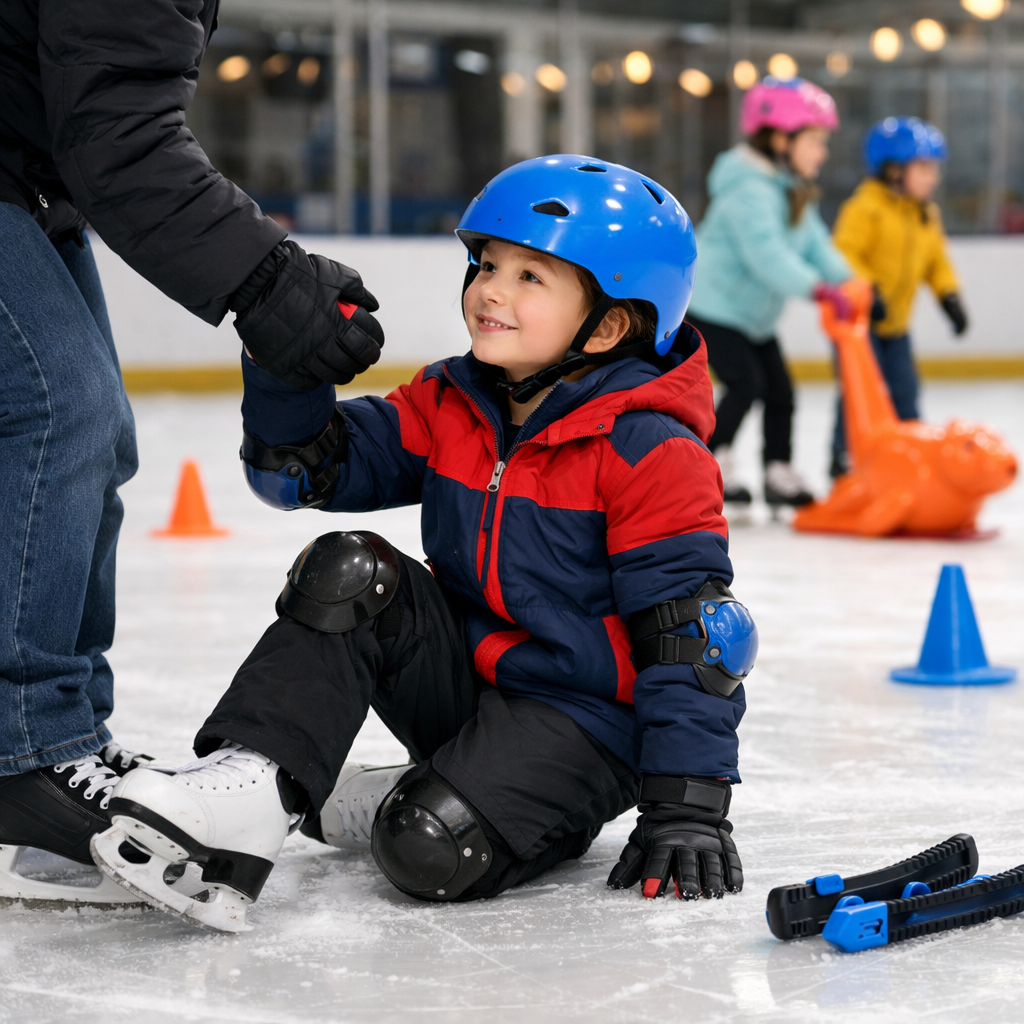
Skates should fit snugly, support the ankles, and be tied correctly. Loose skates can make falls more likely, while skates that are too tight may cause pain and poor balance.
Dress children in warm layers that allow free movement. Mittens or gloves protect hands from cold and sharp skate blades. Snow pants or waterproof outer layers can also help keep children warm and dry after falls.
Check readiness before getting on the ice
- Make sure the child has used the washroom and had water before skating.
- Check skates, laces, helmet fit, and clothing.
- Remove scarves or items that could catch or drag.
- Review basic rules such as stopping, getting up after a fall, and where to wait off the ice.
- Confirm the child understands who to go to if they feel cold, tired, or unsafe.
For school groups and organized activities, a quick pre-skate check can prevent many common issues. Adults should know who is a beginner, who needs support on the ice, and whether any child has limits that affect balance, endurance, or cold tolerance.
Ice skating safety for kids at indoor rinks
Use smart rink rules
Indoor rinks are usually the most controlled skating environment, but they still require clear expectations. Many injuries happen when skaters move too fast, stop suddenly in traffic areas, or play rough games where space is limited.
Set calm, practical rules before the session starts. Explain where beginners should skate, where stronger skaters can practice, and which areas must stay clear, such as gate openings and boards near entrances.
- Skate in the same direction as the session rules.
- No pushing, racing through crowds, or intentional contact.
- Keep a safe distance from other skaters.
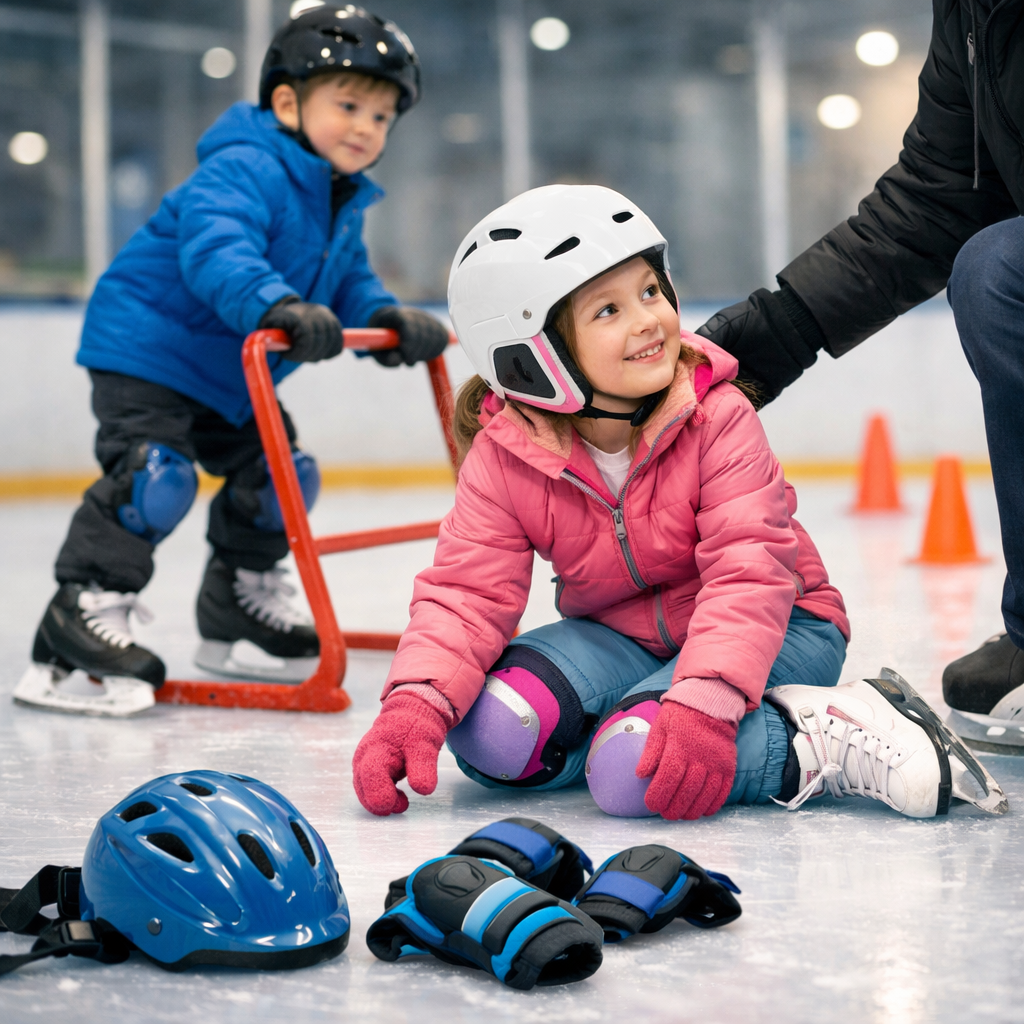
- Get up quickly after a fall, then move to the side if help is needed.
- Stay off the ice if skates are loose, blades are damaged, or a child feels unwell.
Supervise by skill level
Beginners should stay near the boards or in a quieter area where they can practise standing, marching, gliding, and stopping. More advanced children often need reminders that speed must match the space and traffic around them.
Adults supervising school or family skating should spread out instead of standing in one place. That makes it easier to spot hazards early, assist children after falls, and keep high-traffic areas under control.
If the rink posts its own safety rules, follow them. Local facility staff know the layout, the session type, and any special restrictions for helmets, sticks, skating aids, or behaviour on the ice.
Ice skating safety for kids on outdoor ice
Outdoor ice needs extra caution
Outdoor skating can be enjoyable, but natural ice is not the same as an arena surface. Ponds, lakes, and rivers can change quickly with weather, moving water, snow cover, and uneven freezing. Children should never decide on their own that natural ice is safe.
Use only locations that local authorities or property owners have opened, maintained, or clearly identified for skating. If a site is closed, unmarked, or uncertain, do not use it.
Families and schools in Ontario and across Canada should look for current public guidance from trusted sources such as Ontario.ca or Health Canada where relevant, and follow municipal or site-specific direction first.
Key outdoor precautions
- Never let children skate alone on outdoor ice.
- Choose supervised or officially maintained skating areas when possible.
- Avoid rivers, channels, stormwater areas, and ice near bridges, docks, or moving water.
- Watch for dark spots, cracks, slush, open water, or areas covered by snow that may hide weak ice.
- Bring warm dry clothing and plan regular breaks to prevent excessive cold exposure.
Adults should also think about access and rescue. If a child falls and gets wet, how quickly can they get to warmth, dry clothes, and help? Planning that in advance is part of prevention.
| Setting | Main Risks | Smart Controls |
|---|---|---|
| Indoor rink | Falls, collisions, crowding | Helmet, fitted skates, traffic rules, active supervision |
| Outdoor community rink | Uneven surface, cold exposure, rough play | Check maintenance, use warm layers, set behaviour rules |
| Natural outdoor ice | Unstable ice, hidden hazards, cold water exposure | Use only approved areas, close supervision, avoid uncertain ice |
Practical checklist and response tips
Short checklist for parents, schools, and supervisors
Use this quick list before each skating session:
- Helmet on and fitted properly
- Skates fit well and are tied securely
- Gloves or mittens on
- Warm layered clothing suitable for the weather
- Rink or outdoor area checked for hazards
- Rules explained in simple age-appropriate language
- Beginners identified and supported
- Adult supervision active and close enough to respond
- Breaks planned for rest, warmth, and hydration
If a child falls or gets hurt
Most minor falls need a calm check, a pause, and help getting off the ice safely. If a child strikes their head, seems confused, complains of serious pain, cannot bear weight, or appears unusually cold or distressed, stop skating and follow local school, facility, family, workplace, manufacturer, or emergency guidance as applicable.
Avoid trying to diagnose injuries on the spot. The safer approach is to remove the child from further risk, monitor them closely, and seek appropriate help according to the setting’s procedures.
Ice skating safety for kids works best when adults keep the rules simple, supervise actively, and choose the skating environment carefully. Indoor rinks usually offer the most control, while outdoor ice demands more planning and caution. With proper gear, clear expectations, and smart site checks, children can enjoy skating while families, schools, and community leaders build safer winter routines around ice skating safety for kids.
No comments yet