
Practical Job Safety Analysis Methods That Reduce Incidents


Job safety analysis methods help organizations turn routine work into a clear, manageable process for preventing injuries, equipment damage, and costly downtime.
When tasks are broken into steps, hazards are identified before work begins, and controls are selected in a structured way, incident rates often drop because workers are no longer relying on guesswork or memory alone.
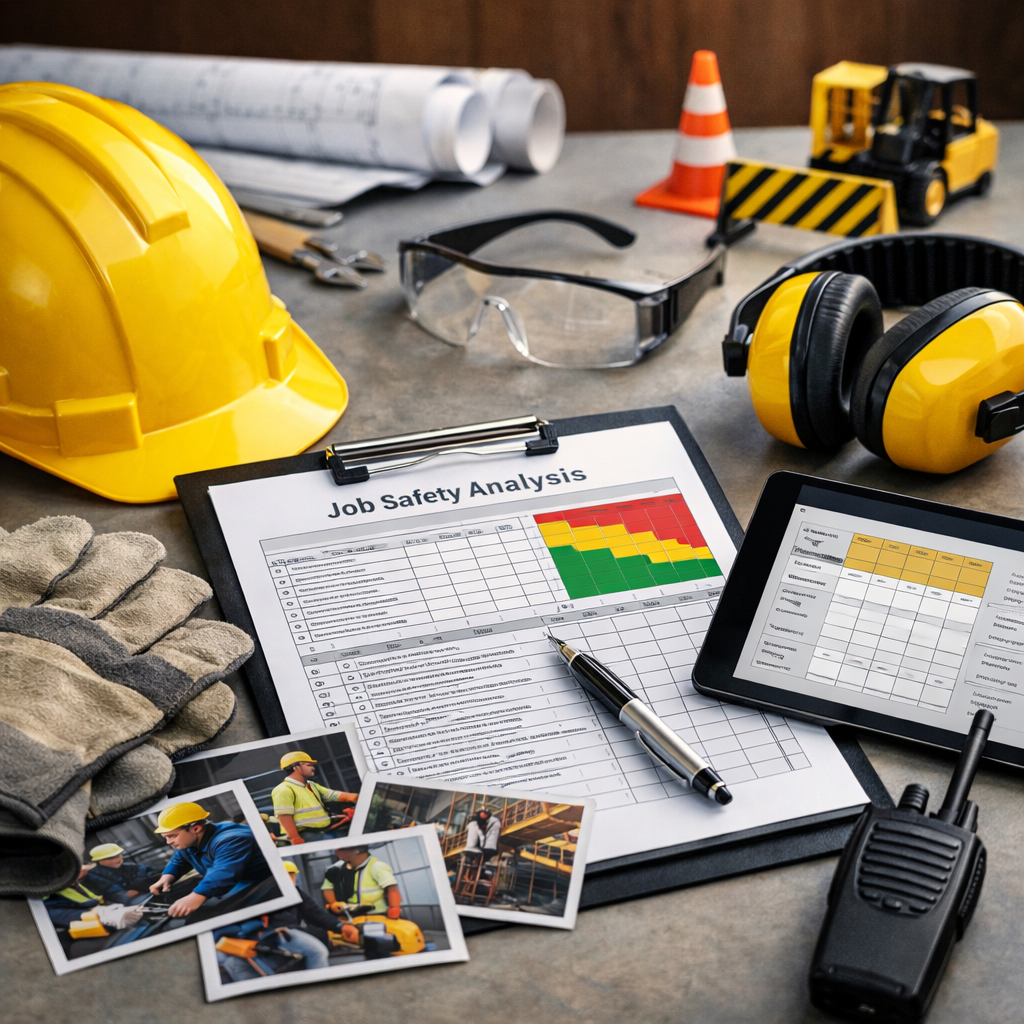
A practical Job Safety Analysis, or JSA, is not just paperwork. It is a tool supervisors, workers, and safety professionals can use together to spot what could go wrong and decide what will keep the job under control.
Whether the task involves maintenance, cleaning, lifting, driving, or operating machinery, the best job safety analysis methods are simple enough to use daily and strong enough to support compliance with guidance from OSHA and CCOHS.
In this guide, you will learn how to break down tasks, identify hazards, and choose effective controls using a format that works in real workplaces, not just in a binder on a shelf.

Job Safety Analysis Methods Start With Breaking the Task Into Clear Steps
The first of the most effective job safety analysis methods is task breakdown.
If a task is too broad, hazards become vague and controls become generic. If it is broken into clear steps, the team can focus on real exposures at each point of the work.
Start by selecting a task with one or more of these characteristics:
- History of injuries, near misses, or property damage
- High potential severity even if incidents are rare
- New or changed equipment, process, or materials
- Non-routine work such as shutdowns, repairs, or confined space entry
- Tasks that involve multiple people, mobile equipment, or energy sources
Once the task is selected, observe the work and list the steps in the order they happen.
Keep each step specific but not overly detailed. For example, “position ladder,” “climb to access valve,” and “remove valve cover” are useful steps. “Do maintenance” is too broad, while “move left foot to rung two” is too detailed.

The best results come from involving the people who actually perform the job. They know the shortcuts, pinch points, awkward reaches, and environmental issues that may not appear in procedures.
If you already use safety observations or incident reporting best practices, review those records while building the JSA. They often reveal hidden patterns that can improve the analysis.
A Simple Task Breakdown Format
| Task Step | What Happens | Who Is Exposed |
|---|---|---|
| Set up work area | Gather tools, mark area, inspect access | Worker, nearby pedestrians |
| Perform the job | Operate equipment or handle materials | Worker, helper |
| Close out task | Restore area, remove waste, store tools | Worker, cleaning staff |
Job Safety Analysis Methods for Identifying Hazards in a Practical Way
After the task is broken into steps, the next stage in job safety analysis methods is hazard identification.
This is where many JSAs become weak because teams write broad statements such as “injury possible” instead of describing the actual source of harm.
A better approach is to ask focused questions at each step:
- Can the worker be struck by, caught in, or caught between something?
- Is there a slip, trip, fall, or dropped object risk?
- Are there electrical, pressure, temperature, or stored energy hazards?
- Is there exposure to chemicals, dust, fumes, noise, or biological agents?
- Does the step involve awkward posture, lifting, repetition, or force?
- Could weather, lighting, traffic, or housekeeping make the task worse?
The goal is to identify hazards by category and by real-world condition.
For example, instead of writing “fall hazard,” write “worker may fall while climbing a portable ladder placed on uneven concrete near a vehicle route.” That level of detail makes control selection easier and more defensible.
It is also useful to think beyond the worker doing the task. Contractors, visitors, adjacent crews, and forklift operators may all be exposed during certain steps.
Practical job safety analysis methods also account for normal work and upset conditions. A machine jam, leaking hose, poor lighting during night shift, or rushed production schedule can change the risk significantly.
Common Hazard Categories to Review
Most workplaces can improve consistency by using a standard hazard checklist during JSA development.

- Mechanical hazards
- Electrical hazards
- Chemical exposure
- Ergonomic strain
- Working at height
- Vehicle and pedestrian interaction
- Fire and explosion potential
- Environmental conditions such as heat, cold, rain, or poor visibility
This simple checklist prevents teams from focusing only on the most obvious danger while missing less visible but common causes of injury.
Selecting Controls With the Hierarchy of Controls
Once hazards are identified, effective job safety analysis methods move to control selection.
This step should follow the Hierarchy of Controls rather than jumping straight to personal protective equipment. PPE matters, but it is the last line of defense, not the first.
Use this order when choosing controls:
- Elimination: Remove the hazard completely
- Substitution: Replace it with a safer process, tool, or material
- Engineering controls: Guarding, isolation, ventilation, barriers, interlocks
- Administrative controls: Procedures, permits, training, scheduling, signage
- PPE: Gloves, eye protection, hearing protection, respirators, fall protection
For example, if workers manually lift heavy pump parts, elimination may mean using a lifting device so the lift is no longer manual. An engineering control could be a jib crane. An administrative control might be a lift plan and trained operators. PPE may include gloves and toe protection, but PPE alone does not solve the core risk.
Another example is floor cleaning in a public area. The hazard is not just a wet floor. It includes vehicle movement, pedestrians, chemical splash, and manual handling. Controls could include cleaning after hours, barricading the zone, using a less hazardous product, providing slip-resistant footwear, and improving drainage.
Strong job safety analysis methods also define who is responsible for each control and when it must be in place. If a control has no owner, it often fails during execution.
Simple JSA Control Format
| Hazard | Control Measure | Control Type |
|---|---|---|
| Exposure to moving equipment | Isolate route with barriers and spotter | Engineering / Administrative |
| Manual lifting strain | Use lifting aid and reduce load size | Elimination / Engineering |
| Chemical splash | Closed transfer system and face shield | Engineering / PPE |
How to Make Job Safety Analysis Methods Work in Daily Operations
The most useful job safety analysis methods are the ones people actually use before work starts.
That means the JSA should be short enough to read, specific enough to matter, and reviewed often enough to stay current. A generic document copied from last year will not reduce incidents if the tools, layout, crew, or material have changed.
One effective practice is to combine the JSA with a brief pre-job discussion. The supervisor or crew leader reviews the task steps, confirms hazards, checks that controls are ready, and asks workers if anything has changed since the JSA was prepared.
This “last-minute risk check” is especially important for outdoor work, maintenance tasks, and jobs involving contractors.
Training also matters. Workers should know how to read a JSA, contribute to updates, and stop the job if the controls listed are not available or conditions differ from the plan.
Supervisors can strengthen the process by auditing a few JSAs each month and asking simple questions:
- Are the task steps accurate?
- Are the hazards specific and realistic?
- Do the controls follow the Hierarchy of Controls?
- Were workers involved in developing the JSA?
- Was the JSA updated after an incident, near miss, or process change?
Here is a practical example. A maintenance team needs to replace a conveyor motor. The task steps include isolating power, accessing the platform, removing guards, disconnecting the motor, lifting the old unit out, and installing the new one. Hazards include stored electrical energy, falls from access points, caught-in points, dropped loads, and awkward lifting. Controls include lockout and verification, guarded access, use of a rated hoist, exclusion zones below the lift, team communication, and required PPE. In this format, the JSA becomes a working plan, not a formality.
Reviewing incident trends can also sharpen your process. If hand injuries, slips, or vehicle interactions keep appearing, update your JSA templates so those hazards are always considered. Resources from OSHA, CCOHS, and industry associations can help benchmark your approach against recognized good practice.
In the end, job safety analysis methods reduce incidents when they are practical, specific, and used consistently. Break every task into clear steps, identify hazards at each step with real-world detail, and choose controls using the Hierarchy of Controls rather than relying only on PPE. When workers and supervisors use that simple structure every day, job safety analysis methods become one of the most reliable ways to prevent injuries and create safer work across the entire operation.
No comments yet