
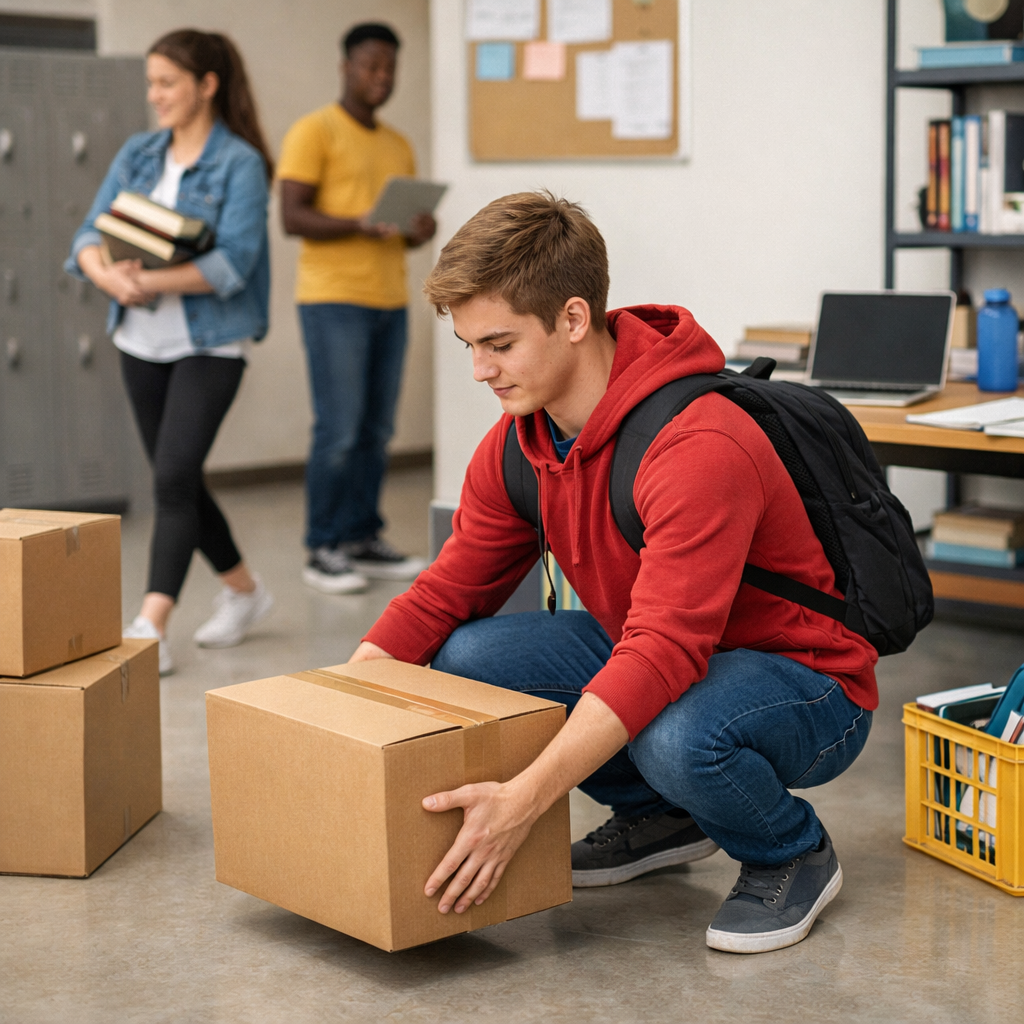

Safe lifting for students is an everyday skill that matters in classrooms, gyms, part-time jobs, and at home. Students often carry backpacks, move sports gear, lift boxes at work, or help with household tasks, and poor lifting habits can lead to strains, sprains, and avoidable pain.
For Canadian students, families, schools, and young workers, the goal is simple: reduce risk by planning the lift, using good body mechanics, and asking for help when needed. Whether the task involves books, equipment, or stock in a retail job, safe lifting is a practical safety habit that supports learning, sports performance, and injury prevention.
Why safe lifting for students matters at school, in sports, and at work
Students lift more often than many people realize. At school, it may be musical instruments, bins of supplies, or heavy backpacks. In sports, it can involve water jugs, mats, weights, or team equipment. At work, young workers may move inventory, carry deliveries, or restock shelves.
Even a light object can become risky when it is awkward, lifted repeatedly, carried too far, or handled in a rushed way. Slippery floors, cluttered hallways, poor footwear, and twisting while carrying a load can all increase the chance of injury.
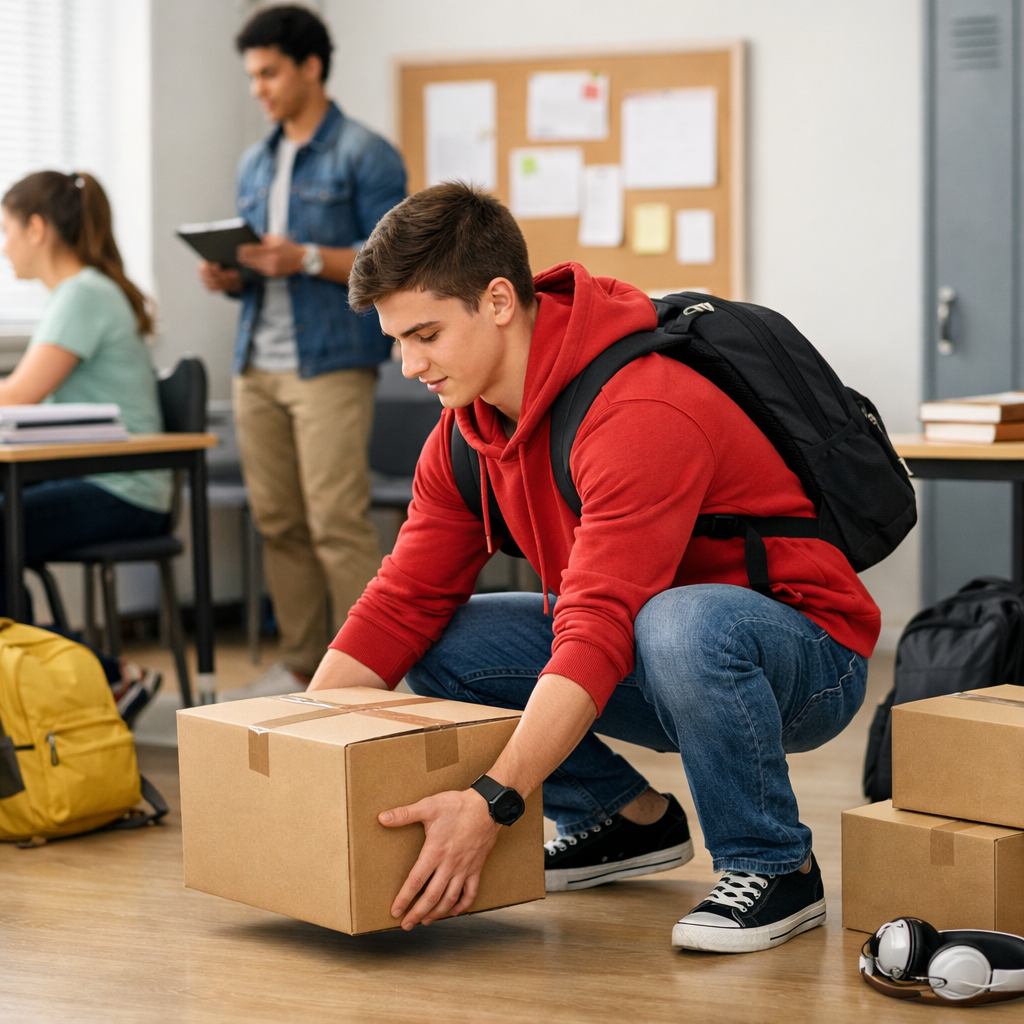
Good lifting technique helps protect the back, shoulders, arms, and knees. It also supports better balance and control. In Ontario and across Canada, schools and workplaces benefit when students understand basic prevention principles promoted by organizations such as CCOHS and government safety resources available through Ontario.
Core safe lifting for students techniques
Plan before you lift
Before touching the object, take a moment to assess it. Ask yourself how heavy it feels, whether you can grip it securely, where you are taking it, and whether the path is clear.
If the item is too heavy, too large, or hard to hold, do not force the lift. Use a cart, split the load, or ask a teacher, coach, parent, or supervisor for help. This is one of the most important parts of safe lifting for students.
Use a stable lifting position
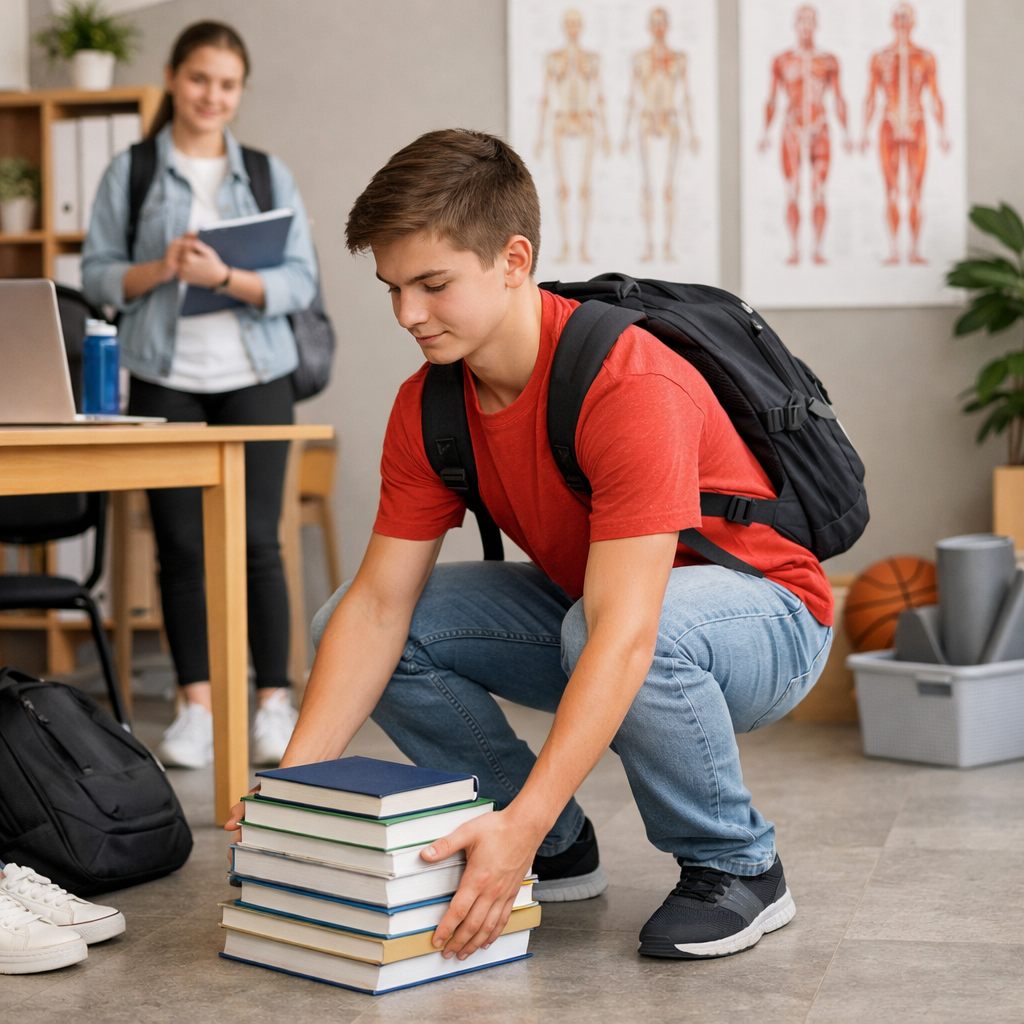
Stand close to the object with your feet about shoulder-width apart. One foot can be slightly ahead of the other for balance. Keep your back in a natural position rather than rounded forward.
Bend at the hips and knees instead of bending from the waist. Tighten your core gently and keep the object close to your body as you begin to lift.
Lift smoothly and avoid twisting
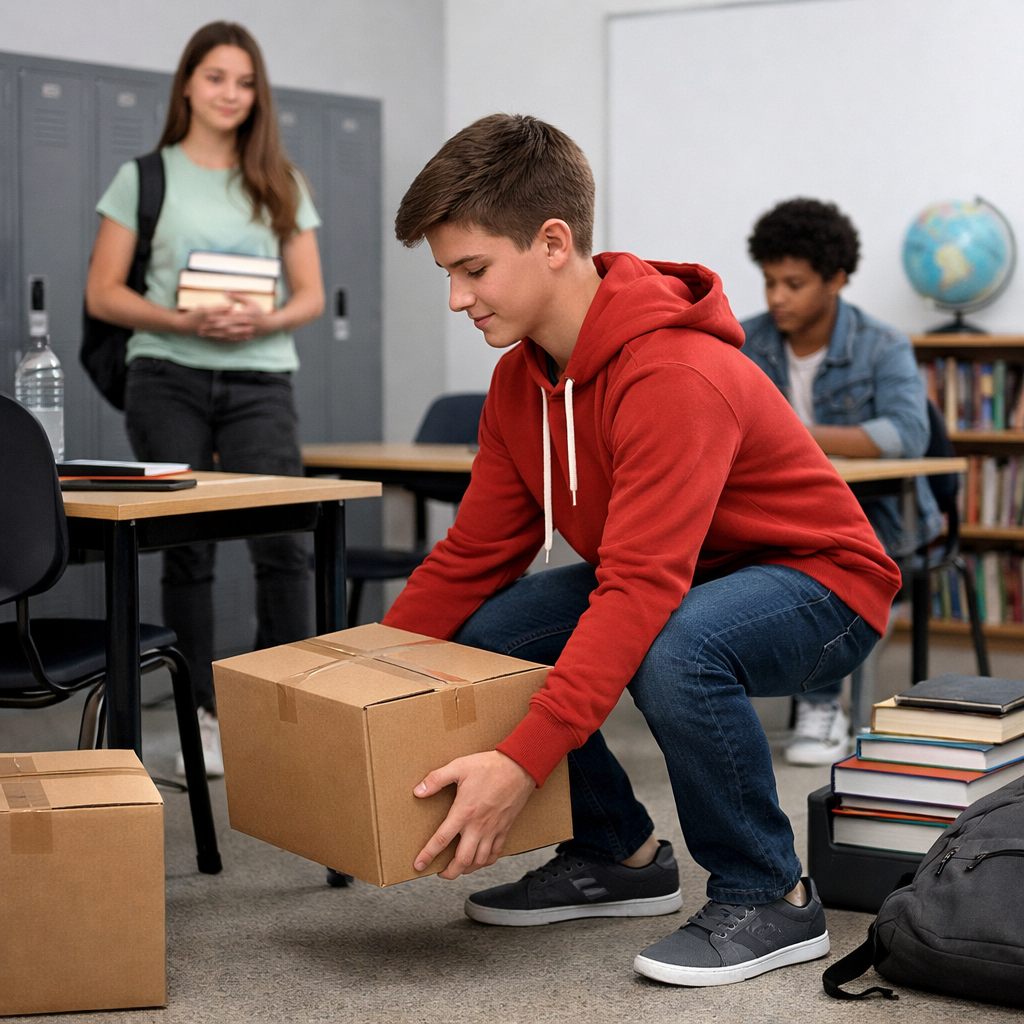
Push through your legs to rise in a controlled motion. Avoid jerking the load upward. Keep your head up, shoulders level, and the item close to your centre of gravity.
Do not twist your torso while lifting or carrying. If you need to turn, move your feet and pivot your whole body. Twisting under load is a common cause of strains.
Set the load down with control
Lower the item by bending your hips and knees again. Keep your fingers clear of pinch points and place the object down gently. Rushing the lowering phase can be just as risky as rushing the lift.
- Keep the load close: Holding an item away from the body increases strain.
- See where you are going: Never carry a load that blocks your view.
- Use handles when available: Better grip means better control.
- Take smaller loads: Two lighter trips are often safer than one heavy trip.
- Wear suitable footwear: Good traction improves balance.
Practical safe lifting for students in common situations
Backpacks and school supplies
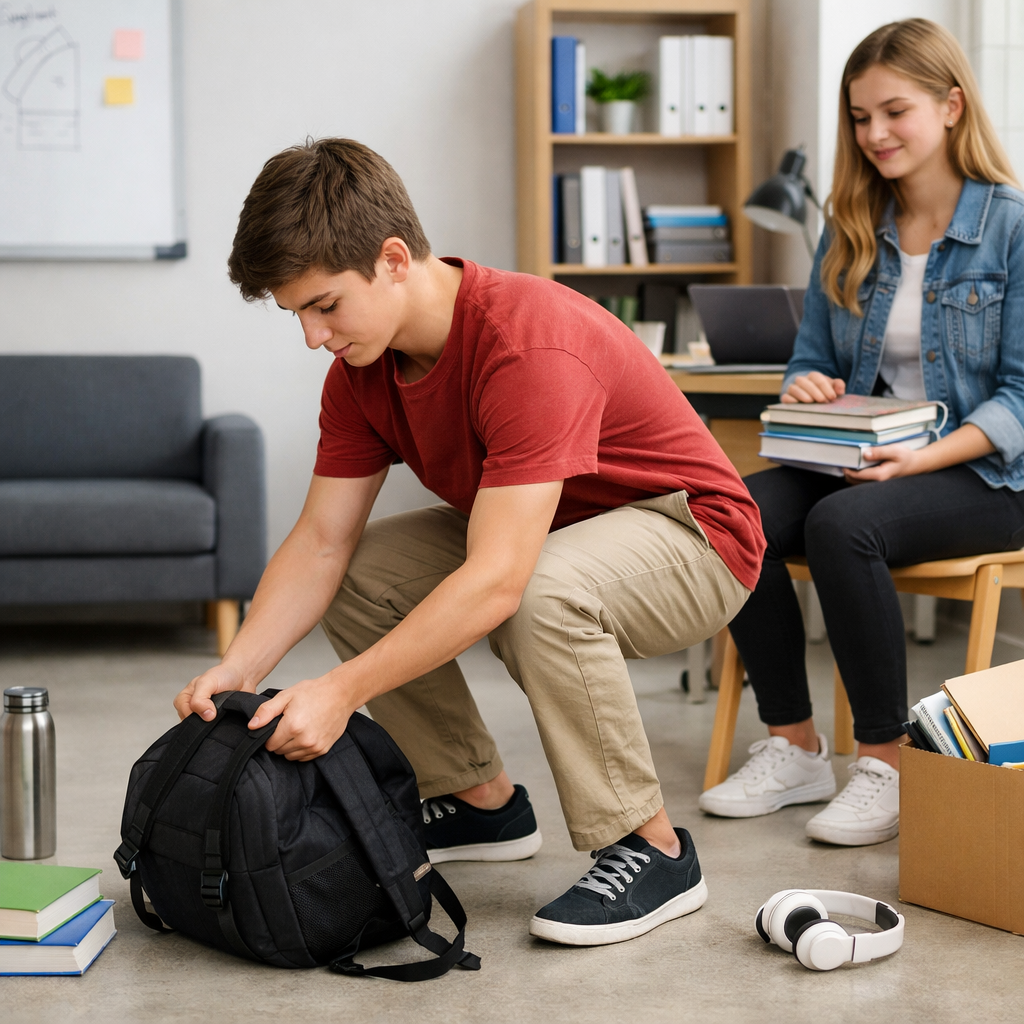
Backpacks are one of the most common lifting and carrying issues for students. Use both shoulder straps, adjust the bag so it sits close to the back, and pack heavier items closest to the body. Clean out unnecessary items regularly to reduce weight.
When lifting a backpack from the floor, use the same basic lifting principles you would use for a box. Avoid swinging a heavy bag up suddenly with one arm.
Sports equipment and fitness spaces
In gyms and on playing fields, students may move weights, mats, nets, or coolers. Follow coach instructions and use equipment only as intended. Team lifts should be coordinated, with one person leading the count so everyone moves together.
Weights deserve extra care. Make sure plates are secured, fingers are clear, and benches or racks are stable. If a student has not been trained to move a piece of equipment, they should ask for guidance first.
Part-time jobs and young workers
Retail, grocery, food service, warehouse, and farm tasks may all involve lifting. Young workers should receive orientation, supervision, and task-specific instruction before handling stock or materials. If a task seems unsafe, students should stop and ask questions.
Employers can support safe lifting for students by reducing manual handling where possible, providing carts or dollies, organizing work areas, and offering clear training. Students looking for practical safety education can also explore resources at learn.ohse.ca and general workplace guidance at OHSE.ca.
| Situation | Common Risk | Safer Approach |
|---|---|---|
| Lifting a backpack | Twisting and one-arm swinging | Lift with both hands and wear both straps |
| Moving sports gear | Awkward shape and poor grip | Use team lifts or a cart when possible |
| Stocking shelves at work | Repetitive bending and reaching | Keep heavy items between knee and chest height where possible |
| Carrying boxes upstairs | Blocked view and loss of balance | Reduce load size and keep one hand free if needed for stability |
Risk control and smart prevention habits
The best approach is not just technique, but prevention. In safety practice, the Hierarchy of Controls reminds us to reduce hazards at the source before relying only on individual effort. For lifting tasks, that means asking whether the lift can be avoided, made smaller, or assisted with equipment.
For example, schools can store heavy items at waist height, sports programs can use wheeled bins, and workplaces can reorganize shelves to reduce overhead lifting. These changes often make safe lifting for students easier and more realistic.
Short checklist for safe lifting for students
- Check the weight, shape, and grip before lifting.
- Clear the path and open doors first if needed.
- Stand close to the object with a stable base.
- Bend at the hips and knees, not only at the waist.
- Keep the load close and lift smoothly with your legs.
- Avoid twisting; pivot with your feet.
- Use help, a cart, or a smaller load when needed.
- Follow school, workplace, coach, and manufacturer instructions.
Students should also pay attention to signs of fatigue. Tired muscles, rushed movement, or trying to impress others can lead to poor decisions. Taking a pause and resetting your technique is a smart safety choice, not a weakness.
If pain happens during a lift, stop the task and report the concern to a parent, teacher, coach, or supervisor. Follow local school, workplace, manufacturer, or emergency guidance where applicable. For general health and injury-prevention information in Canada, students and families may also find useful material through Health Canada and Parachute.
Building lifelong lifting habits
Safe habits learned early can last for years. Students who understand how to lift properly are better prepared for science labs, trades programs, athletics, volunteer work, and part-time employment. They are also more likely to recognize unsafe conditions and speak up before someone gets hurt.
Safe lifting for students is not about making every task seem dangerous. It is about using practical judgment, good technique, and the right level of support. At school, in sports, and at work, small choices such as planning the lift, keeping the load close, and asking for help can make a real difference. When students practise safe lifting for students consistently, they build confidence, reduce injury risk, and support a safer learning and working environment for everyone.
No comments yet