
Biohazard Safety Measures: Critical Protection Strategies for Healthcare and Lab Settings

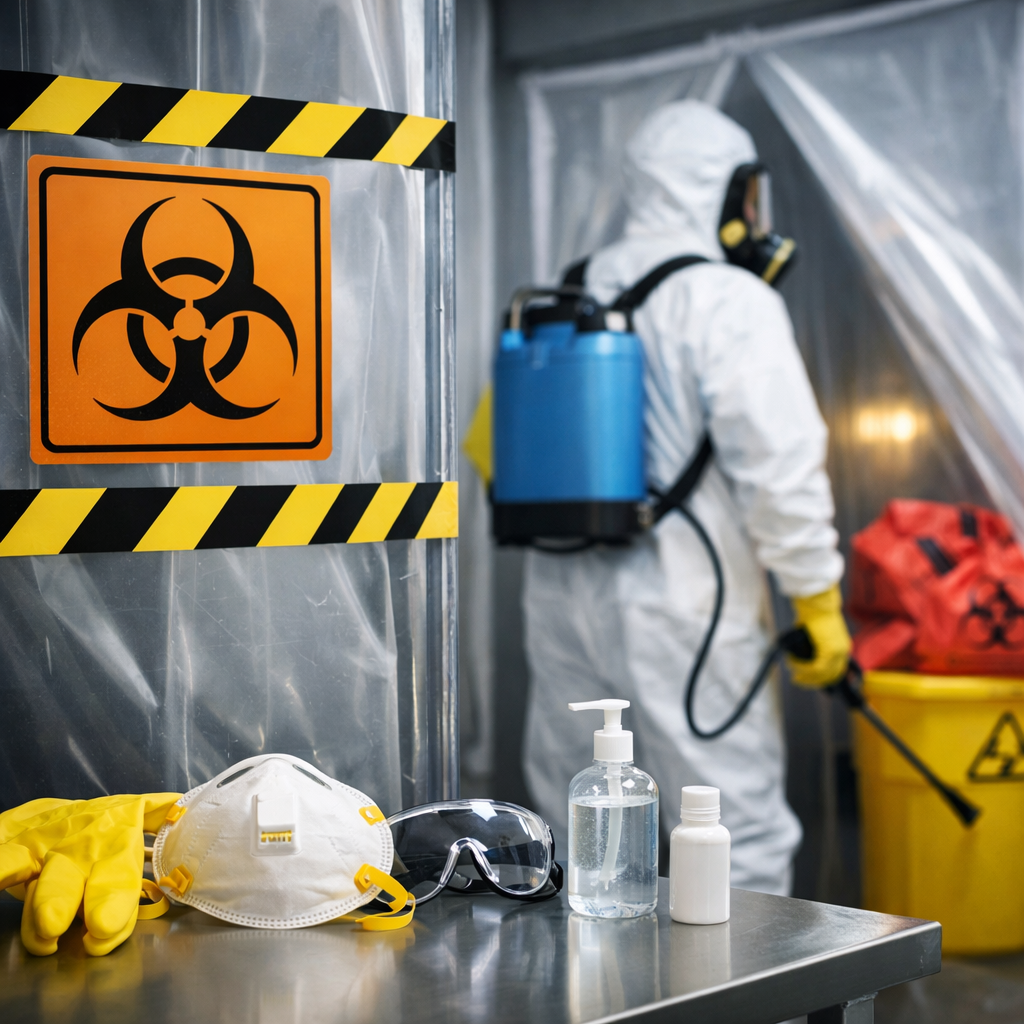
Biohazard safety measures are essential in healthcare facilities and laboratory environments where workers handle blood, bodily fluids, cultures, sharps, and contaminated materials every day.
From hospitals and diagnostic labs to research centers and outpatient clinics, strong safety practices reduce exposure risks, prevent infections, and support regulatory compliance.
Because these settings often involve direct contact with infectious agents, even a small mistake can lead to serious consequences for staff, patients, and visitors.
A practical safety program should address exposure risks, engineering controls, personal protective equipment, and waste handling in a clear and consistent way.
Organizations such as OSHA and CCOHS provide guidance that helps employers build safer workplaces.
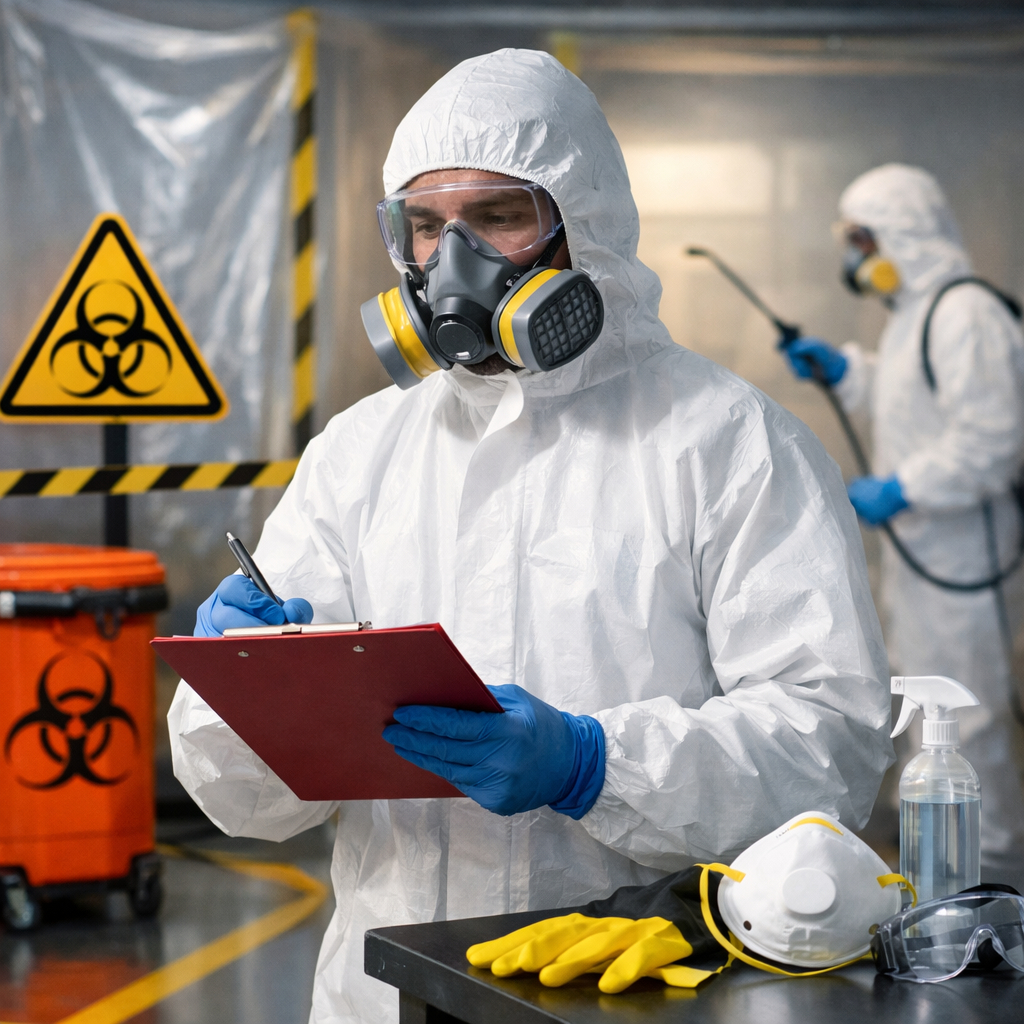
When combined with local procedures and regular training, these standards make biohazard safety measures more effective and easier to apply in real-world situations.
Understanding Exposure Risks in Healthcare and Lab Settings
Healthcare and laboratory personnel face a wide range of biological hazards, including bacteria, viruses, fungi, parasites, and human-derived materials that may carry infectious disease.
Common exposure routes include inhalation, skin contact, mucous membrane contact, ingestion, and needlestick or sharps injuries.
In a hospital, a nurse may be exposed while drawing blood or cleaning a spill in an isolation room.
In a laboratory, a technician may face risk while pipetting specimens, centrifuging samples, or handling cultures outside a containment device.
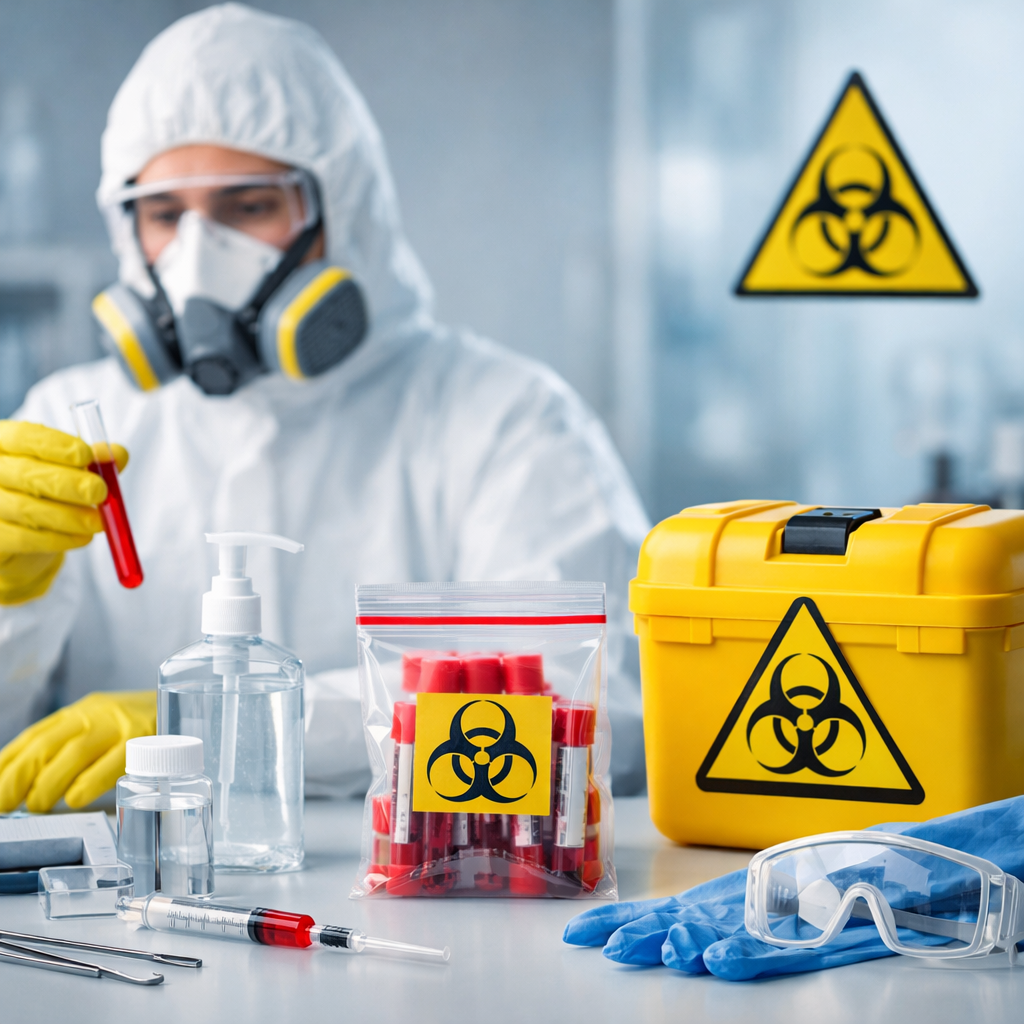
Common Sources of Biohazard Exposure
- Blood and other potentially infectious materials
- Respiratory secretions and aerosol-generating procedures
- Contaminated sharps such as needles, scalpels, and broken glass
- Laboratory cultures and stock solutions
- Surface contamination on benches, carts, equipment, and door handles
- Improperly packaged or labeled waste
Exposure risk is not limited to frontline clinical staff.
Housekeeping teams, waste handlers, maintenance workers, students, and transport personnel may also come into contact with hazardous biological materials if biohazard safety measures are weak or inconsistently followed.
That is why risk assessments should be task-specific, not job-title-specific.
For example, a cleaner handling waste from an emergency department may require protection similar to clinical support staff.
Facilities should identify where exposure is most likely to occur, what agents may be involved, and how workers interact with those hazards.
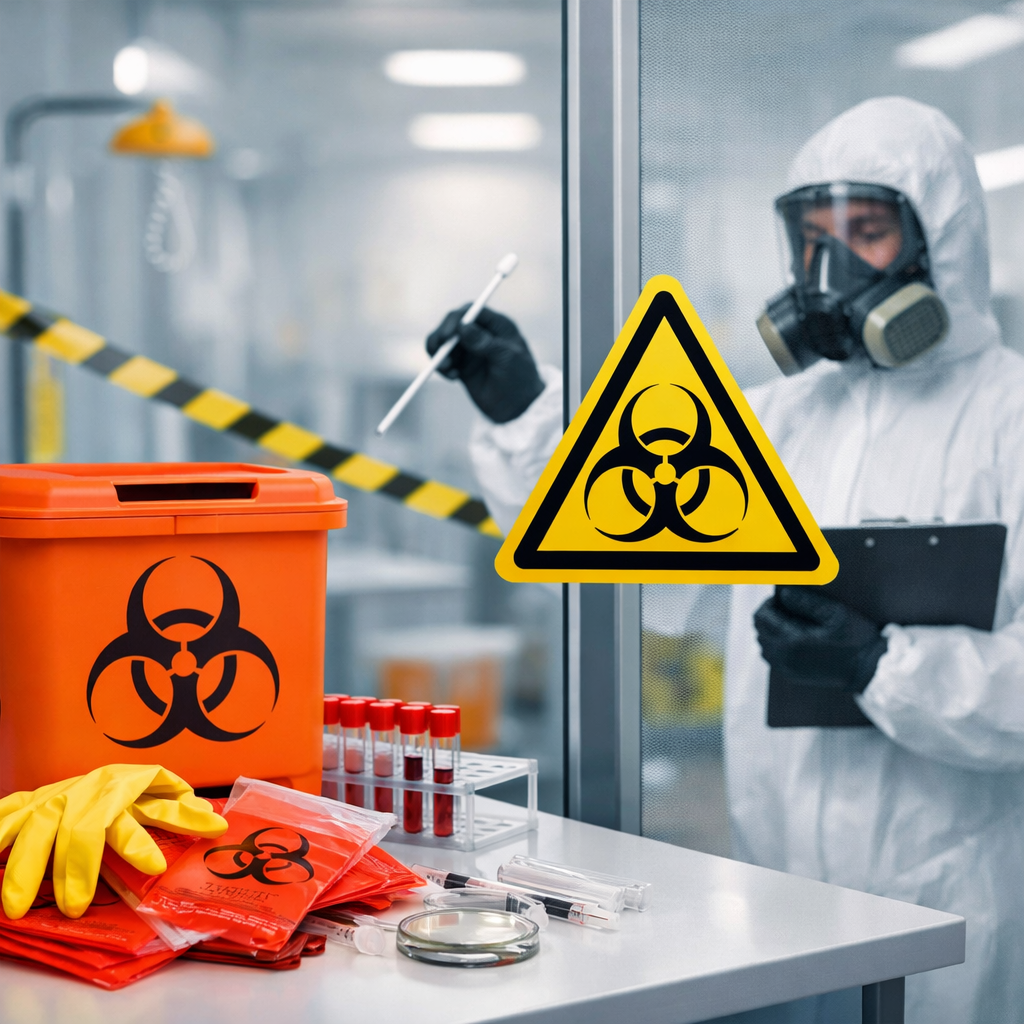
This approach supports better planning, clearer procedures, and more targeted training.
For more practical workplace guidance, employers often connect these procedures with broader risk assessment practices and infection control programs.
Applying Biohazard Safety Measures Through the Hierarchy of Controls
The most effective biohazard safety measures do not rely on PPE alone.
They follow the Hierarchy of Controls, which prioritizes stronger protections before depending on individual behavior.
This framework is especially useful in healthcare and lab environments, where repeated exposure can make routine tasks seem less risky than they really are.
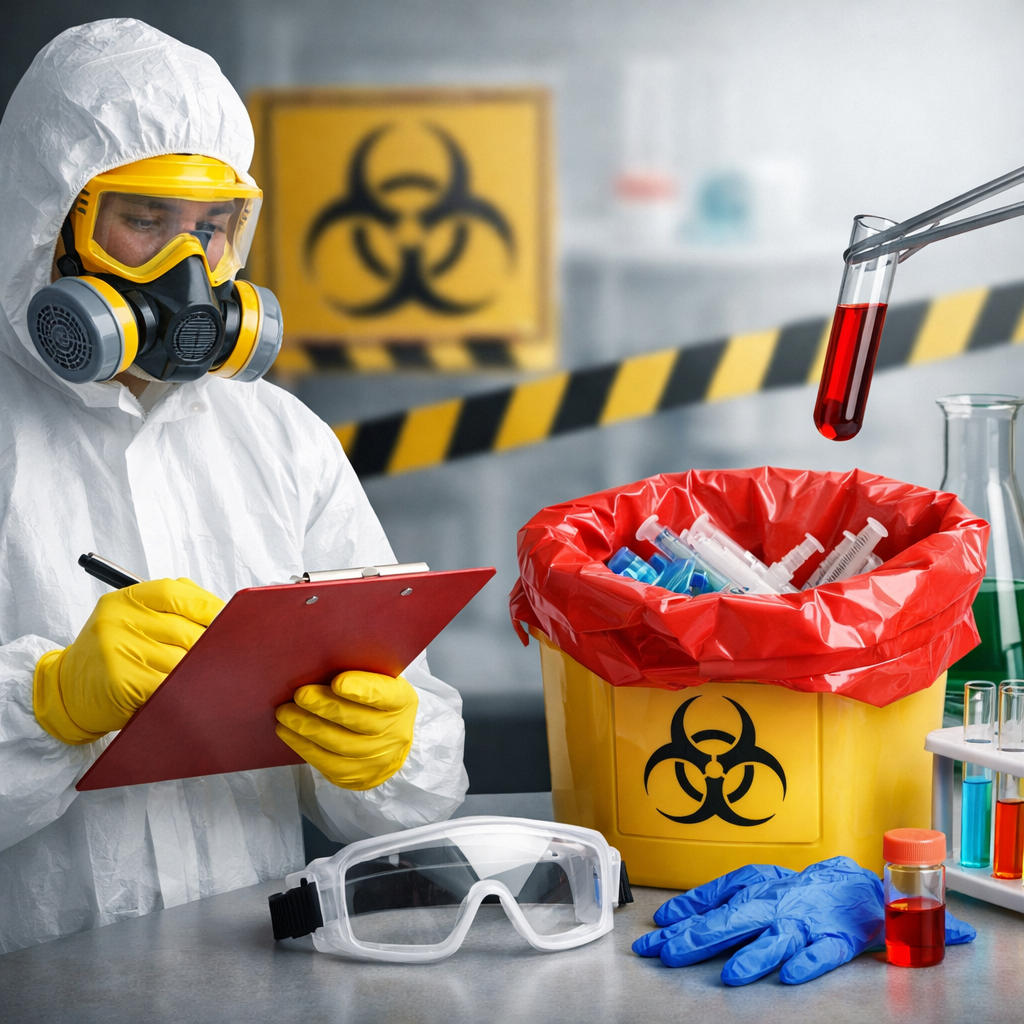
Elimination, Substitution, and Engineering Controls
Elimination is the best control, although it is not always possible when handling clinical or research specimens.
Still, facilities can reduce risk by removing unnecessary handling steps, limiting access to hazard zones, and minimizing manual transfer of contaminated materials.
Substitution may involve using safer collection devices, needleless systems, or less hazardous testing methods where appropriate.
Engineering controls are a core part of biohazard safety measures because they isolate workers from the hazard.
Examples include biological safety cabinets, sealed centrifuge rotors, splash guards, hands-free sinks, negative pressure rooms, and sharps disposal containers placed close to the point of use.
These controls are often more reliable than administrative rules because they do not depend entirely on memory or perfect technique.
Administrative Controls and Safe Work Practices
Administrative controls support safe behavior through written procedures, training, supervision, signage, and scheduling.
They include exposure control plans, vaccination policies, incident reporting systems, cleaning schedules, and restricted access protocols.
According to the CDC, clear standard precautions remain one of the most important ways to reduce transmission in healthcare settings.
Safe work practices should include:
- Never recapping needles unless a specific approved procedure requires it
- Performing hand hygiene before and after patient or specimen contact
- Disinfecting work surfaces after procedures and after spills
- Transporting specimens in sealed, labeled, leak-resistant containers
- Avoiding eating, drinking, or storing food in work areas
- Reporting exposures immediately for prompt evaluation and follow-up
When leaders reinforce these expectations and model them consistently, biohazard safety measures become part of daily operations rather than a box-ticking exercise.
Personal Protective Equipment for Biohazard Safety Measures
PPE is the last line of defense, but it remains a critical part of any exposure prevention strategy.
In healthcare and laboratory settings, the right PPE depends on the task, the hazard, and the likelihood of splashes, sprays, aerosols, or direct contact.
Using too little PPE creates obvious risk, but using the wrong type can also lead to contamination if it interferes with the task or is removed incorrectly.
Selecting the Right PPE
Common PPE for biological hazards includes gloves, gowns, lab coats, face shields, goggles, surgical masks, and respirators.
Selection should be based on a documented hazard assessment.
For example, handling a sealed blood tube may require gloves and routine precautions, while cleaning a spill in a microbiology lab may call for gloves, eye protection, gowning, and respiratory protection depending on the agent involved.
| Task or Exposure Scenario | Typical Risk | Appropriate PPE |
|---|---|---|
| Blood sample collection | Splash or sharps injury | Gloves, lab coat or gown, face protection if splash risk exists |
| Cleaning a biohazard spill | Direct contact and aerosol risk | Gloves, gown, eye/face protection, mask or respirator as required |
| Working in a biosafety cabinet | Exposure to infectious material | Gloves, lab coat or gown, additional protection based on agent |
| Waste transport within facility | Leak, puncture, surface contamination | Gloves, protective clothing, closed-toe footwear |
Training is just as important as selection.
Workers need to know how to inspect PPE before use, put it on correctly, avoid self-contamination during removal, and dispose of or decontaminate it properly.
Fit testing and medical evaluation may also be required when respirators are used.
One common weakness in PPE programs is poor compliance during routine tasks.
People may skip eye protection for a “quick” procedure or continue wearing contaminated gloves while touching clean surfaces.
Effective biohazard safety measures address these habits through supervision, refresher training, and easy access to properly stocked PPE stations.
Waste Handling, Spill Response, and Ongoing Safety Improvement
Biohazardous waste handling is one of the most visible and heavily regulated parts of infection prevention.
If waste is segregated, packaged, labeled, transported, and disposed of incorrectly, it can expose staff throughout the facility, not just at the point where it was generated.
That makes waste control a vital component of biohazard safety measures.
Safe Waste Segregation and Disposal
Waste should be separated at the point of generation.
Sharps must go into approved puncture-resistant containers, while soft contaminated waste should be placed in designated biohazard bags or containers according to facility policy and local regulations.
Overfilled containers, unlabeled bags, and unsecured transport carts all increase the chance of injury or contamination.
Clear procedures should cover:
- What qualifies as biohazardous waste
- How to segregate sharps, solid waste, and liquid waste
- Container color coding and labeling requirements
- Internal transport routes and storage limits
- Decontamination methods and final disposal arrangements
- Actions to take if a container leaks or breaks
Spill Response and Incident Follow-Up
Spill response must be fast, controlled, and based on the material involved.
A small blood spill in a patient room may be handled with standard disinfectants and PPE, while a laboratory spill involving concentrated infectious material may require area isolation, enhanced protective equipment, and a documented decontamination procedure.
Staff should know who to notify, what disinfectant contact time is required, and how to manage contaminated cleanup materials afterward.
Post-exposure procedures are equally important.
Any needlestick, splash to eyes or mouth, damaged PPE event, or suspected inhalation exposure should be reported immediately.
Prompt medical evaluation, documentation, root cause review, and corrective action help prevent repeat incidents.
Regular audits, safety drills, and review of near misses can reveal gaps before they lead to harm.
In the end, strong biohazard safety measures protect more than compliance records.
They protect the people who diagnose illness, treat patients, process specimens, clean workspaces, and manage waste every day.
By understanding exposure risks, applying the Hierarchy of Controls, using PPE correctly, and handling waste with care, healthcare and laboratory facilities can build safer, more resilient operations.
Consistent training, practical procedures, and leadership support are what turn biohazard safety measures from written policy into real workplace protection.
No comments yet