
Asbestos Awareness Training: Critical Points Every Building Worker Should Know

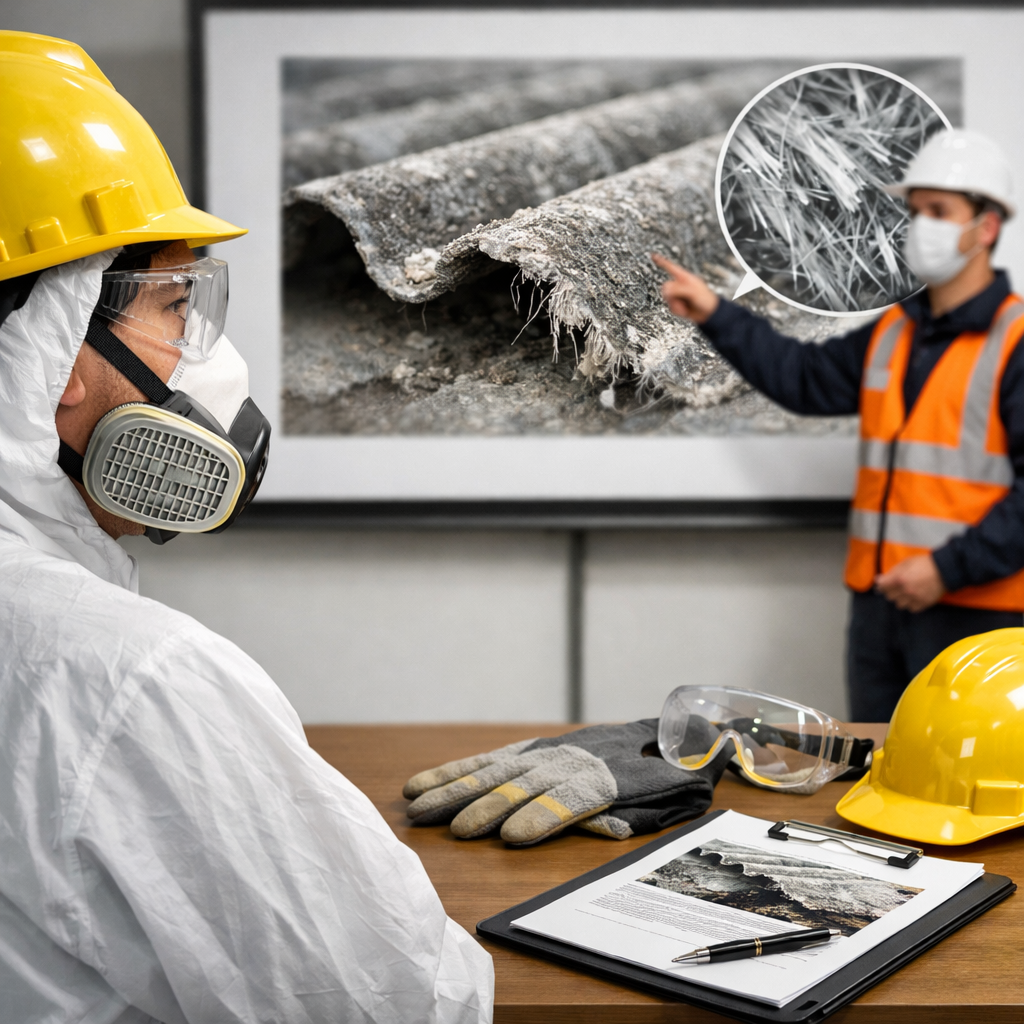
Asbestos awareness training is one of the most important safety topics for anyone involved in building work, maintenance, refurbishment, or demolition.
Even though asbestos use has been heavily restricted or banned in many countries, it remains present in countless older buildings, and disturbing it can create serious long-term health risks.
Workers do not need to remove asbestos to be affected by it. They only need to drill into the wrong ceiling tile, cut through an old insulation board, or damage pipe lagging during routine work.
That is why asbestos awareness training matters: it helps workers recognize potential asbestos-containing materials, understand disturbance risks, and follow safe controls before work begins.
For employers, supervisors, contractors, and tradespeople, the goal is simple but critical: prevent accidental exposure and stop unsafe work before fibres are released.
- Why asbestos awareness training remains essential in building work
- Recognition points covered in asbestos awareness training
- Disturbance risks and why small tasks can create major exposure
- Controls that asbestos awareness training should reinforce
- Building a safer culture through asbestos awareness training
Why asbestos awareness training remains essential in building work
Asbestos was widely used in construction because it was durable, heat resistant, and inexpensive.
It appeared in insulation, sprayed coatings, cement sheets, floor tiles, textured coatings, roofing products, partition walls, and many other materials commonly found in older properties.
In practice, this means electricians, plumbers, joiners, HVAC workers, surveyors, decorators, roofers, and general maintenance teams may all encounter asbestos during normal tasks.
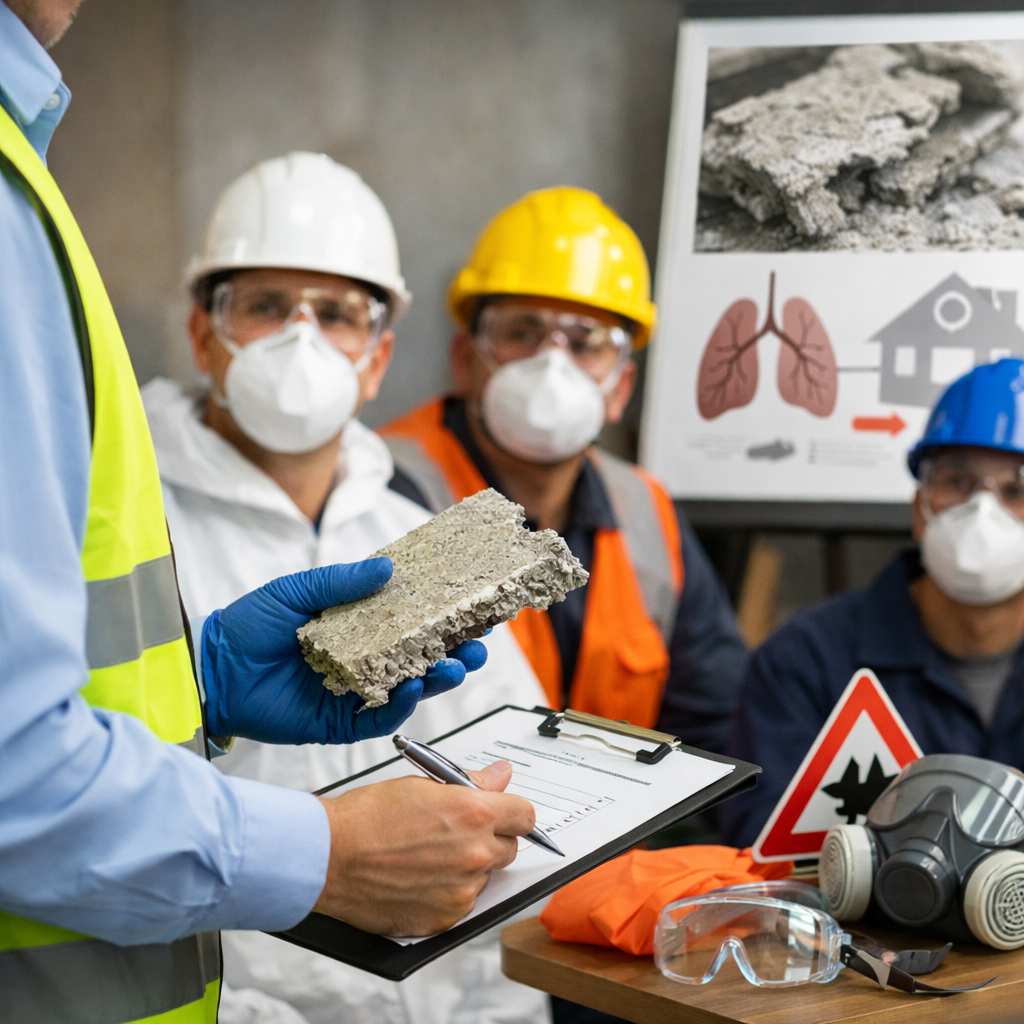
Asbestos awareness training does not qualify someone to remove asbestos. Instead, it teaches workers how to identify likely asbestos-containing materials, avoid disturbing them, and respond correctly if suspect materials are found.
A cautious approach is vital because asbestos-related diseases often develop slowly over many years. Exposure can contribute to asbestosis, lung cancer, and mesothelioma.
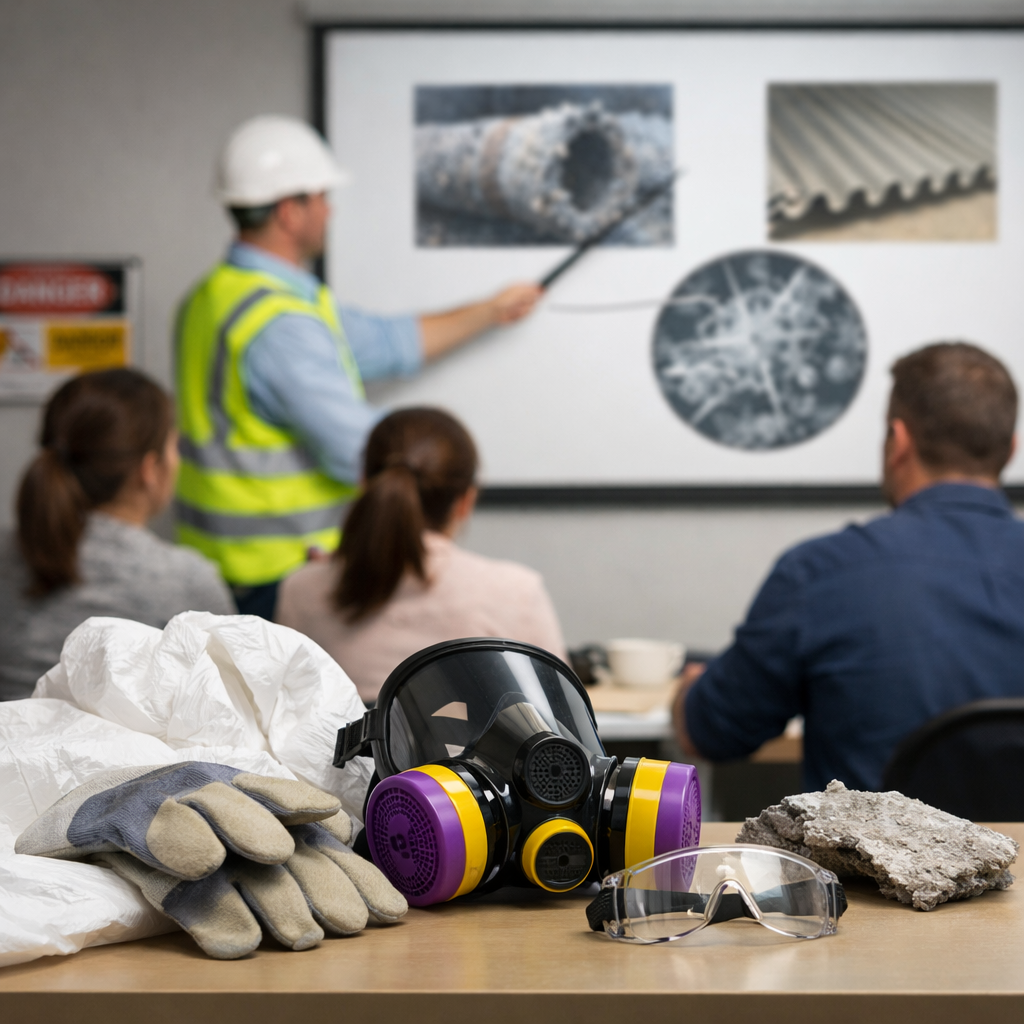
Guidance from organizations such as OSHA and CCOHS reinforces the need for hazard recognition, worker information, and strict control measures wherever asbestos may be present.
For building owners and contractors, awareness should also connect to wider safety planning, including pre-job checks, permit systems, and access to asbestos registers or surveys.
Teams that already follow strong health and safety training processes are usually better prepared to manage asbestos risks before work starts.
Recognition points covered in asbestos awareness training
Where asbestos may be found
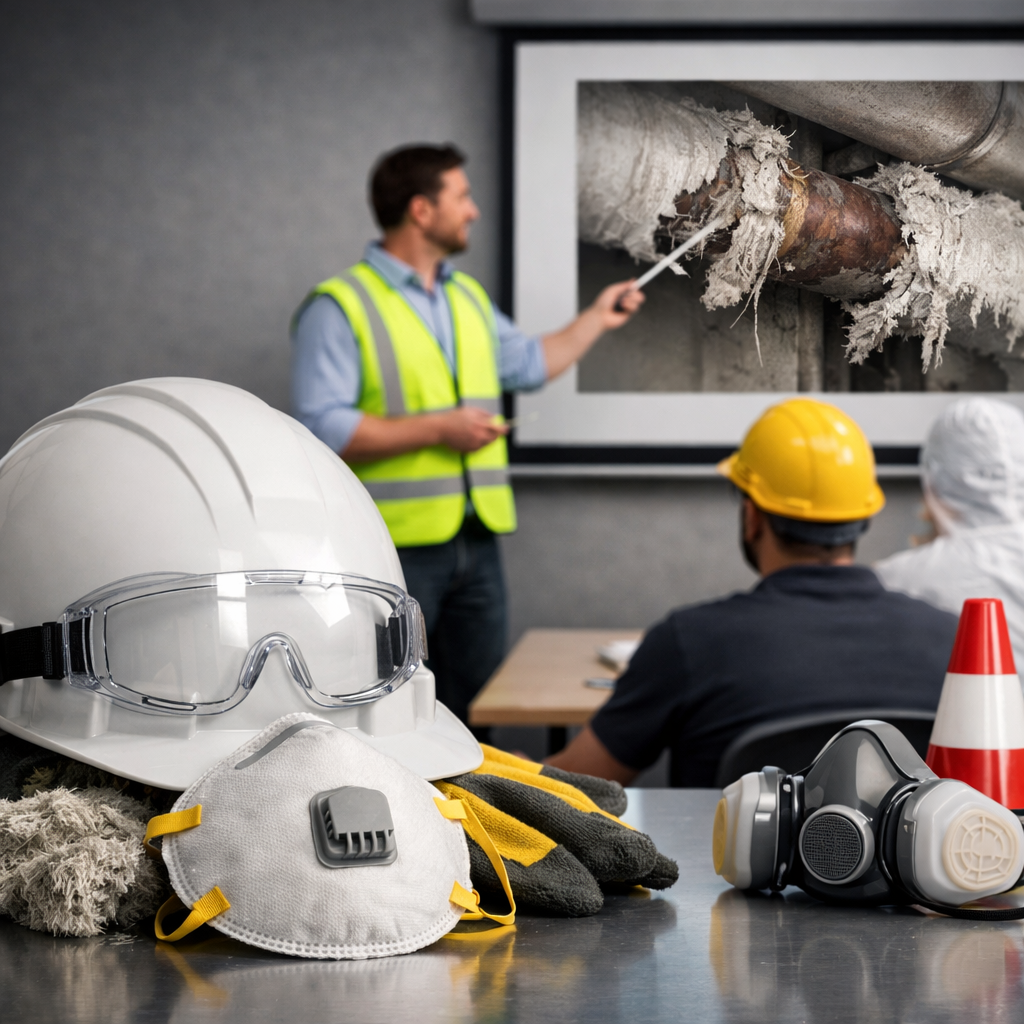
One of the most valuable parts of asbestos awareness training is learning where asbestos is likely to be present.
Any building constructed or refurbished before asbestos bans took full effect should be treated with caution, especially if records are incomplete or materials look original.
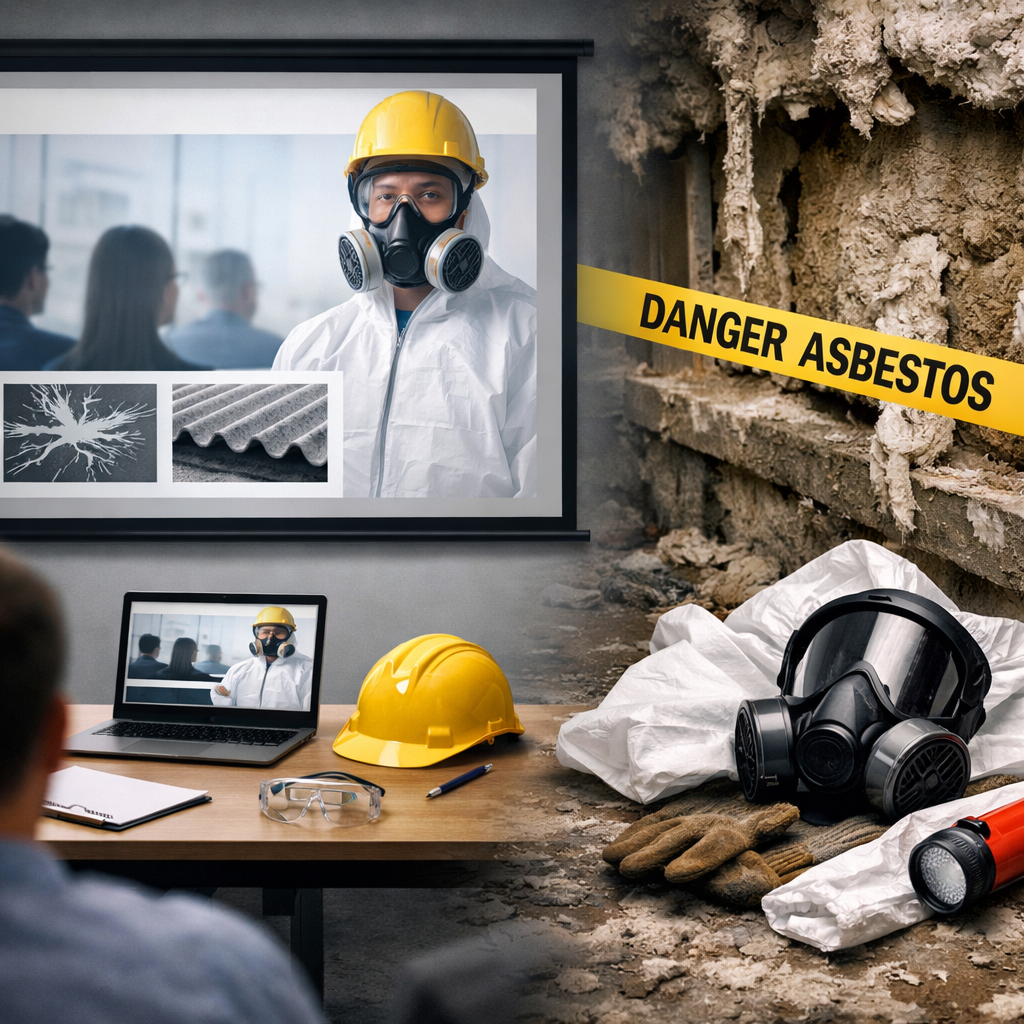
Common examples include:
- Pipe insulation and boiler lagging
- Asbestos insulating board in service risers, partitions, soffits, and ceiling panels
- Textured coatings on walls and ceilings
- Vinyl floor tiles and adhesive residues
- Cement roof sheets, wall panels, gutters, and flues
- Fire doors, panels, and older insulation products
- Sprayed coatings on structural steel or ceilings
Why visual checks are not enough
Workers should never assume a material is safe simply because it looks solid or undamaged.
Many asbestos-containing materials resemble non-asbestos products, and some can only be confirmed through sampling by competent professionals.
This is a key message in asbestos awareness training: if there is doubt, stop and check records rather than proceed.
Before starting intrusive work, workers should review the asbestos survey, register, and work scope carefully.
If these documents are missing, unclear, or out of date, the risk level increases significantly.
Typical warning signs on site
Although asbestos cannot be identified reliably by sight alone, certain site conditions should trigger caution.
- Older materials in pre-2000 buildings
- Insulation around pipes, ducts, and plant
- Damaged ceiling boards or wall panels with fibrous cores
- Unlabelled refurbishment zones with limited historical records
- Debris from previous maintenance or demolition work
In these situations, the right response is not to investigate by touching or breaking the material.
The correct response is to pause work, isolate the area if needed, and seek competent advice.
Disturbance risks and why small tasks can create major exposure
Many asbestos incidents happen during minor building tasks rather than major demolition.
Simple activities such as drilling, sanding, cable installation, chasing walls, lifting floor coverings, or replacing ceiling fittings can disturb hidden asbestos and release dangerous fibres into the air.
This is why asbestos awareness training emphasizes the link between everyday work and unexpected exposure.
Friable materials present especially high risk because they can release fibres more easily when damaged.
However, even lower-risk products like asbestos cement can become hazardous if broken, cut, or handled roughly.
Once fibres are airborne, they may remain suspended and spread beyond the immediate work area.
This can expose not only the person doing the task, but also nearby workers, occupants, cleaners, and visitors.
| Building material | Typical risk if disturbed | Example of unsafe activity |
|---|---|---|
| Pipe lagging | Very high fibre release potential | Cutting or pulling insulation during maintenance |
| Asbestos insulating board | High risk when drilled or broken | Installing services through partition walls |
| Textured coating | Moderate risk during abrasive work | Sanding ceilings before repainting |
| Asbestos cement sheet | Lower risk unless damaged | Breaking roof sheets during removal |
Practical examples help reinforce the message. An electrician fixing new containment in a riser may unknowingly drill through asbestos insulating board.
A plumber replacing valves may disturb lagging hidden behind a damaged cover. A decorator preparing surfaces may sand a coating that contains asbestos.
These are exactly the kinds of scenarios where awareness can prevent a serious incident.
Controls that asbestos awareness training should reinforce
Applying the hierarchy of controls
Good asbestos awareness training should do more than list hazards. It should explain the controls that reduce risk and connect them to the hierarchy of controls.
In many asbestos situations, elimination means avoiding the task until proper assessment and specialist planning have taken place.
Substitution is usually not relevant once asbestos is already in place, so emphasis often shifts to isolation, administrative controls, and, where appropriate, personal protective equipment.
Key control principles include:
- Avoid disturbance wherever possible
- Check the asbestos register and survey before intrusive work
- Use permit-to-work or authorization systems for higher-risk tasks
- Restrict access to suspect areas
- Stop work immediately if unknown materials are uncovered
- Report concerns to supervisors without delay
- Use licensed asbestos professionals for removal or remedial work where required
What workers should do if asbestos is suspected
If a material is damaged and asbestos is suspected, workers should stop work straight away.
They should keep others out of the area, avoid sweeping or dry cleaning debris, and report the issue through site procedures.
Attempting to tidy the area without proper controls can make the problem worse by spreading fibres.
Clear emergency arrangements should be part of site planning, especially on refurbishment projects where hidden materials are more likely.
Many employers support this through refresher briefings, toolbox talks, and documented procedures linked to their construction safety courses.
Training, supervision, and records
Asbestos awareness training is most effective when it is refreshed regularly and backed by real supervision.
Workers need training that is relevant to their tasks, site conditions, and the age and type of buildings they enter.
Supervisors should verify that asbestos information is available before work starts, and contractors should be able to demonstrate training records and safe systems of work.
Where projects involve maintenance in occupied premises such as schools, hospitals, offices, or housing blocks, communication becomes even more important.
Everyone affected by the work should understand where asbestos risks exist and what controls are in place.
Further technical guidance can also be found through the HSE asbestos resources, which provide practical information on surveys, management, and safe handling requirements.
Building a safer culture through asbestos awareness training
Strong safety culture depends on workers feeling confident enough to stop and question what they are about to disturb.
That culture does not come from paperwork alone. It comes from practical, repeated, and well-delivered asbestos awareness training that helps people recognize warning signs and act cautiously.
In building work, speed and familiarity can create risk. People often assume they have seen the same material before or that a quick job will not cause harm.
Asbestos risk does not work that way.
Old materials can be hidden behind newer finishes, records can be incomplete, and a task that seems minor can cause widespread contamination if fibres are released.
The safest approach is to plan carefully, verify information, and never disturb suspect materials without the right assessment and controls.
When workers understand recognition points, disturbance risks, and the control measures expected on site, they are far more likely to prevent exposure before it happens.
That is the real value of asbestos awareness training: protecting workers, occupants, and the wider public through informed decisions, cautious behavior, and safe building practices.
No comments yet