
- school staff safety guidelines: Practical OHSE Measures for a Safer School Workplace
- Why school staff safety guidelines matter in every school setting
- Risk prevention using the hierarchy of controls
- PPE and practical examples for everyday school risks
- Compliance, training, and continuous improvement
school staff safety guidelines: Practical OHSE Measures for a Safer School Workplace

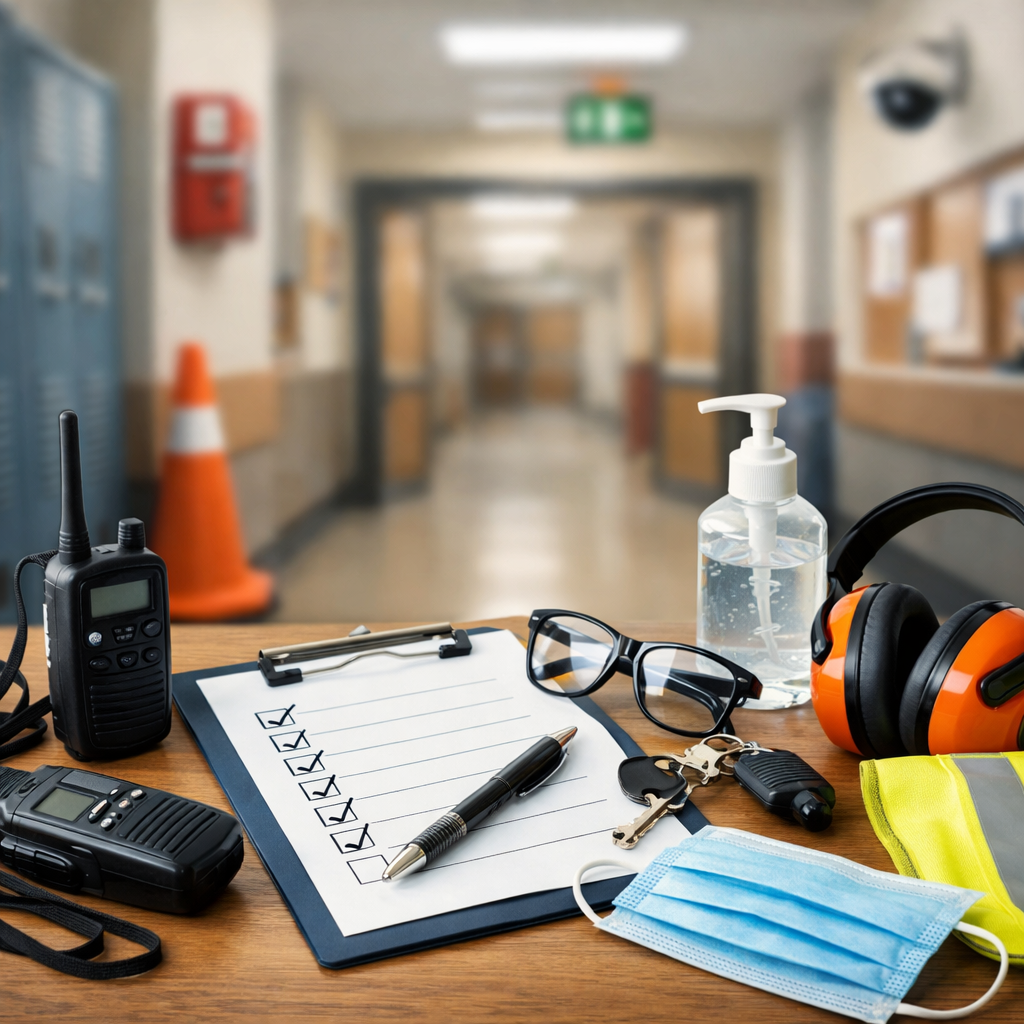
school staff safety guidelines are essential for protecting teachers, administrators, education assistants, custodians, food service workers, and every other employee who helps a school operate safely each day.
Schools are busy workplaces with a wide mix of physical, psychological, chemical, biological, and environmental hazards, so a strong occupational health and safety approach is not optional.
Whether staff are supervising playgrounds, handling cleaning chemicals, supporting students with behavioral needs, or responding to emergencies, the right safety systems reduce injuries and improve confidence across the whole school community.
This article explains practical school staff safety guidelines with a strong OHSE focus, including common risks, prevention methods, PPE, legal compliance, and examples that schools can apply immediately.
Why school staff safety guidelines matter in every school setting
Schools are often seen as low-risk environments, but that assumption can be misleading.
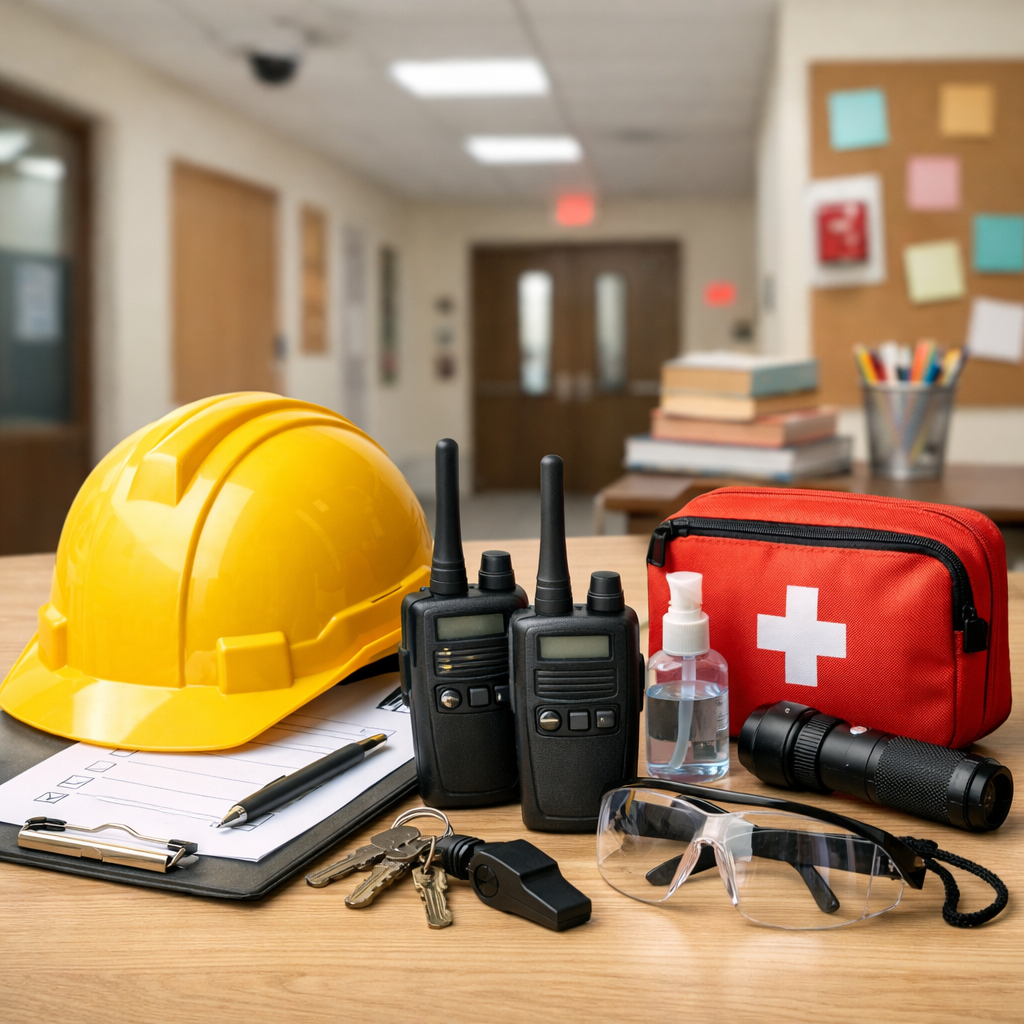
In reality, staff may face slips and falls, ergonomic strain, violence or aggression, infectious disease exposure, hazardous substances, vehicle movement risks, and stress-related harm.
Strong school staff safety guidelines help control these hazards before they result in injury, illness, lost time, or disruption to learning.
They also support legal duties under workplace health and safety laws, workers’ compensation frameworks, and internal school board or district policies.
Good safety practice starts with hazard identification and risk assessment.
For example, a science teacher may face chemical splash risks, while a custodian may be exposed to cleaning agents and wet floors, and an office worker may be more vulnerable to repetitive strain or poor workstation setup.
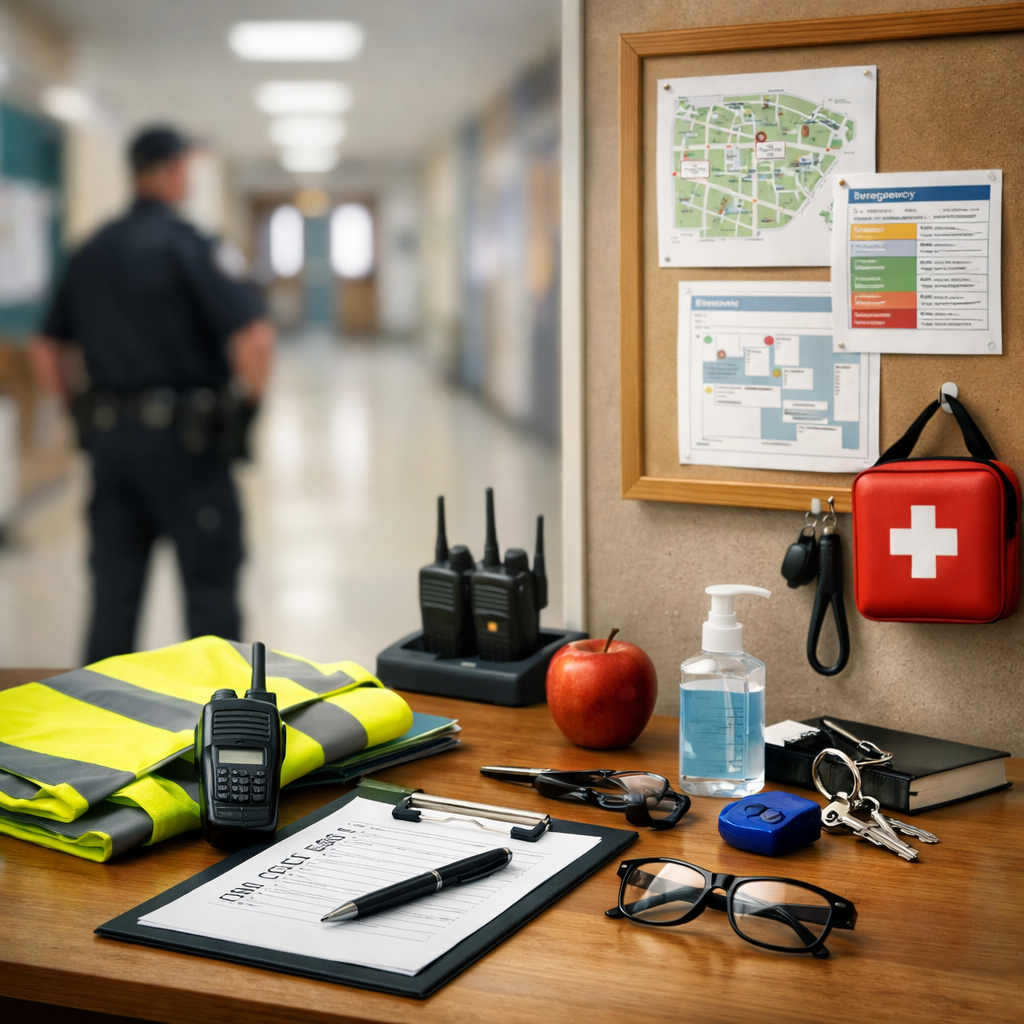
Each role has different exposures, so safety measures should reflect the actual tasks performed.
Common hazards affecting school staff
- Physical hazards: slips, trips, falls, manual handling, poor lighting, noise, and unsafe equipment
- Biological hazards: seasonal illness, bloodborne pathogen exposure, mold, and poor hygiene conditions
- Chemical hazards: laboratory chemicals, cleaning products, adhesives, paints, and disinfectants
- Psychosocial hazards: bullying, work-related stress, fatigue, trauma exposure, and violence
- Environmental hazards: extreme heat, poor ventilation, ice, storms, and traffic movement during drop-off and pickup
- Security hazards: unauthorized entry, aggressive visitors, lockdown events, and emergency evacuations
Resources from CCOHS and OSHA can help schools understand these workplace risks in more detail.
Risk prevention using the hierarchy of controls
The most effective school staff safety guidelines use the hierarchy of controls rather than relying only on staff caution.
This means starting with the strongest control methods first and using PPE as the last line of defense.
Applying the hierarchy of controls in schools
| Control Level | School Example | Safety Benefit |
|---|---|---|
| Elimination | Remove broken furniture or unsafe equipment from classrooms | Removes the hazard completely |
| Substitution | Use less hazardous cleaning products or art materials | Reduces exposure severity |
| Engineering Controls | Install secure entry systems, ventilation, eyewash stations, and anti-slip flooring | Separates people from hazards |
| Administrative Controls | Training, supervision, traffic plans, incident reporting, and safe work procedures | Improves safe behavior and consistency |
| PPE | Gloves, eye protection, masks, hearing protection, or high-visibility vests | Provides personal protection when other controls remain |
A practical example is a school kitchen where hot surfaces, knives, and wet floors create multiple risks.
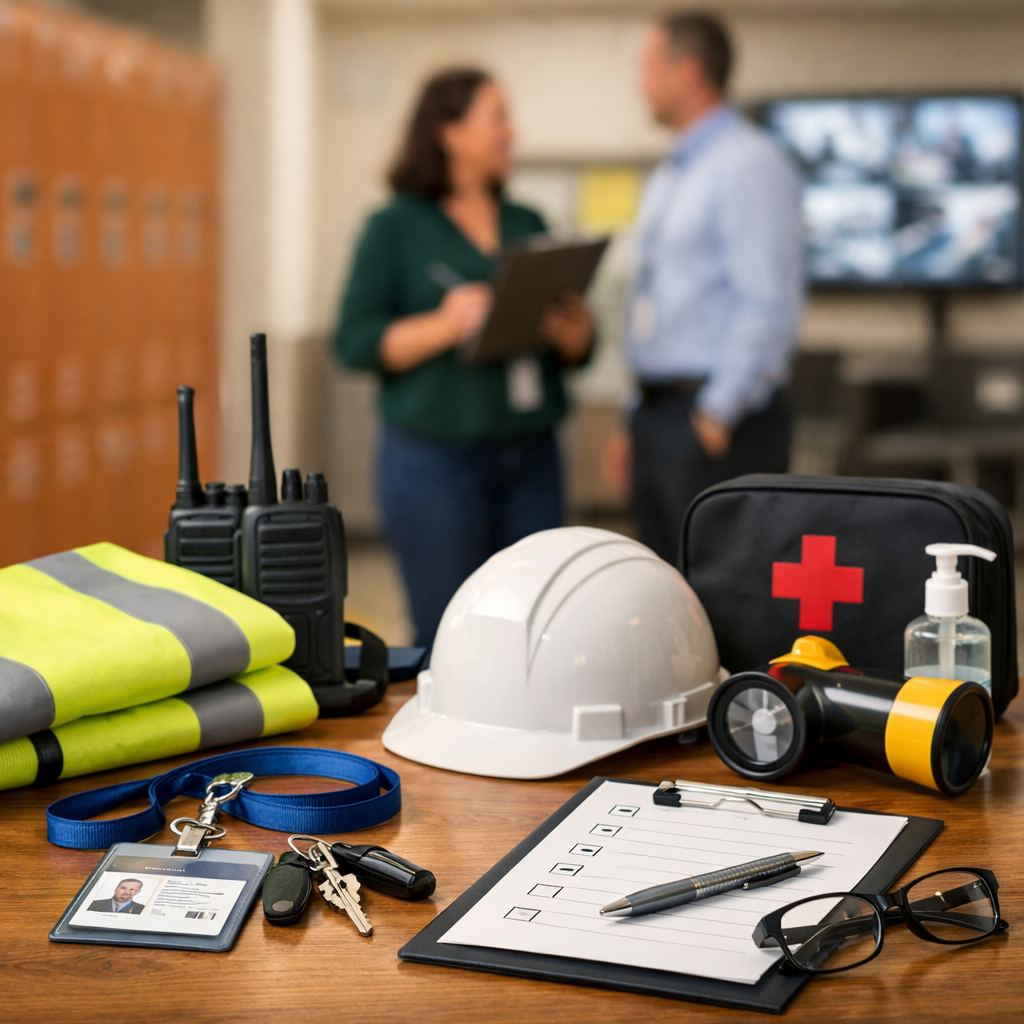
Elimination might involve removing damaged appliances, substitution could mean using safer chemicals, engineering controls may include splash guards and floor drainage, administrative controls would cover training and cleaning schedules, and PPE might include non-slip shoes and heat-resistant gloves.
Another example is student drop-off traffic.
Instead of simply telling staff to “be careful,” better school staff safety guidelines include separated pedestrian pathways, visible signage, designated crossing zones, and clear supervision procedures.
Prevention measures schools should prioritize
- Conduct regular workplace inspections in classrooms, labs, offices, gyms, kitchens, and outdoor areas
- Report hazards quickly and track corrective actions to completion
- Provide task-specific OHSE training for each staff group
- Review emergency procedures at least annually and after incidents
- Maintain safe staffing levels for high-risk tasks and student support
- Use incident and near-miss reports to identify patterns and prevent recurrence
- Include staff consultation in safety planning and policy review
Many schools also benefit from a simple internal safety hub with procedures for incident reporting, first aid, chemical handling, and emergency contacts.
For example, a page such as workplace safety checklists or incident reporting procedures can make safety information easier to access.
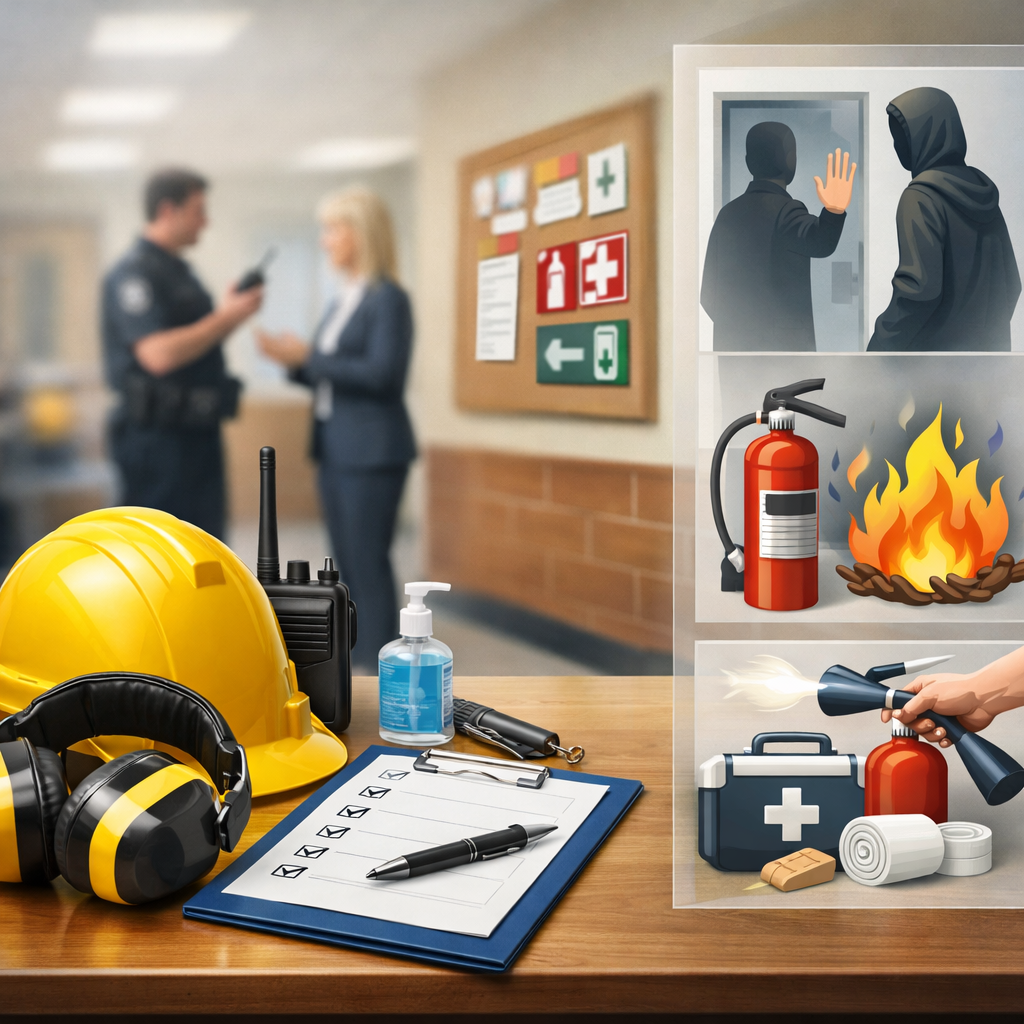
PPE and practical examples for everyday school risks
PPE is an important part of school staff safety guidelines, but it should always support broader control measures rather than replace them.
Staff need the right equipment, the right fit, and training on correct use, storage, maintenance, and disposal.
Where PPE may be required in schools
Different school roles need different protection depending on the task.
Science staff may require goggles, lab coats, and chemical-resistant gloves.
Custodial staff may need gloves, splash protection, and non-slip footwear.
Maintenance workers may require hearing protection, respiratory protection, or high-visibility clothing.
School nurses or first aid staff may need masks, gloves, and face shields when dealing with bodily fluids or infectious illness.
Outdoor supervisors in certain environments may need sun protection, weather-resistant clothing, or reflective gear near vehicle zones.
Practical school examples
Example 1: Science laboratory exposure. A teacher preparing an experiment uses incompatible chemicals without checking storage labels.
Good school staff safety guidelines require chemical inventories, safety data sheets, ventilation, eyewash access, staff training, and suitable eye and hand protection.
Example 2: Aggressive behavior incident. An education assistant is supporting a student during escalation.
Prevention includes behavior support planning, communication protocols, de-escalation training, safe room layout, and post-incident review.
PPE is usually not the main control here; staffing, planning, and training are more effective.
Example 3: Slip injury after cleaning. A custodian mops a corridor just before class transition, and a staff member slips on the wet surface.
Control measures include scheduling, warning signs, floor drying methods, footwear requirements, and reviewing whether the product or process can be changed.
Example 4: Illness transmission in a staff room. Several employees become sick during flu season.
Practical controls include ventilation, cleaning protocols, hand hygiene supplies, staying-home-when-ill policies, and public health guidance from agencies such as the CDC.
Compliance, training, and continuous improvement
Effective school staff safety guidelines should align with applicable legislation, local education authority requirements, and recognized OHSE standards.
Compliance is not only about documentation.
It means proving that hazards are identified, risks are assessed, staff are trained, controls are maintained, and incidents are investigated properly.
Key compliance areas for schools
- Hazard assessments: identify role-specific risks across all school operations
- Safe work procedures: document how tasks should be completed safely
- Training records: keep evidence of orientation, refresher training, and competency
- Emergency preparedness: cover fire, lockdown, severe weather, medical events, and evacuation support
- First aid: ensure appropriate supplies, trained personnel, and access procedures
- Violence prevention: assess threats, report incidents, and support affected staff
- PPE management: select, issue, inspect, and replace PPE as needed
Training should be practical and repeated when tasks, equipment, or risks change.
New employees need a full safety orientation, but long-term staff also need refreshers, especially after incidents or policy updates.
Supervisors play a major role by modeling safe behavior, correcting unsafe practices early, and making sure concerns are addressed instead of ignored.
Continuous improvement is what turns a written program into a living safety culture.
Schools should review trends in injuries, near misses, absenteeism, and staff feedback.
If multiple reports involve playground supervision, chemical storage, or musculoskeletal strain, those findings should lead to corrective action.
That may include redesigning tasks, updating procedures, purchasing better equipment, or increasing staffing support.
In conclusion, school staff safety guidelines are most effective when they combine risk awareness, prevention planning, proper PPE, legal compliance, and day-to-day practical action.
A safer school workplace does not happen by chance.
It depends on clear procedures, regular training, visible leadership, and a willingness to improve conditions before someone gets hurt.
When schools apply strong school staff safety guidelines consistently, they protect employees, support student wellbeing, and create a more stable and resilient learning environment for everyone.
No comments yet